

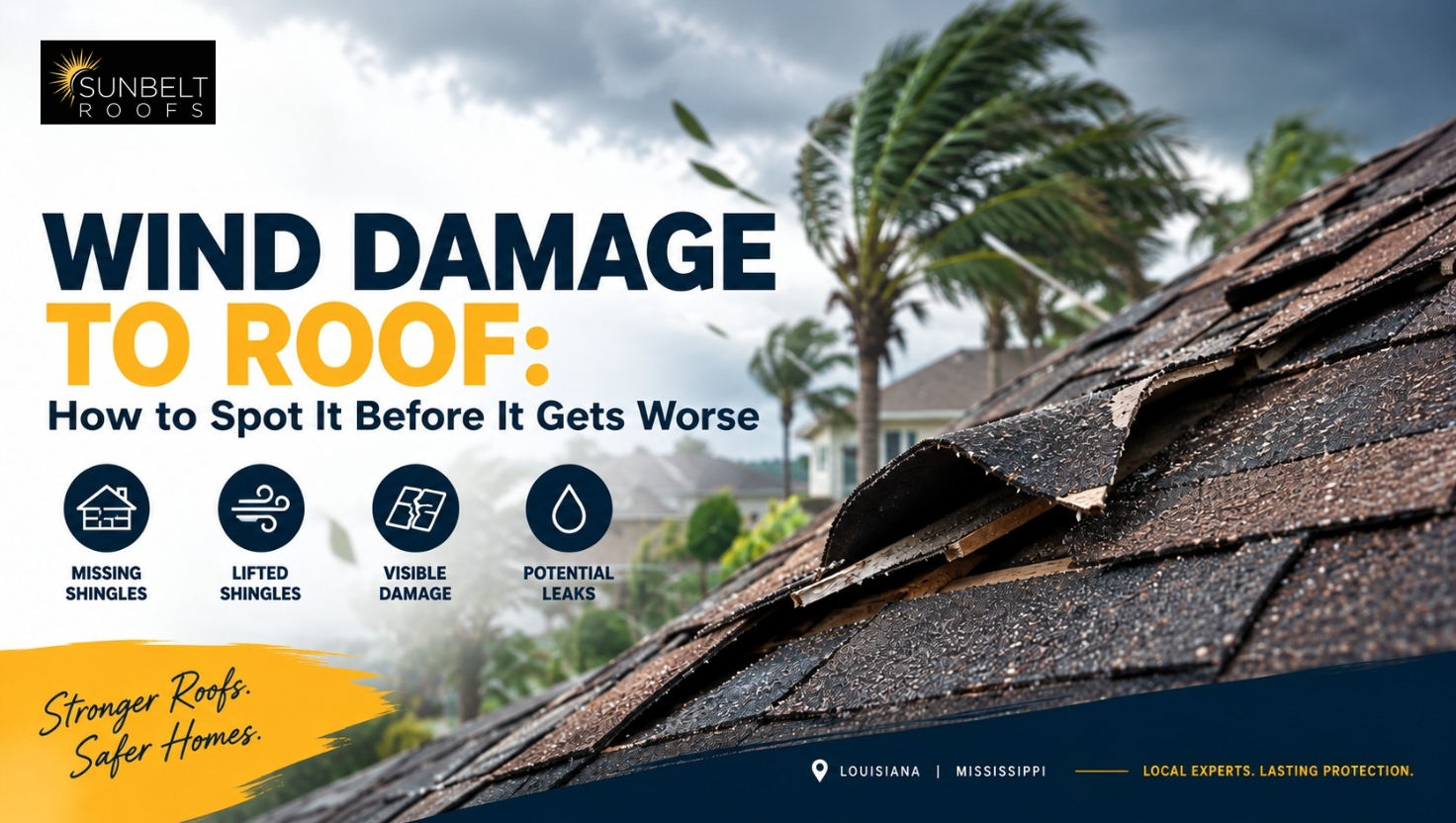
Strong wind doesn’t always announce itself with missing shingles scattered across the yard. Sometimes wind damage to roof surfaces starts small: a lifted edge here, a loosened nail there. It grows quietly until a small leak turns into a ceiling stain nobody noticed forming. Homeowners along the Gulf Coast deal with this every storm season, and the ones who catch it early are the ones who save real money.
The tricky part is that wind damage on roof systems isn’t always visible from the ground. A roof can look fine from the driveway while shingles underneath are cracked, creased, or partially torn loose. That’s why a slow walk around the property after any high-wind event matters more than a quick glance upward.
If you’re in South Mississippi and unsure what you’re looking at, a local Roofing Company in Pascagoula can walk the roof with you and point out what a homeowner might miss. Local crews know how the coastal wind patterns behave and what kind of damage they typically leave behind.
What Causes Wind Damage to a Roof
Wind pressure doesn’t push evenly across a roof surface. It creates uplift at the edges and corners first, which is why those areas fail before the center of the roof shows any sign of trouble. Once a single shingle lifts, wind gets underneath the next one, and the damage spreads faster than most homeowners expect.
Age plays a role too. An older roof with brittle sealant strips has far less resistance than a newer one, so the same storm can leave two neighboring houses with very different amounts of damage. Poor original installation, weak nailing patterns, or shingles that were never properly sealed all make wind damage to roof surfaces worse than the wind speed alone would suggest.
Common Signs of Wind Damage to Roof Surfaces
Wind rarely damages a roof evenly. It tends to attack edges, ridges, and corners first, since those areas take the brunt of uplift pressure. Knowing where to look shortens the inspection and helps you decide whether it’s a minor fix or something bigger.
Here’s what to check first after a windy day:
- Shingles that are curled, cracked, or missing entirely, especially near roof edges
- Granules collecting in gutters or at the base of downspouts
- Soft spots or slight sagging when you press on the roof deck
- Flashing around chimneys or vents that has pulled away or bent
- Exposed nail heads where shingles have shifted out of place
Any one of these on its own might not mean much, but two or three together usually point to wind damage to roof decking that needs a closer look. It’s worth walking the perimeter of the house as well, since debris patterns on the ground often hint at where the damage started.
Shingle-Level Damage Deserves Its Own Inspection
Shingles absorb most of the impact during a windstorm, and the damage isn’t always dramatic. A shingle can be creased or lifted without fully detaching, which leaves a weak point that worsens with the next storm. If you’re seeing torn tabs, exposed underlayment, or shingles that flap slightly in a breeze, it’s worth reading through this breakdown of Damaged Roof Shingles to understand what’s repairable and what isn’t.
Wind-damaged roof repair at this stage is usually straightforward. A contractor replaces the affected shingles, checks the underlayment for tears, and reseals the area. Catching it here keeps the job small and the cost low.
| Wind Speed Range | Typical Roof Impact | Likely Action Needed |
| 40-55 mph | Loose or lifted shingle edges | Spot inspection |
| 56-74 mph | Missing shingles, exposed underlayment | Targeted repair |
| 75-90 mph | Torn decking sections, damaged flashing | Repair or partial replacement |
| 91+ mph | Widespread shingle loss, structural stress | Full roof replacement likely |
How to Inspect Your Roof for Wind Damage Yourself
A homeowner doesn’t need to climb onto the roof to do a basic check. Binoculars from the ground, a walk around the foundation, and a look inside the attic cover most of what matters before calling in a professional.
Start outside. Look for shingle fragments in the yard, dented gutters, or bent vent caps, all of which point to wind damage on roof surfaces even when nothing looks obviously broken from a distance. Then move inside and check the attic for daylight coming through the decking, damp insulation, or a musty smell near the roofline.
When to Call a Professional Instead of Waiting
Some signs are worth an immediate call rather than a wait-and-see approach. Active leaks, sagging sections, or exposed decking after a storm all mean water is already getting where it shouldn’t. Wind damage roof repair delayed by even a few weeks can turn a $400 fix into a $4,000 one once rot sets into the framing underneath.
How Long It Takes for Wind Damage to Show Up
Not all wind damage on roof surfaces reveals itself right away. A shingle that’s lifted but not torn might sit for weeks before it finally tears loose in the next stiff breeze, and a hairline crack in flashing can leak only during driving rain from a specific direction. This delay is exactly why a single post-storm glance from the driveway isn’t enough.
Homeowners who skip a follow-up inspection thirty to sixty days after a major windstorm often discover wind damage on roof sections only after water stains appear on a ceiling. By that point, the underlayment and possibly the decking have already absorbed moisture, which turns a simple shingle swap into a more involved repair.
Repair or Replacement: How to Tell the Difference
Not every storm calls for a new roof, and not every repair actually solves the problem. The decision usually comes down to how much of the roof surface is affected and how old the existing roofing already is.
Wind damage roof repair makes sense when the damage is contained to a section, the decking underneath is intact, and the roof still has years of usable life left. A contractor patches the affected area, matches shingles as closely as possible, and the roof performs like normal again.
For a deeper look at how storm systems affect roofing across a wider area, this guide on Storm Damage Roof covers what adjusters typically look for during a claim inspection.
Wind damage roof replacement becomes the better option once damage spreads across multiple sections, the roof is already near the end of its lifespan, or repeated storms have weakened the decking in ways a patch can’t fix. Layering another repair onto an already-compromised roof usually costs more in the long run than starting fresh.
So how much wind damage to replace roof coverage actually requires? As a general rule, if more than 25 to 30 percent of the roofing surface shows visible damage, most contractors and insurance adjusters will recommend full replacement rather than piecemeal repair. Anything below that threshold is typically handled as a targeted repair.
Here’s a quick way to think through the decision:
- Under 15% of the surface affected: repair is usually sufficient
- 15% to 30% affected: get a professional opinion before deciding
- Over 30% affected: replacement is the more cost-effective path.
- Roof already past 15 years old: replacement often makes more sense than repair.
- Multiple storms in one season: cumulative damage adds up faster than it looks.
Insurance documentation matters just as much as the physical inspection. Photograph the damage before any tarps or temporary fixes go up, and keep records of every storm date tied to the property. Adjusters weigh timeline and evidence heavily when approving wind damage roof repair or wind damage roof replacement claims, so thorough records speed up the process considerably.
Cost also factors into the decision, though it shouldn’t be the only consideration. A partial repair that ignores surrounding wear often needs to be redone within a year or two, while a full wind damage roof replacement resets the clock on the entire system and usually comes with a longer warranty.
Homeowners frequently ask how much wind damage to replace roof coverage actually needs before an insurer will approve a full claim rather than a patch. Adjusters typically look at the percentage of affected surface, the age of the roof, and whether matching shingles are still available, since discontinued shingle lines can push a repair toward a full replacement even when the damaged area itself is small. Getting a written estimate that breaks down how much wind damage to replace roof sections would cost versus a targeted repair gives homeowners a clearer basis for that conversation with their insurance company.
A roofing contractor who inspects in person can usually answer the how much wind damage to replace roof question within the same visit, since they’re comparing the damaged area against the roof’s remaining lifespan and the availability of matching materials rather than working from a general rule alone.
Short version, for anyone who just wants the fast answer: check the roof after any wind event above 40 mph. Minor damage usually means repair. Widespread or repeated damage usually means replacement. A licensed inspector can tell you which category a specific roof falls into in a single visit, and getting that answer early is what actually saves money.
Choosing a Contractor After Wind Damage
Not every roofing crew that shows up after a storm is worth hiring. Storm season tends to attract traveling contractors who knock on doors, offer a quick estimate, and disappear once the check clears. A roof exposed to wind damage to roof decking deserves a contractor who’s licensed locally, carries proper insurance, and will still answer the phone a year later if something needs adjusting.
Ask for references from recent jobs in the same area, and confirm the contractor pulls permits when required. A legitimate wind damage roof repair or wind damage roof replacement job should come with a written scope of work, a materials list, and a timeline, not just a verbal promise and a deposit request. Manufacturer certifications matter too, since they often extend warranty coverage beyond what a standard installation includes.
Price matters, but the lowest bid isn’t always the safest choice. A contractor who underbids significantly may be cutting corners on underlayment, flashing, or fastening patterns, all of which determine how well the roof holds up the next time high wind rolls through. A mid-range quote from an established local company usually reflects the true cost of doing the job correctly.
Before signing anything, it helps to run through a short checklist:
- Confirm the contractor is licensed and insured in your state.
- Ask for at least two references from jobs completed in the last year.
- Get the estimate in writing, not just verbal.
- Check that the roofing material and labor warranty terms are spelled out.
- Avoid paying the full amount upfront, before any work has started.
Waiting until a leak shows up inside the house almost always costs more than addressing wind damage to roof surfaces early. A small repair today prevents a much larger claim later, and it keeps the rest of the roofing system from absorbing stress it wasn’t built to handle.
Preventive care extends a roof’s lifespan more than most homeowners expect. Reading through tips on how to Protect Your Home with weather-resistant materials is a useful next step if a recent storm has you thinking about upgrades.
Frequently Asked Questions
Q1: How do I know if my roof has wind damage?
Look for curled or missing shingles, granules in the gutters, and soft spots on the roof deck. A professional inspection confirms what’s visible from the ground.
Q2: Can wind damage a roof without removing shingles?
Yes. Wind can lift, crease, or loosen shingles without fully detaching them, which weakens the roof even though nothing looks obviously missing.
Q3: Does homeowners insurance cover wind damage roof repair?
Most standard policies cover wind damage, though coverage details depend on the policy, the roof’s age, and how the damage is documented.
Conclusion
Wind damage to roof systems rarely announces itself loudly, which is exactly why regular inspections matter. Whether the fix is a simple wind damage roofs repair or a full wind damage roof replacement, catching the signs early keeps the cost, and the stress much lower.