

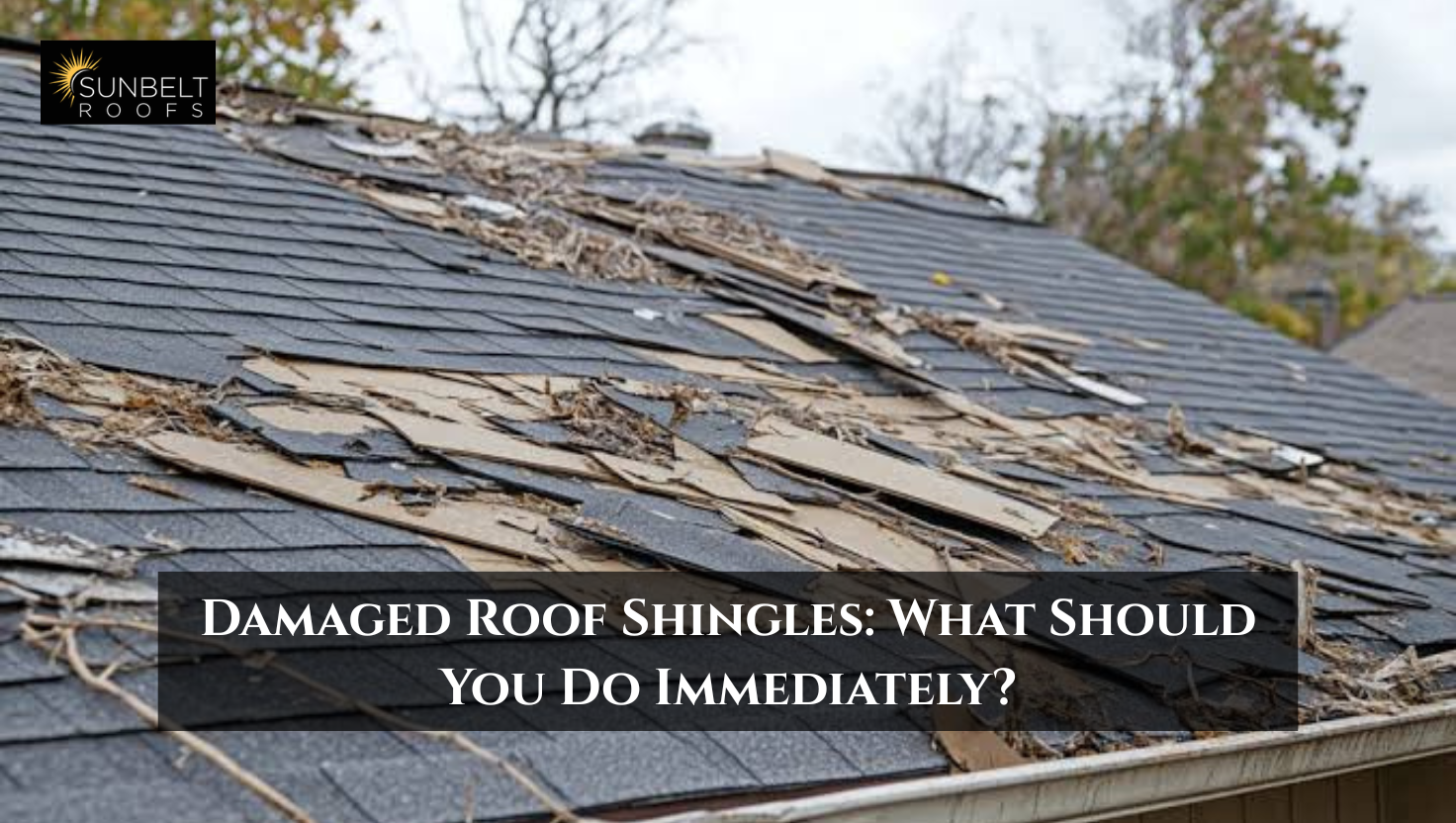
Damaged roof shingles may not look like a big deal at first, but they slowly weaken the protection your home relies on — especially with asphalt shingle roofing, where even small cracks can let water in and lead to costly repairs. Knowing the right roof shingle steps to take can reduce the impact of the damage and extend the life of your roof significantly. In this guide, we’ll walk through how to spot damaged roof shingles, what to do the moment you find them, and when it’s time to bring in a professional for roof shingle.
Signs of Damaged Roof Shingles
Prior to setting out to fix damaged roof shingles, it is better to analyze or inspect for shingle cracks and fractures before taking any action. Here’s what you should pay attention to:
- Curled or lumbering shingles
- Cracked or absent shingles
- Algae and moss blossom
- Water marks visible on walls or ceilings
Granules inside gutters Widespread routine checks on your roof can assist in dealing with any of these issues ahead of time.
Why Fixing Damaged Roof Shingles is Important
Sometimes damaged roof shingles are ignored, but procrastination can lead to more severe matters, such as:
· Water Damage and Leakage: A single crack is enough to allow water to pass through.
· Undermined Structure: A roof deck that has water over it for an unreasonable amount of time will weaken the roof structure.
· Mold infestation: At times, build-up of moisture can initiate the development of potential fungi inside the house.
· Increased Cost: The energy efficiency gets affected due to damaged roof shingles, increasing smoker stacks, and energy elevators.
Taking action early enough ensures that the issue does not escalate.
What to Do When You’ve Damaged Roof Shingles
1.Perform a Visual Inspection
Check for damaged roof shingles, such as missing or cracked shingles, at the safety of your ground level. Use a ladder for further inspection if necessary. Binoculars can provide an even more detailed view.
2.Assess the Extent of the Damage
Figure out what caused the damage first. Wind, hail, a branch that finally gave way, or just years of wear all leave different marks, and knowing which one you’re dealing with changes what happens next. A handful of missing or cracked shingles is usually a straightforward, cheap fix. Large bare patches, exposed decking, or spots that feel soft underfoot are a different story — that’s damage you shouldn’t assess on your own, and it’s time to get a professional out to look at it.
3. Apply a Temporary Fix
Can’t get to it right away? A tarp or some roofing sealant will keep water out and stop the damage from spreading until a professional can take a proper look. It’s worth doing sooner rather than later too — minor damage left alone tends to spread, and that’s usually what pushes the final repair bill higher.
4. Call a Professional Roofing Contractor
If the damage is extensive, it’s best to call experienced Roofing Contractors in Mississippi who can assess the problem accurately. Their expertise ensures safe repairs and long-lasting protection for your home.
Can You Replace a Shingle Yourself?
Replacing one or two missing shingles yourself is doable if you’re comfortable working at height and have the right materials on hand. That said, it’s not without risk — a bad seal, a mismatched shingle, or an unsteady ladder can leave you with leaks down the road, and some manufacturers will void your warranty over DIY work. Anything beyond a small, isolated fix is worth handing to a licensed roofing contractor instead.
Preventing Shingle Damage
It is better to conduct roof inspections more frequently, especially every six months.
✅ Prevent standing water by unclogging gutters.
✅ Cut branches that are likely to break and fall.
✅ Use roof coverings that are suitable to your region.
How We Can Help with Shingle Repairs at Sunbelt Roofs
We serve the entire region of Louisiana and Mississippi with professional roof repair and roof replacement service. As a trusted roofing contractor in Louisiana and Mississippi, Sunbelt Roofs makes certain that your roof is tough enough to withstand the weather elements and is durable.
Don’t Overlook Your Roof Edges
Shingles get most of the attention, but the edges of your roof do a lot of the heavy lifting too. A weak or damaged edge is one of the easiest places for wind to get a grip and start lifting shingles, and it’s often where water finds its way in first during a storm. Keeping that edge in good shape is a big part of what actually protects your home — it’s not just a finishing touch, it’s structural.
If it’s been a while since anyone checked yours, it’s worth having a professional take a look while they’re already up there for a roof edges protects your home inspection.
Conclusion
Damaged shingles rarely fix themselves, and waiting usually just turns a small job into a bigger, pricier one. Catch the signs early, take a few sensible steps to protect your roof in the meantime, and know when it’s time to hand things off to a professional. A little attention now goes a long way toward keeping your roof — and everything under it — in good shape for years to come.
📞 985-805-6921 ( Louisiana ) | 228-222-5255 ( Mississippi )
👉 Get Your Free Roof Inspection Now!
Frequently Asked Questions
Q1. How much does roof shingle repair cost?
Costs vary by damage extent, but minor repairs (a few shingles) are typically far cheaper than a full roof replacement.
Q2. Can damaged shingles be repaired, or do they need full replacement?
Isolated damage can usually be repaired. Widespread damage across the roof often points to replacement being more cost-effective long term.
Q3. How long does a roof shingle repair take?
Most minor repairs can be completed within a few hours to a day, depending on accessibility and weather.
Q4. Does homeowner’s insurance cover roof shingle damage?
Many policies cover storm or wind-related damage — check your policy details or ask your roofing contractor to help document the damage.
Q5. How do I know if my roof needs repair or replacement?
If damage is limited to a small area and your roof is under 15 years old, repair is usually sufficient. Widespread or recurring damage may signal it’s time for replacement.