

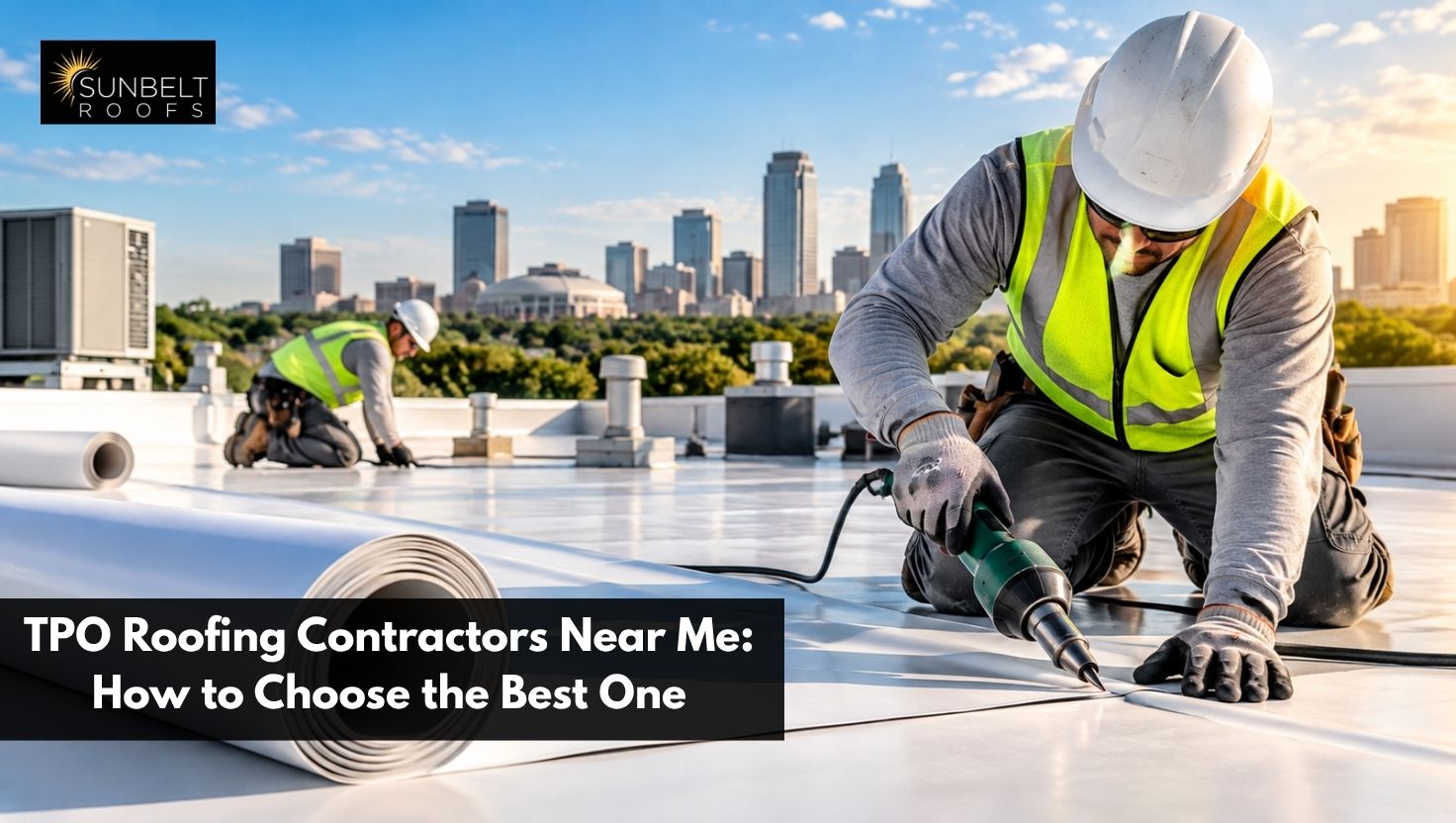
Finding the right tpo roofing contractors near me starts with knowing what separates a reliable installer from someone who just owns a heat gun. TPO (Thermoplastic Polyolefin) roofing has become the go-to choice for flat and low-slope commercial buildings because of its energy efficiency and durability. But the material only performs as well as the crew installing it, which is why contractor selection matters more than the product itself.
Poor installation is the single biggest cause of TPO roof failure, not the membrane itself. Seams that aren’t properly welded, incorrect insulation layering, or rushed flashing work can shave years off a roof’s lifespan. That’s why anyone searching tpo roofing near me should treat it as a vetting process, not a quick directory click. For a deeper look at how proper installation protects your investment, see Professional Roofing Solutions.
What Makes TPO Roofing Different From Other Commercial Systems
TPO stands apart from EPDM and PVC because it combines a reflective white surface with heat-welded seams, giving it strong resistance to UV rays, punctures, and ponding water. It’s commonly used on flat and low-slope commercial roofs, from retail centers to warehouses. If your building already has a flat or low-slope profile, our guide to Commercial Flat Roofs breaks down which systems perform best in Gulf Coast climates.
How to Search for TPO Roofing Contractors Near Me
The fastest way to find qualified tpo roofing contractors near me is to combine three sources: manufacturer-certified installer directories (GAF, Carlisle, Firestone), Google Business Profile reviews filtered by recency, and direct referrals from property managers nearby. Skip generic “roofer near me” searches — TPO installation is specialized, and a shingle crew without single-ply training can void your manufacturer warranty before the job starts.
Once you have a shortlist, narrow it further by checking how many tpo roofing companies near me actually carry manufacturer-specific certifications versus a general commercial license. A certified installer can offer extended warranties backed by the manufacturer, not just a workmanship guarantee. That distinction alone can save thousands if a seam fails years later.
Verify Licensing, Insurance, and Manufacturer Certification
Before signing anything, confirm three documents: a current state contractor license, liability plus workers’ comp insurance, and manufacturer certification for the specific TPO system proposed. If a contractor hesitates on any of these, treat it as a hard stop. Still deciding between membrane types? Our EPDM Roofing vs TPO comparison breaks down which fits different budgets and roof shapes — and how tpo roofing contractors near me typically price each option.
Compare Several Local Contractors Before You Decide
Get at least three written estimates before hiring. Pricing among tpo roofing company near me options can vary 20–30% for the same scope, and the cheapest bid often cuts corners on insulation thickness or seam-welding time. Ask each contractor to itemize labor, materials, and warranty terms separately so you’re comparing apples to apples.
Questions to Ask Before You Hire a Local TPO Contractor
A short phone call can reveal a lot about a tpo roofing company near me before you schedule a site visit. Ask how long they’ve specialized in single-ply systems, whether they handle warranty claims directly with the manufacturer, and how they manage weather delays. Vague answers usually mean a subcontracted crew, not an experienced in-house team.
Key questions to ask any TPO contractor:
- How many TPO roofs have you installed in the last 12 months?
- Are your installers manufacturer-certified for the specific brand you’re using?
- What’s covered under your workmanship warranty versus the manufacturer’s warranty?
- Do you handle permitting and inspections, or is that on me?
- Can you provide references from recent commercial clients?
Where to Find Reliable TPO Roofing Suppliers Near Me
Reputable tpo roofing suppliers near me sell directly to licensed contractors, not walk-in customers — which is actually a good sign, since it means the membrane meets manufacturer spec rather than a discounted off-brand swap. Ask your contractor which supplier they source from and confirm it’s on the brand’s approved distributor list.
Sourcing matters because membrane thickness, reinforcement, and reflectivity vary between suppliers, even within the same TPO category. A contractor working with established tpo roofing suppliers near me is far less likely to substitute materials mid-project. If your current roof is already showing wear, our breakdown of Common TPO Roof issues in humid coastal climates explains what to watch for before problems turn into leaks.
Cost Factors to Expect From TPO Roofing Contractors Near Me
Pricing for TPO installation depends on roof size, insulation type, existing roof condition, and how much tear-off is needed before the new membrane goes down. Coastal properties in Louisiana and Mississippi often need wind-uplift-rated fastening systems, which adds cost but is non-negotiable for storm resistance. A transparent contractor walks you through each line item instead of quoting a flat number.
| Cost Factor | Why It Matters |
| Roof size & pitch | Determines material and labor hours |
| Insulation upgrade | Affects energy efficiency and code compliance |
| Tear-off vs. overlay | Existing roof condition drives total cost |
| Wind-uplift rating | Required for Gulf Coast storm protection |
| Warranty length | Longer manufacturer warranties cost more upfront |
Red Flags to Watch For When Choosing a Contractor
Door-to-door solicitation after a storm, pressure to sign same-day, and refusal to provide a written contract are the clearest warning signs in commercial roofing. A legitimate contractor won’t rush your decision or ask for full payment upfront. If something feels off during the estimate, it usually is — trust that instinct and get a second opinion.
Red flags to avoid:
- Demands full payment before any work begins
- Can’t produce proof of manufacturer certification
- Offers a bid dramatically lower than competitors with no explanation
- Has no local address or verifiable business history
- Pressures you to sign a contract on the spot
Why Local Expertise Matters in Louisiana and Mississippi
Gulf Coast weather adds complexity that out-of-state or inexperienced crews often miss. A contractor familiar with local wind codes, humidity-driven seam expansion, and hurricane-season timelines designs your roof system differently than one working from a generic template. That’s the real value behind searching tpo roofing near me instead of settling for the first name that appears.
Local tpo roofing companies near me also tend to respond faster for storm damage and warranty service, since calls aren’t routed through a national center. When comparing a tpo roofing company near me against a larger regional chain, ask directly how repair requests are handled post-installation — that answer often matters more than the initial price.
Conclusion
Choosing the right tpo roofing contractors near me comes down to verifying credentials, comparing multiple bids, and prioritizing manufacturer-certified installers over the lowest price tag. A properly installed TPO system can last 20+ years, but only when the contractor behind it has the training and local experience to back it up. Take the time upfront — it’s far cheaper than fixing a bad installation later.
FAQs
Q1: How much does TPO roofing installation typically cost?
A: Most commercial TPO installations run $6–$12 per square foot, depending on insulation and wind-rating needs.
Q2: How long does a TPO roof last?
A: A properly installed TPO roof typically lasts 20–30 years with regular maintenance.
Q3: Is TPO roofing good for humid, storm-prone climates?
A: Yes—TPO’s heat-welded seams and reflective surface suit Gulf Coast humidity and wind exposure well.