

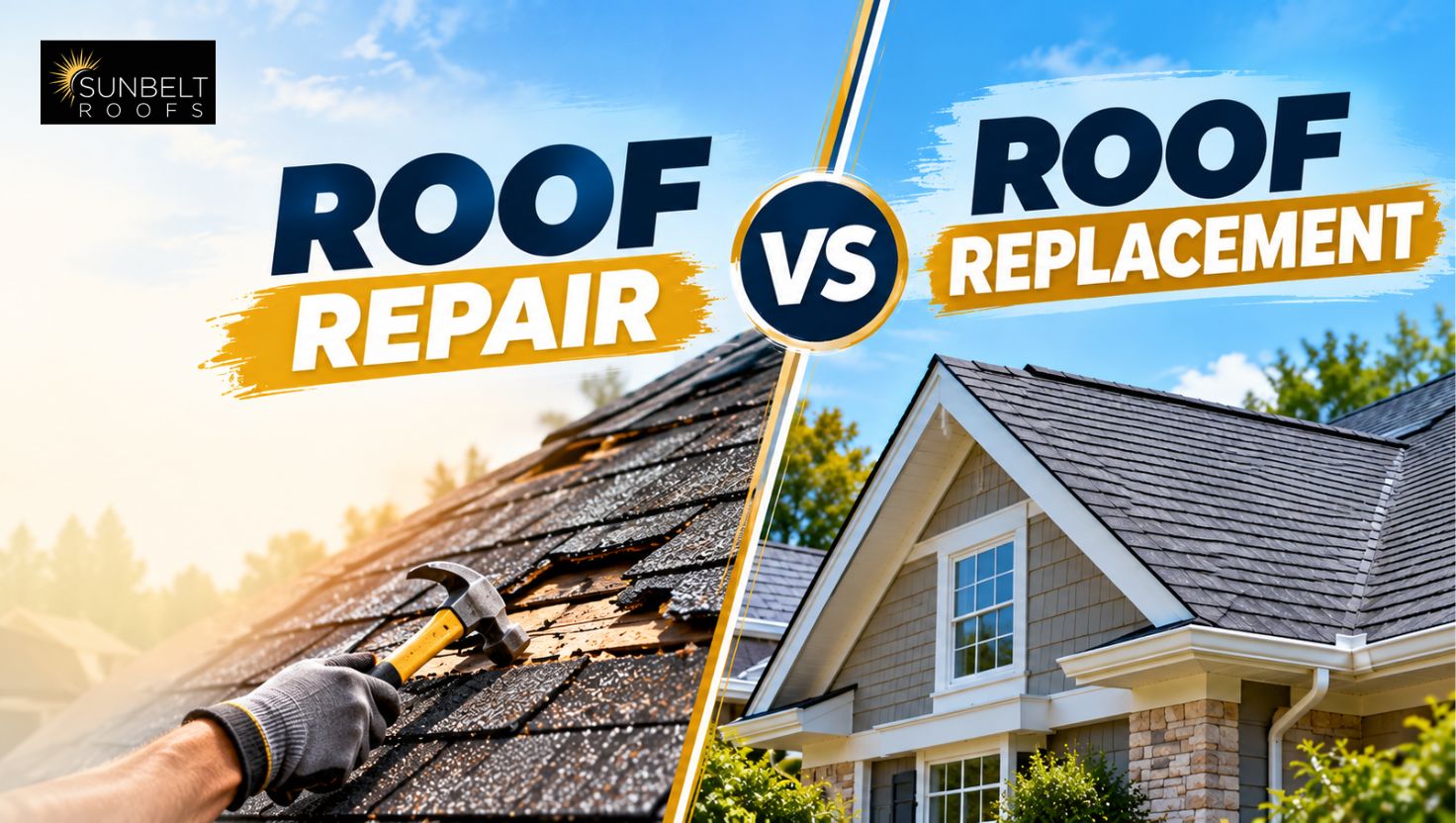
A brown stain shows up on your ceiling after a summer storm. Now you have a decision to make, and it’s usually bigger than it looks. The roof repair vs roof replacement question comes down to four things: the roof’s age, how far the damage has spread, whether the decking underneath is still solid, and what you’ll spend over the next ten years.
Here’s the short answer to roof repair vs roof replacement. Repair the roof when damage is limited to one area and the roof is under 15 years old. Replace it when problems keep coming back, the shingles are near the end of their life, or the decking feels soft. A patch on a worn-out roof only buys you time.
Roof Repair vs Roof Replacement: What’s the Real Difference?
A repair fixes one specific problem, like a few missing shingles, a cracked pipe boot, or loose flashing around a chimney. A replacement strips the old roof down to the deck and installs a new system. The only reliable way to know which one you need is a professional Roof Inspection, because most damage on a Gulf Coast roof starts where you can’t see it from the driveway.
Think of it like a car. New tires fix a flat. They won’t fix a worn-out engine. That’s the core of the roof repair vs replacement debate. (And in south Louisiana, heat and humidity age a roof faster than most people expect.)
7 Signs It’s Time for a New Roof
When it comes to roof repair vs roof replacement, some signs are easy to spot. Others hide in the attic. If you find two or more, a full replacement usually makes more sense than another round of patching.
1. Your Roof Is 20 Years Old or More
Most asphalt shingle roofs last 20 to 25 years under normal conditions. Gulf Coast weather often cuts that short. At this age, a repair fixes one spot while the rest of the roof keeps wearing out around it.
2. Shingles Are Curling, Cracked, or Missing
Curled edges and cracked tabs mean the shingles have lost their flexibility. Missing shingles after a storm are a separate issue. If strong winds peeled off a section, read about Wind Damage to Roof before you decide, because wind often breaks the seal strips on nearby shingles that still look fine from the ground.
3. Granules Are Collecting in Your Gutters
Those sandy granules protect asphalt from UV rays. Finding handfuls of them in the gutters or at the bottom of a downspout means the shingles are close to the end of their service life.
4. The Roof Deck Sags or Feels Spongy
A dip in the roofline usually points to water that has soaked into the decking. That’s not a repair job. Rotten decking has to come out, and once you’re tearing off that much material, replacement is the practical call.
5. You Have Leaks in More Than One Spot
One leak is a repair. Three leaks in two years is a pattern. Low-slope sections over porches and additions are especially prone to this, so read How to Find the Best Flat Roof Repair if part of your home has a flat roof.
6. You Can See Daylight Through the Attic Boards
Climb into the attic on a sunny afternoon and switch off the light. If sunlight gets through, so does rain.
While you’re up there, check the underside of the decking for dark streaks, stained rafters, or a musty smell. Those are signs that moisture has been getting in for a while, even if you’ve never seen a drip inside the house.
Mold on the attic side of the decking is a bigger warning than a single wet spot. It means water has been sitting long enough to grow something, and patching the shingles above won’t dry out the wood below.
7. Your Cooling Bills Keep Going Up
A failing roof lets heat build up in the attic, and your AC pays the price. If your summer bills climb with no other explanation, worn underlayment and poor ventilation could be behind it.
A poorly vented attic in a Louisiana July can pass 140 degrees. That heat bakes shingles from underneath and shortens their life, so this sign often shows up alongside curling and granule loss. When you see both together, the roof is telling you the same story twice.
What to Expect From Each Option
Knowing what actually happens on the job helps you compare quotes and spot a contractor who’s cutting corners. The two jobs look very different once the crew shows up.
What Happens During a Roof Repair
A typical repair starts with finding the source of the problem, which isn’t always where the stain appears inside. Water can travel along a rafter for several feet before it drips onto your ceiling.
Once the source is found, the roofer removes the damaged shingles, checks the decking and underlayment beneath them, and replaces what’s needed. Good crews also reseal nearby shingles and check the flashing in that area, since one weak spot often has a neighbor.
Most repairs take a few hours. You’ll usually get a short workmanship warranty on the repaired section only, not the whole roof.
What a Full Replacement Involves
A replacement starts with a full tear-off down to the wood deck. This is the moment of truth, because nobody knows exactly how much rotten decking is under there until the old shingles come off.
After any bad decking is swapped out, the crew installs new underlayment, drip edge, flashing, ventilation, and finally the new shingles or metal panels. A careful contractor will also protect your landscaping and run a magnet over the yard to pick up stray nails.
The upside is a clean slate. Every layer is new, the manufacturer warranty covers the full system, and you won’t be thinking about your roof again for a long time.
Why Gulf Coast Weather Changes the Math
A roof in Baton Rouge or Gulfport doesn’t age like a roof in Ohio. Constant humidity, long hot summers, and hurricane season all wear down materials faster than the label on the shingle bundle suggests.
Algae is a good example. Those black streaks you see on many south Louisiana roofs feed on the limestone filler in asphalt shingles. On their own they’re mostly cosmetic, but they hold moisture against the roof surface and speed up wear on older shingles.
Then there’s wind. A roof that has already lost some of its seal strength can fail during a storm that a newer roof would shrug off. If your roof is close to 20 years old and hurricane season is a few months away, waiting for the next big storm to make the decision for you is a risky bet.
Roof Replacement vs Repair Cost: How the Two Options Compare
Price is where most homeowners start, and that’s fair. The roof replacement vs repair cost gap is wide, but the cheaper option today isn’t always the cheaper option over ten years.
The table below shows how roof repair vs roof replacement compare for a typical single-family home in Louisiana and Mississippi. Your actual quote will depend on roof size, pitch, materials, and how much damage sits under the shingles.
| Factor | Roof Repair | Roof Replacement |
| Upfront cost | Low | High |
| Time on site | A few hours to 1 day | 1 to 3 days |
| Lifespan added | Fixes one problem area | 20+ years for asphalt |
| Best for | Roofs under 15 years with local damage | Older roofs or widespread damage |
| Long-term value | Drops as the roof ages | Strong, with a full warranty |
| Insurance impact | Little change | A newer roof can help with coverage |
Here’s where the roof repair vs replacement cost math gets interesting. Small patches every year or two on an aging roof add up fast. After a few rounds, you’ve spent a good share of what a new roof would cost and still own an old one.
When a Repair Makes More Sense
A repair is the smart move when:
- The roof is less than 15 years old
- Damage is limited to one small section
- The decking is dry and solid
- You’ve had only one leak in the past few years
- Matching shingles are still available
What Drives Roof Repair vs Replacement Cost
A few factors push the price of a new roof up or down:
- Roof size and pitch
- Material choice, such as asphalt, metal, or a FORTIFIED system
- How much rotten decking needs replacing
- Permits and old material disposal
- Upgrades like new vents, flashing, and underlayment
Should You Upgrade Materials When You Replace?
If you’re already paying for a tear-off, it’s the cheapest time to upgrade. The labor for removing the old roof is the same either way, so the extra cost goes only toward the better materials.
Architectural shingles cost a bit more than basic three-tab shingles but handle wind better and last longer. Metal roofing costs more upfront and can last 40 years or longer, which makes it worth a look if you plan to stay in your home for decades.
A FORTIFIED roof is another option for coastal homeowners. It adds a sealed roof deck, stronger edges, and better nailing, and Louisiana insurers are required to offer discounts on homes that earn the designation.
How Insurance Affects Your Choice
Storm damage is often covered by homeowners insurance. General wear and age usually aren’t. Some Louisiana insurers also look closely at roof age when setting premiums, so an older roof can cost you twice: once in repairs and again on your policy.
If a storm caused the damage, take photos and get an inspection report before filing a claim. In many cases, the adjuster’s findings settle the roof repair vs replacement decision for you.
Timing matters here too. Most policies set a deadline for reporting storm damage, and waiting too long can weaken your claim. Having a roofer meet the adjuster on site is also a smart move, since they can point out damage an adjuster might miss on a quick walk-through.
Making the Right Call for Your Home
Before you settle the roof repair vs roof replacement question, ask your contractor for photos of the problem areas. A good roofer shows you the damage instead of just describing it.
Ask a few direct questions too. How old do they think the roof is? How much life is left in the shingles around the damaged area? Would they repair it if it were their own house? An honest contractor won’t push a full replacement on a 10-year-old roof with one bad spot.
Get at least two quotes for any job over a few thousand dollars, and make sure each quote covers the same scope. One price might include new flashing and ventilation while another quietly leaves them out.
Don’t forget drainage. Clogged gutters and poor runoff shorten a roof’s life no matter which option you pick, and How Proper Water Flow Helps Protect Your Roof and Home explains what to look for.
Sunbelt Roofs is a family-owned contractor with GAF Master Elite certification and a 25-year labor warranty. Our team gives you a straight answer on roof repair vs replacement, even when the answer is a small fix.
Conclusion
The roof repair vs roof replacement choice isn’t about the cheapest quote. It’s about how much life your roof has left. If yours shows two or more of the seven signs above, start planning for a new one.
A small, recent problem on a younger roof? Repair it and move on. Either way, weigh the roof repair vs replacement cost over the next decade, not just this month.
Frequently Asked Questions
Q1. Is it cheaper to repair or replace a roof?
A repair is cheaper upfront. But on an old roof that needs repeated fixes, the roof replacement vs repair cost comparison often favors replacement over time.
Q2. How long does a roof replacement take?
Most homes take 1 to 3 days, depending on roof size, weather, and how much decking needs work.
Q3. Can I replace just part of my roof?
Yes, if the rest of the roof is in good shape. On an aging roof, partial replacement often leads to color mismatch and new leaks along the seams.