

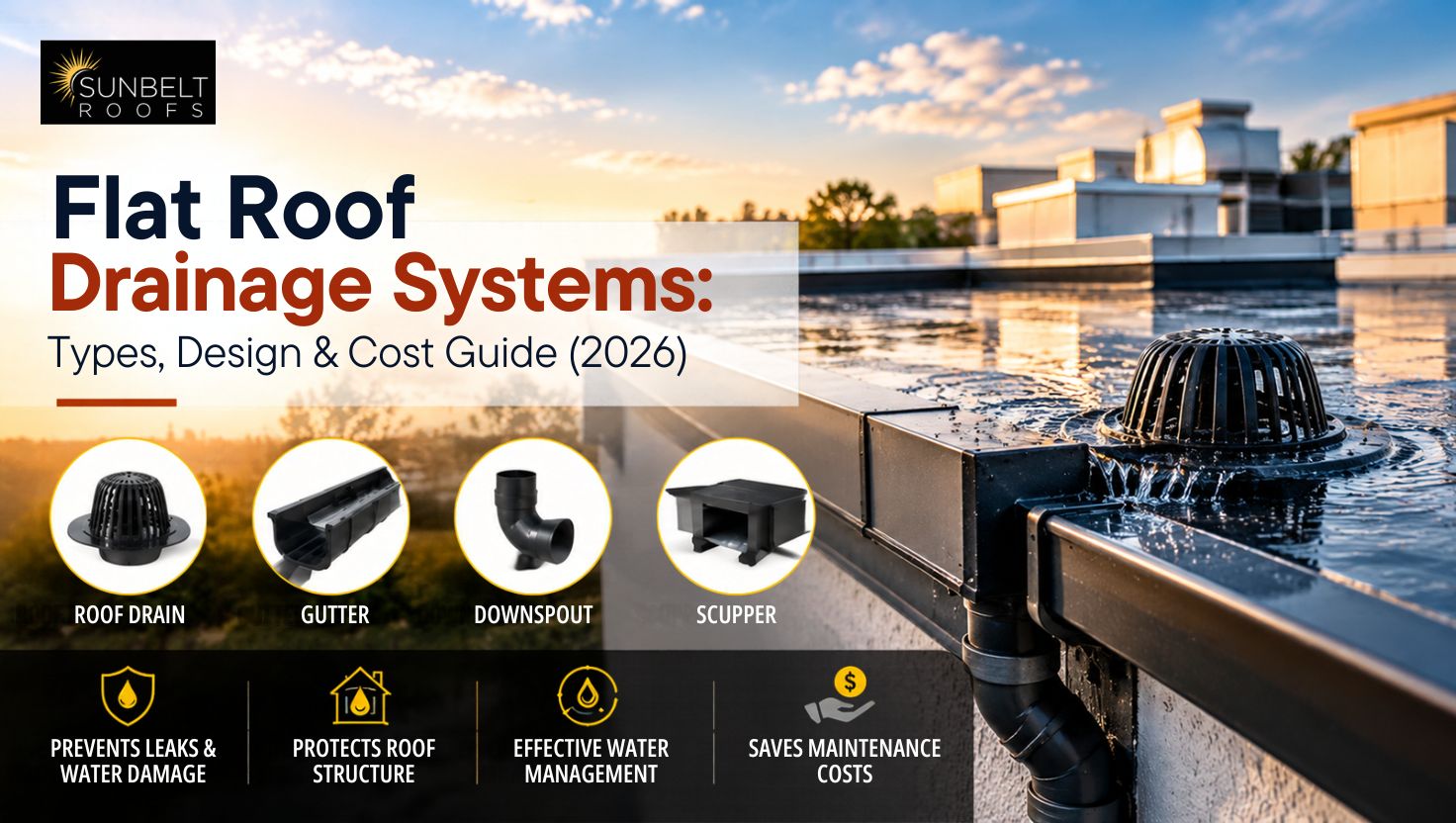
A flat roof looks simple, but it has one job a sloped roof gets for free: getting rid of water. When rain has nowhere to go, it sits, soaks in, and slowly finds its way into the decking below. That’s why good flat roof drainage matters more than most property owners realize.
Here in the Gulf South, one summer storm can drop inches of rain in an afternoon. A weak setup shows its flaws fast, usually through stained ceilings, soft spots, and puddles that never dry.
In this guide, we’ll cover the main drainage types, how slope is designed, what affects the cost in 2026, and how to keep it all working. Many homes we visit have a flat addition sitting next to a pitched tile roof, so if both sides need attention, our Tile Roof Repair Near Me service has you covered there too.
Why Flat Roof Drainage Matters
No roof is truly flat. A “flat” roof has a gentle pitch that guides water toward drains, scuppers, or gutters. When that pitch is off or an outlet clogs, you get ponding water.
Most roofing pros treat water that sits for more than 48 hours as a problem. Over time, ponding can lead to:
- Membrane breakdown from constant moisture and sun exposure
- Leaks around seams, flashing, and roof penetrations
- Extra load on the structure (one inch of water over 1,000 sq ft weighs more than 5,000 lbs)
- Algae, moss, and mosquitoes breeding in standing water
- Rotted decking and soggy insulation underneath
- Voided manufacturer warranties in some cases
Proper flat roof water drainage stops these problems early and is one of the cheapest ways to add years to a roof.
Common Types of Flat Roof Drainage Solutions
Every roof is different, so the best setup depends on the size of your roof, how it’s built, your budget, and how much rain your area gets. Below are the four options we come across most on jobs.
Interior Drains
Interior drains are set into the low spots of the roof, and the water runs down through pipes inside the building. You’ll mostly see them on commercial properties and bigger homes. The pipes stay out of sight, but a hidden leak can take longer to track down.
Scuppers
Scuppers are openings in a parapet wall or roof edge that let water spill out, often into a downspout. They’re simple and affordable. For example, a flat garage roof with a low parapet often works well with two scuppers on the low side, as long as they’re sized for heavy storms.
Gutters and Downspouts
Gutters collect water at the roof edge and send it down through downspouts. They suit roofs without parapet walls and are budget-friendly but need regular cleaning.
Siphonic Drainage
Siphonic systems use special outlets that create suction and pull water off the roof fast. They’re mainly used on large commercial roofs.
Whichever type you choose, plan it as part of the whole roof. When we put together Roof Repair and Replacement Solutions for a client, drainage is one of the first things we check. A brand-new membrane won’t last long on a roof that holds water.
How to Slope a Flat Roof for Drainage
Slope is the backbone of any flat roof drainage system. Most building codes call for at least 1/4 inch of fall per foot, which works out to about a 2% slope. That small pitch is enough to keep water moving toward the outlets.
Slope and outlets work as a team. Drains should sit right at the low points the slope creates, so water never has to fight its way off the roof.
If you’re wondering how to slope a flat roof for drainage on an existing building, there are three main methods.
Tapered Insulation
Angled rigid insulation boards go under the membrane. It’s the most common fix during a re-roof since it adds slope and insulation together.
Crickets and Saddles
Crickets are small angled build-ups that steer water around HVAC units, chimneys, or walls where ponding keeps happening.
Structural Slope
In new construction, the deck itself can be pitched. It’s the cleanest approach but rarely practical on an existing roof.
A quick tip: the day after a heavy rain, check the roof from a ladder or walk it safely. Any puddle still there after 48 hours marks a low spot. Learning how to slope a flat roof for drainage really starts with finding those trouble areas first.
How to Drain a Flat Roof: Design Tips That Work
Good design goes beyond picking a drain type. The most reliable flat roof drainage solutions combine smart outlet placement with a backup plan. Here’s what we follow on most projects:
- Place outlets at the lowest points, not just where they’re easiest to install.
- Add overflow scuppers or secondary drains in case the main drain clogs
- Size drains and scuppers for local rainfall rates, not national averages
- Give every major roof section at least one outlet.
- Install strainers or guards to keep out leaves and debris.
- Make sure downspouts discharge well away from the foundation.
For example, a 2,000 sq ft roof with one interior drain is a gamble. If it clogs, water has nowhere to go. One overflow scupper gives the roof a safety valve, and that’s why every well-planned Roof Drainage System includes a backup outlet. Knowing how to drain a flat roof well is mostly about planning for the worst storm, not the average one.
Flat Roof Drainage Cost Guide (2026)
There’s no single number that fits every roof. What you pay mostly comes down to roof size, the number of outlets needed, and the drainage type you pick. Access, the condition of the membrane and decking, and whether the roof needs added slope also play a big part.
A clogged drain is usually a quick, low-cost fix. Correcting the slope across the whole roof is a bigger job and often makes the most sense during a re-roof. Either way, ask for an on-site inspection and a written estimate instead of a quote over the phone.
Keep in mind that the cheapest option isn’t always the best value. Doing drainage right the first time costs far less than replacing rotted decking later.
Keeping Your Flat Roof Water Drainage Working
Even a good setup fails without upkeep. Clean drains, scuppers, and gutters twice a year and after major storms, and watch for cracked sealant or new ceiling stains.
On the Gulf Coast, a quick check before hurricane season is a smart habit. If you’d rather leave inspections to a local crew, Sunbelt Roofs is one of the trusted Roofers in Louisiana and Mississippi for both flat and pitched roofs.
Conclusion
A flat roof can last for decades when water moves off it quickly. The right mix of slope, outlets, and backup drains protects your structure and your budget. Whatever type you choose, the goal is the same: no standing water. Keep it clean and call a professional when ponding or leaks appear. Good flat roof drainage is a small investment that pays you back every time it rains.
FAQs
1. What is the best drainage option for a flat roof?
Scuppers or gutters work well for most homes, while bigger roofs usually need interior drains. The best flat roof drainage solutions always include an overflow backup.
2. How to drain a flat roof that already has standing water?
Start by clearing any clogged drains, scuppers, or gutters. If water is still sitting there after two days, the roof has low spots that need fixing.
3. What is the minimum slope for flat roof water drainage?
Most building codes ask for at least 1/4 inch of fall per foot. With anything flatter, water starts to pond.
4. What affects the cost to fix flat roof drainage problems?
Roof size, the type of outlet, and whether the slope needs correcting matter most. A simple clog is a small job, but reworking the slope takes more time.
5. How often should flat roof drains be cleaned?
Twice a year is a good rule, once in spring and once in fall. Give them another check after any big storm.