

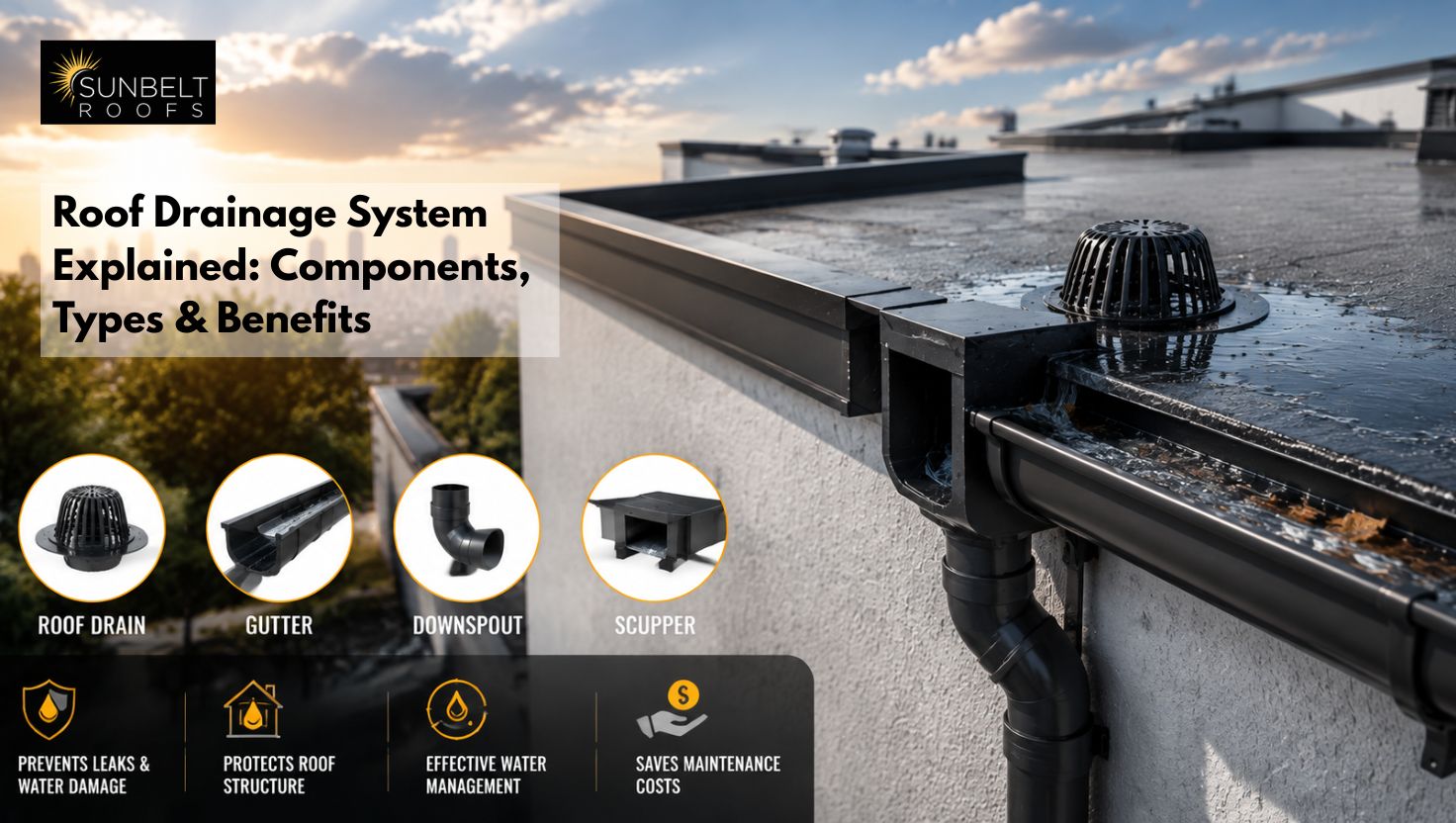
Your roof is more than a big, flat lid; it’s the front line against rain, snow, and wind. Yet a rooftop can only do its job if water is guided away from it. That’s the job of a roof drainage system. They funnel rainwater and melting snow off your roof and away from your building, saving you from leaks, mold, and pricey repairs.
We’re diving into the parts, types, and perks of these roof drainage systems design tips. Whether you have a house or a big office, knowing the basics of roof drainage helps you keep your investment safe for many years. And if you’d rather not figure it all out on your own, a trusted roofing contractor in Louisiana and Mississippi can walk you through what your specific roof actually needs.
What Are Roof Drainage Systems?
Simply put, a roof drainage system collects water and moves it away from your building. Left unchecked, rain can collect, find tiny cracks, and ice can expand. The roof may sag, the walls can crack, and the whole structure can be put in danger. This stop those problems before they can start.
The design of these systems changes based on the type of roof, whether it is flat or sloped. Downspouts and gutters are common on sloped roofs, but flat roofs typically need drains, scuppers, or siphonic systems on the inside. No matter what form, material, or climate the roof is, a good roof drainage design makes sure that water flows well.
How Does a Roof Drainage System Work?
A roof drainage system gives rainwater a controlled path off the roof and away from the building. On sloped roofs, gravity moves water toward gutters before downspouts carry it to ground level. Flat and low-slope roofs usually rely on strategically positioned drains or scuppers.
Good roof drainage design considers more than where the water enters a drain. Roof slope, rainfall volume, drainage capacity, and discharge location all matter. When these elements work together, water moves away efficiently instead of collecting in areas where it can cause problems.
Key Components of Roof Drainage Systems
Roof Gutters
These are basically the frontline defense. Installed along the roof’s edge, gutters grab rain before it goes rogue. A correctly placed roof gutter drain keeps water from streaming down brick or siding and weakening the building’s footing, and the material you pick, aluminum, steel, or copper, comes down to how much you want to spend versus how long you want it to last.
Downspouts and Leaders
Once the gutter collects water, downspouts take over, channeling it straight down and away from the building. Where you place these tubes matters; water needs to land well clear of the foundation, usually with elbows to redirect the flow and splash blocks to keep it from eroding the ground nearby. Even on a flat roof drainage system, downspouts still do the heavy lifting once water reaches ground level, carrying it away from the interior drains or scuppers just like on a sloped roof.
Roof Drains
On commercial buildings with flat roofs, interior drains are usually the go-to option, set into the lowest points and sitting behind grates that keep debris out while a network of pipes carries the water away below. A solid roof drainage detail plan sizes those pipes correctly from the start, so water never gets the chance to back up and threaten the structure.
Scuppers
Scuppers are openings in parapet walls that let rainwater escape, usually spaced at regular intervals and tied into vertical downspouts. They act as a backup, so if a main drain clogs, water still has somewhere to go instead of pooling and damaging the roof surface.
Sumps, Splash Blocks & Accessories
These small fixtures punch above their weight. A sump or splash block near the downspout softens the water’s impact and keeps soil near the foundation from washing away. Paired with the rest of the drainage setup, they’re a small addition that protects both the building and the landscape around it.
Types of Roof Drainage Systems
Traditional Gutter Systems
The most common way to drain water from a house is using built-in roof gutters. They are cheap, easy to put up, and work well on most sloped roofs. With the right roof gutter drain in the right spot, the system sends precipitation to the ground without spilling, which helps keep siding, wall finish, and landscaping dry and safe.
Inner Roof Drains
Inner roof drains are built right into commercial and industrial flat roofs. Water enters through drain strainers, then moves down vertical pipes hidden inside the roof. This kind of roof drainage design maintains the membrane free of ridge guards, which makes the system small, effective, and not too busy to look at.
Scupper Systems
Scuppers add extra protection where roof designs include parapet walls. Water drains through these openings to the outside, stopping ponds from forming. Besides the functional benefit, scuppers create lines that can lift a roof’s skyline, balancing form with water control. On a lot of commercial buildings, scuppers end up working alongside a broader flat roof drainage system rather than replacing it, catching the overflow when the main drains can’t keep up.
Primary vs. Secondary Roof Drainage Systems
Commercial and low-slope roofs may use both primary and secondary drainage. The primary system handles normal rainfall through roof drains, gutters, or scuppers. Secondary—or overflow—drainage provides another path for water if the primary outlet becomes blocked or rainfall exceeds its capacity.
This extra layer of protection can be particularly important on roofs surrounded by parapet walls. Without an adequate overflow route, accumulated water can place additional weight on the roof structure.
A complete roof drainage system design should therefore consider:
- Primary drain locations and capacity
- Emergency overflow drains or scuppers
- Roof slope toward drainage points
- Potential debris and blockage areas
- Safe discharge locations away from foundations
Siphonic Drainage Systems
Siphonic systems are a breakthrough for large commercial buildings. Instead of relying on gravity, these drains create a pressure difference that rushes water to vertical pipes. Smaller pipes save on material and labor costs, sawed even drill-free layouts are reduced, and peak data on roof water is turned into design.
Benefits of Efficient Roof Drainage Systems
A carefully engineered roof drainage system design delivers value well beyond redirecting water.
Prevents Structural Damage: Guiding water off keeps walls, ceilings, and foundations dry, avoiding future repair shock.
- Extends Roof Lifespan: Standing water speeds up the roof’s disintegration, which makes it last longer. An excellent roof drainage detail will make the roof last longer.
- Improves Safety: Hidden, irrelevant, no puddles to refreeze, and no ice dams to languish inside either.
- Enhances Curb Appeal: A roof that drains right usually clears a well.
- Supports Property Value: An attractive, well-functioning roof can lift a home’s market appeal at first glance.
Roof Drainage Detail: Key Design Considerations
Great roof drainage system design doesn’t just happen; it’s carefully planned. Here are the key points to nail in the design phase:
Roof Slope & Load Capacity
If your roof drainage design is flat, expect to invest in extra drainage planning versus a pitched roof. Base calculations assure that the roof can temporarily hold all the rainfall until the system kicks in and the water leaves.
Flat Roof Drainage: Why Ponding Water Matters
A flat roof drainage system is designed to move water toward designated drainage points even though the roof may appear completely level. In practice, flat roofs normally incorporate a slight slope that encourages water to travel toward drains or scuppers.
When water remains on the roof for extended periods, it is commonly described as ponding water. Persistent ponding can increase stress on roofing materials and expose weak seams, flashing, and penetrations to moisture for longer periods.
A well-planned flat roof drainage plan should identify low points, drain locations, overflow routes, and the path water will follow during heavy rainfall.
Local Climate
Heavy rains or snow? You’ll need bigger drains and extra downspouts. Areas exposed to hurricane winds, like Louisiana and Mississippi, call for extra reinforcement against flying debris and high water. This is exactly why so many homeowners in the region are pairing their drainage upgrades with fortified roofing services Mississippi — it’s one thing to move water off the roof, it’s another to make sure the roof itself can take a direct hit from a storm.
Building Codes & Regulations
Following state and local drainage codes is non-negotiable. It keeps your project safe and your budget free from fines down the road. Skilled contractors can stamp and lay out systems that meet both levels of the law.
Maintenance Access
Every roof drainage system should be easy to clean and check. Access points in the design help save things from getting stuck and costing a lot of money.
Roof Drainage System Sizing
Correct sizing is one of the most important parts of drainage planning. A drain or gutter that works during light rain may struggle during a severe Gulf Coast storm.
Roof drainage capacity can depend on the total roof area, local rainfall intensity, roof configuration, number of outlets, gutter dimensions, downspout capacity, and applicable building or plumbing requirements.
This is why roof drainage system sizing should be based on the individual property rather than simply copying dimensions from another building. Larger roof areas and locations exposed to intense rainfall may require additional or higher-capacity drainage points.
Choosing the Right Roof Drainage System
There’s no one-size-fits-all;’s a balancing act of:
- Type of Building: Gutters are often helpful for residential dwellings, but siphonic drains may be needed for big commercial buildings.
- Budget: Standard gutters are cheaper upfront, but siphonic setups can lower life-cycle costs on big boxes and factories.
- Aesthetic Appeal: Modern buildings might want systems that are hidden or mix seamlessly with the architecture.
- Professional Advice: A good roofing crew with real experience in Gulf Coast weather will catch drainage issues most people miss, and get the install right the first time so it actually holds up for years.
Residential vs. Commercial Roof Drainage
Residential and commercial buildings often require different drainage strategies.
Residential roofs commonly rely on gutters and downspouts because pitched roof surfaces naturally move water toward the edges. The main objective is to collect that runoff and discharge it far enough away to protect siding, landscaping, and foundations.
Commercial roof drainage systems, particularly on large low-slope roofs, may use internal drains, scuppers, overflow drains, or siphonic drainage. Larger surface areas mean drainage capacity and outlet positioning become especially important during intense rainfall.
Regardless of building type, the right roof drainage system should account for roof geometry, expected rainfall, drainage capacity, maintenance requirements, and local conditions.
Advanced Drainage and Fortified Roofing
Storms are getting harder to predict, and drainage alone can’t always keep up. That’s why more homeowners and businesses in Mississippi are pairing their drainage planning with a stronger roof overall, not just better gutters and drains. Combine that with a well-designed drainage system , and you get a roof that can actually stand up to heavy rain and wind-driven storms instead of just managing the water after the fact.
For businesses, combining drainage systems with commercial roof installation makes sure that big buildings are up to code, work well, and last a long time.
Common Roof Drainage Problems to Watch For
Even a well-designed system can lose effectiveness when debris, damage, or poor maintenance interrupts water flow. Property owners should watch for:
- Standing or slow-draining water
- Gutters overflowing during rainfall
- Leaves and debris around roof drains
- Loose or disconnected downspouts
- Water stains near ceilings or exterior walls
- Soil erosion near downspout outlets
- Damaged drain strainers or covers
- Water collecting near parapet walls
Catching these warning signs early can prevent a minor roof drainage problem from developing into a larger roofing or moisture issue.
Maintenance Tips for Roof Drainage Systems
Great roof drainage systems can’t sit and hope. Give them the basics, and they pay you back:
- Check those gutters and downspouts for clogs. Do it at the start and end of each season.
- Sweep out debris right after storms and strong winds.
- Look at slope and alignment; keep them as the plans showed.
- Seal any leaks right away, or your roof might start leaking.
- Book a pro check at least once a year for the complete review.
Roof Drainage System Inspection Checklist
A quick visual inspection can help identify developing drainage problems before the next major storm.
| Area to Check | What to Look For |
| Gutters | Leaves, sediment, sagging or standing water |
| Downspouts | Blockages, loose joints and poor discharge direction |
| Roof drains | Debris around strainers and slow drainage |
| Scuppers | Obstructions or visible deterioration |
| Flat roof surface | Ponding water and unusual low spots |
| Flashing | Cracks, separation or moisture entry |
| Discharge area | Soil erosion or water returning toward the building |
Inspections are especially useful after severe weather because wind can move leaves, branches, and other debris directly into drainage paths.
Reliable Residential & Commercial Roofing solutions help protect properties with durable roofing systems designed for long-term performance and changing weather conditions.
Conclusion
To protect your house or company, you need roof drainage systems that are well-designed and well-maintained. There are many types of systems, such as gutters, downspouts, siphonic, and scupper designs, that all work together to move water away from your property. You may safeguard your roof and make your whole building last longer by focusing on roof drainage system design and including the proper roof drainage detail.
If you’re a homeowner in need of a dependable roof gutter drain or a business owner developing a cutting-edge roof drainage design, Sunbelt Roofs has the know-how to protect your investment for many more seasons to come.
FAQs
Q1: Where can I get advice on roof drainage systems?
Call up a local licensed contractor like Sunbelt Roofs. They can walk on the roof and tell you what’s actually wrong versus what can wait.
Q2: What are common roof drainage solutions for flat roofs?
Mostly interior drains, scuppers, or siphonic setups. These roof drainage solutions cover almost every flat roof situation out there.
Q3: What is a flat roof drainage plan?
It’s the layout behind where water goes, slope, drain spots, pipe sizing, all of it. Skip a proper flat roof drainage plan and you’re pretty much guaranteed a leak eventually.
Q4: How do I know if my drainage system is failing?
Puddles that won’t drain, a roof deck that feels spongy underfoot, ceiling stains near the roofline. Any of these means it’s time to look closer.
Q5: How often should roof drains and gutters be cleaned?
Twice a year is the baseline. Add another check after any storm that dumps a lot of debris.