

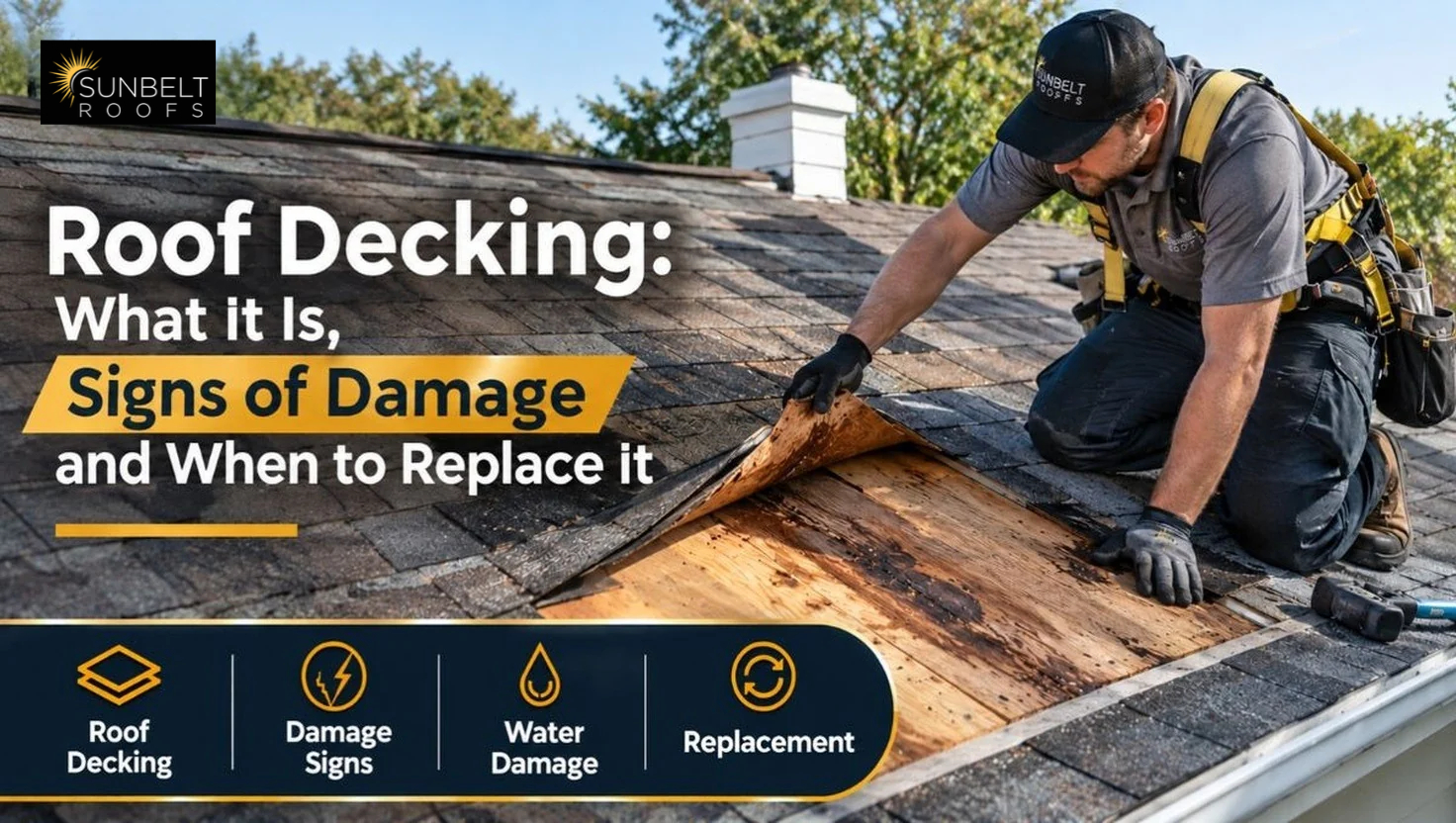
Most homeowners think about shingles when they think about their roof. That makes sense, since shingles are the part you can see from the driveway. But the layer underneath them does a lot more of the heavy lifting.
That layer is roof decking. It is the solid base that holds your shingles, underlayment, and flashing in place. If it gets weak or rotten, even brand-new shingles will not protect your home for long.
In this guide, we explain what decking is, the common materials used, the warning signs of damage, and how to know when it is time to replace it instead of patching it.
What Is Roof Decking?
So, what is it in plain terms? It is the layer of boards or panels nailed directly to your rafters or trusses. Everything else on the roof sits on top of it. You rarely see it unless you go into the attic or a crew tears off the old shingles during a full Roof Replacement Service.
Think of it like the subfloor in your house. Nobody notices it, but it carries the weight. The deck does the same job for your roof, spreading the load of shingles, rain, and foot traffic across the frame.
A solid deck also gives nails something firm to grip. When the wood is soft or warped, shingles lose their hold, and that is when wind starts lifting them.
Roof Decking Types and Common Materials
There are several roof decking types used on homes and commercial buildings across the US. The right roof decking material depends on your roof design, local climate, and budget.
| Decking Type | Best For | Typical Lifespan | Key Point |
| Plywood | Most homes | 30 to 40 years | Strong, holds nails well |
| OSB (Oriented Strand Board) | Budget-friendly homes | 20 to 30 years | Affordable but swells when wet |
| Plank (Board) Decking | Older homes | Varies | Common in houses built before the 1970s |
| Metal Decking | Commercial and low-slope roofs | 40+ years | Very durable, fire-resistant |
Plywood and OSB
Plywood and OSB are the most common choices for homes today. Plywood handles moisture better and dries faster. OSB costs less, but its edges can swell if water sits on them.
In humid areas like Louisiana and Mississippi, that difference matters. Many contractors prefer plywood for homes that see heavy rain and storm-driven moisture.
Plank Decking
Older homes often have plank decking, which is solid boards with small gaps between them. Those gaps can cause trouble with modern asphalt shingles, so roofers often add new sheathing on top during a replacement.
Metal Roof Decking
This option is usually made from corrugated steel panels. You will mostly find it on warehouses, schools, and other commercial buildings with flat or low-slope roofs. It is strong, does not rot, and handles fire well, which makes it a practical long-term pick for commercial owners.
If you live in a storm-prone area, the way the deck is fastened matters as much as the material. Programs like Fortified Roofing Services use ring-shank nails and sealed deck seams to help the roof hold up against high winds.
Signs of Roof Decking Damage
Decking problems usually start small and stay hidden. Water slips past a damaged shingle and slowly soaks into the wood. By the time you notice anything inside, the damage has often spread.
Here are the most common warning signs to watch for:
- A sagging or wavy roofline when you look at the roof from the street
- Soft or spongy spots that a roofer can feel when walking on the roof
- Water stains or dark spots on the attic ceiling or the underside of the boards
- Daylight showing through the boards when you stand in the attic
- Mold, mildew, or a musty smell in the attic space
- Shingles that keep blowing off in the same area after every storm
One quick tip: grab a flashlight and check your attic after a heavy rain. Look for damp wood, drips, or fresh stains. It takes ten minutes and can save you thousands of dollars.
Small issues are much easier to catch when someone checks the roof on a schedule. Regular Professional Roof Care Services can spot loose flashing, clogged gutters, and minor leaks before water reaches the wood underneath.
What Happens During a Roof Decking Inspection
A proper inspection is the best way to know the real condition of your roof. A good roofer will look at the deck from both sides.
From the attic, they check for stains, rot, mold, and light coming through. On the roof, they walk the surface and feel for soft spots, paying extra attention to valleys, chimneys, and vents.
Keep in mind that the full deck is only visible once the old shingles come off. That is why most roofers quote a price per sheet, so you know the cost of any rotten boards found during tear-off.
Aim for a professional check once a year and after any major storm. In the Gulf South, that habit pays off.
When Should You Replace Roof Decking?
Not every damaged board means you need a whole new deck. If the rot is limited to a few sheets, a roofer can cut out the bad sections and install new ones. This is common during a re-roof.
Full replacement makes more sense when the damage covers a large part of the roof, the roof sags in more than one spot, or mold has spread through the boards. It is also the right call when you are installing a new roof and the old wood can no longer hold nails properly.
For example, a homeowner calls about a small leak over the kitchen. The roofer finds it has been there for two years and the wood around it has gone soft across several feet. Patching the shingles alone would be wasted money.
If you are unsure which way to go, our guide on roof repair vs roof replacement walks through the main factors, including roof age, cost, and the extent of the damage.
Tips to Make Your Roof Decking Last Longer
A little upkeep goes a long way. The goal is to keep the wood dry and well ventilated.
Keep your gutters clean so water does not back up under the roof edge. Make sure the attic is well ventilated, since trapped heat and moisture rot boards from below. Trim overhanging branches and replace cracked shingles quickly.
It also helps to ask your contractor what decking material they plan to use and how thick it is. A thicker panel resists sagging better and gives nails a stronger grip.
Choosing the Right Roofer for the Job
Replacing damaged decking is not a DIY project. It involves working at height and lining up new boards with your rafters, and a small mistake can lead to leaks.
Look for a licensed, insured roofer with solid local reviews, and ask how damaged wood is priced in your quote. If you are starting your search, our article on finding a New Roof Near Me explains what to look for and which questions to ask before you sign anything.
Conclusion
Your shingles may take the weather, but the deck underneath is what holds your roof together. Knowing the different decking options, watching for signs like sagging or soft spots, and scheduling regular checks can help you catch problems early. When the damage is limited, a few new sheets may be all you need. When it is widespread, replacing the deck as part of a new roof is the safer and smarter long-term choice for your home.
Frequently Asked Questions
1. What is roof decking made of?
In most homes, it’s plywood or OSB. If your house is on the older side, you might find solid wood planks up there instead. Commercial buildings usually go with steel panels.
2. How long does metal roof decking last?
If it’s installed right and looked after, you can expect 40 years or more. It won’t rot like wood does. Still, it’s worth having someone check now and then for rust or loose screws.
3. How often should I schedule a roof decking inspection?
Once a year works for most homes. Also book one after any big storm. If you live near the Gulf Coast, a second check during hurricane season is a smart idea.
4. Can damaged decking be replaced without replacing the whole roof?
Yes, and it happens all the time. If the damage is only in one spot, the roofer pulls up the shingles there, swaps out the bad boards, and puts new shingles back on top.
5. Which roof decking material is best for humid climates?
Plywood usually comes out ahead. It dries out faster after rain and doesn’t swell as easily as OSB, so it tends to last longer in hot, sticky weather.