

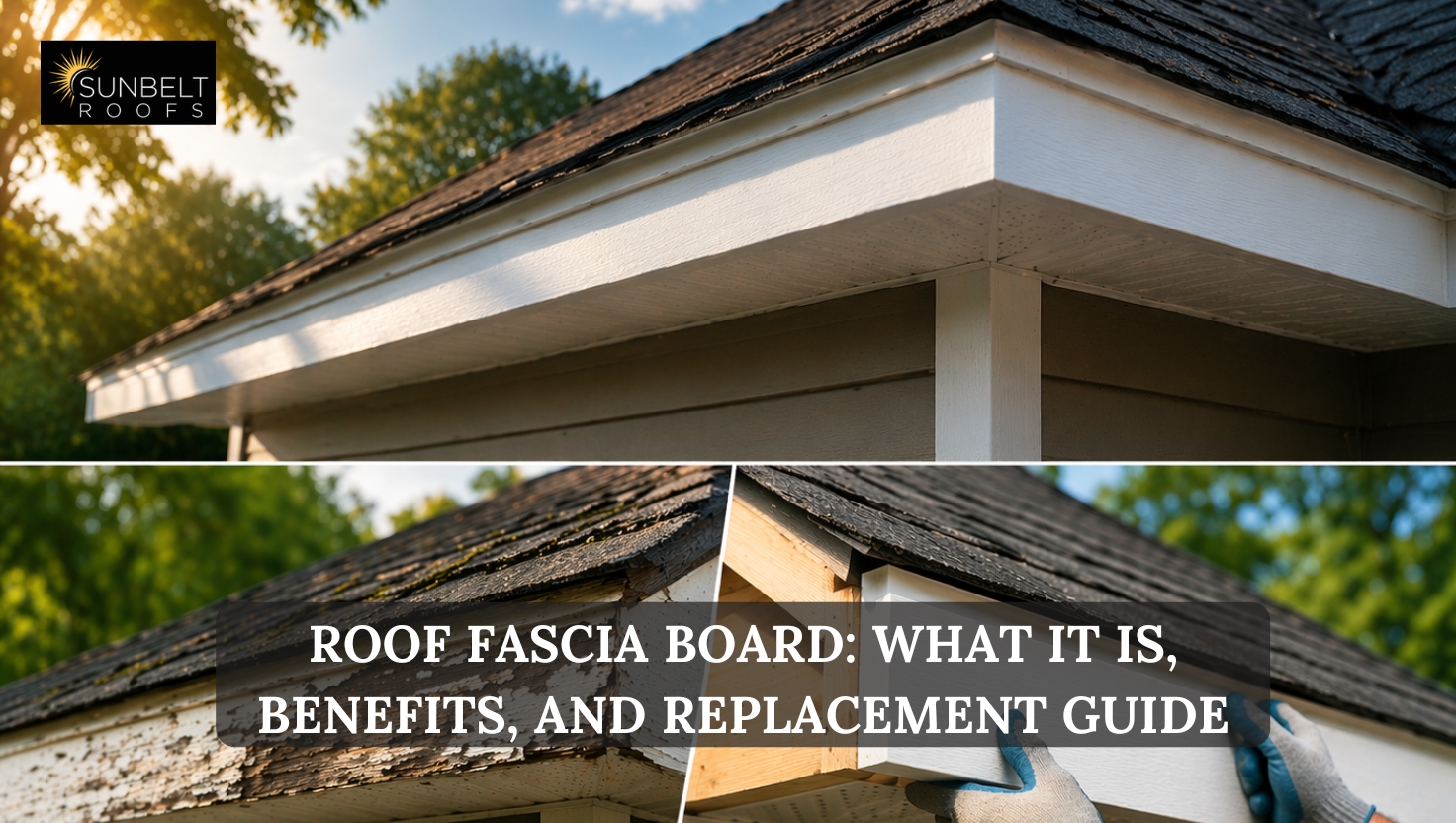
The roofline of your house does a lot more than just shape your home. It protects everything below it, including your home’s roof fascia board, which most homeowners neglect. Fascia boards are horizontal boards that are placed at the edge of your fascia board roof, and along with the gutters, they help keep moisture and pests away from the roof’s structure. Knowing what roof fascia boards do and when they require repairs can save homeowners from more expensive repairs.
What Is a Fascia Board?
For those wondering what is fascia board and what role it plays in the roofing system, here’s the answer: it is the flat, horizontal board that sits at the edge of the roof and at the ends of the rafter. It is what makes the roof overhang. It is also where your gutters are attached. Fascia boards are distinct from other Types of roofing materials, and so is their role in keeping the roof system functional.
The roof fascia board works in combination with the soffit, which is the horizontal panel that occupies the underneath side of the overhang. Together, the soffit and fascia serve to seal the edge of the roof and so provide a barrier against wind, rain, and pests. Without a good fascia, that entire protective layer is compromised.
Why the Roof Fascia Board Matters
A well-maintained roof fascia board does far more than finish off the fascia board roof aesthetically. It plays an active role in protecting your home:
- Water protection — Closes the gap between the roof deck and the wall, preventing water intrusion into the structure
- Gutter stability—Gutters attach directly to the fascia; a rotting fascia board means gutter sagging, leaking, or detaching
- Pest barrier—Rodent, avian, and insect access are provided by a fascia board forming the front edge of the roof structure
- Structural support — Binds the rafter tails together, reinforcing the roof edge against wind and other weather loads
- Visual finish—A clean, painted fascia creates a sharp, finished look to the roofline as viewed from the street
Common Fascia Board Materials
There are various fascia board options and each can be evaluated based on various metrics, which can include durability, aesthetics, and maintenance (frequency of replacement):
- Wood — the traditional material and most flexible, susceptible to rapid deterioration, and great aesthetic imperative to paint every few years
- uPVC / Vinyl — great for modern construction; don’t need to deal with rotting
- Aluminum — will not break down due to moisture, will be lightweight, and will last a long time
- Composite — synthetic wood fibers that will resist moisture and rotting but will appear to be ‘real’ wood.
It can be beneficial to discuss material options with a professional, as each choice has a different lifespan and price.
Signs You Need Fascia Board Repair or Replacement
Fascia boards provide early warning Signs You Need a New Roof, just as roofs do. Look for the following indicators:
- Soft or spongy texture: This indicates rot has already set in and the board has give when pressed.
- Peeling or bubbling paint: This indicates moisture is migrating under the finish.
- Sagging or pulling gutters: This indicates the fascia is unable to support the load the gutters place on it.
- Cracks or open gaps: This indicates the structure is open to incursion of water and pests from above.
- Dark staining or mold patches: This is a sign the board has prolonged moisture problems.
Typically, the area around fascia board repair is localized damage. Full roof fascia replacement is a better alternative when deterioration has hit multiple areas. It’s reliable and cheaper in the long run.
Fascia Board Installation: Step by Step
Whether you’re completing a targeted roof fascia repair or a full roof fascia replacement, the fascia board installation process follows the same core sequence:
- Removing the gutters: Carefully remove them and keep them for reuse if they are still in good condition.
- Removing the fascia: The old fascia should be cleanly ripped from the end of the rafters. Make sure you do not damage the trim in the process.
- Inspect the rafter tails: Repair any rotting wood. If there are newer boards, they will be rotted too and need to be replaced.
- Measure and cut new boards: The new boards should be cut to precise lengths to be flush with the roof.
- Nail and seal: First the boards are to be secured. Then make sure the caul of the joints and the surface are painted and reminded.
- Reattaching the gutters: This should be at the right angle for the new roof fascia board to allow for proper drainage.
If the fascia board repair is only for a short section, you only do the steps related to that section. Just remember that you have to inspect and fix the rafter damage as the last step.
Maintaining Your Fascia Long-Term
With Practical Solutions for Long-Lasting Roofing Protection as the goal, consistent upkeep makes a significant difference:
- Ensure gutters are cleared of debris at least two times a year to prevent water from overflowing onto the fascia.
- Try to repaint or reseal wooden fascia every three to five years to keep moisture from penetrating.
- After a heavy storm, check the perimeter for new cracks, stains, or sagging.
- Ensure attic ventilating is functioning to control the condensation from the eaves.
- Prune any overhanging or scraping branches from the roof.
Conclusion
The roof fascia board is the unsung hero of the house. When it fails, it can wreak havoc on the gutters, roof, and interior of the home. Do regular maintenance to keep the fascia board in good condition, and make good choices regarding the materials for the fascia boards. This way you can better assess fascia replacement costs and set a budget to avoid any unpleasant pitfalls.
FAQs
Q1: How long does a roof fascia board last?
Regular maintenance of wooden fascia can last 10-20 years. Vinyl and aluminum have an advantage as upkeep is generally not as frequent so they can last up to 50 years.
Q2: When should I repair vs. fully replace the fascia?
Fascia board repair is the best option if damage seems to be contained in a single area. If the damage is extensive and affects several parts of the fascia, a full roof fascia replacement is necessary.
Q3: Is the fascia the same as the soffit?
No, soffit and fascia are completely different. Fascia is the vertical board at the edge of the roof and soffit is the horizontal board that is below the overhang.
Q4: Can I replace the fascia myself?
Although small patches can be DIY projects, the full fascia board installation, especially when it involves rafter damage, should be done by a qualified roofing contractor.