
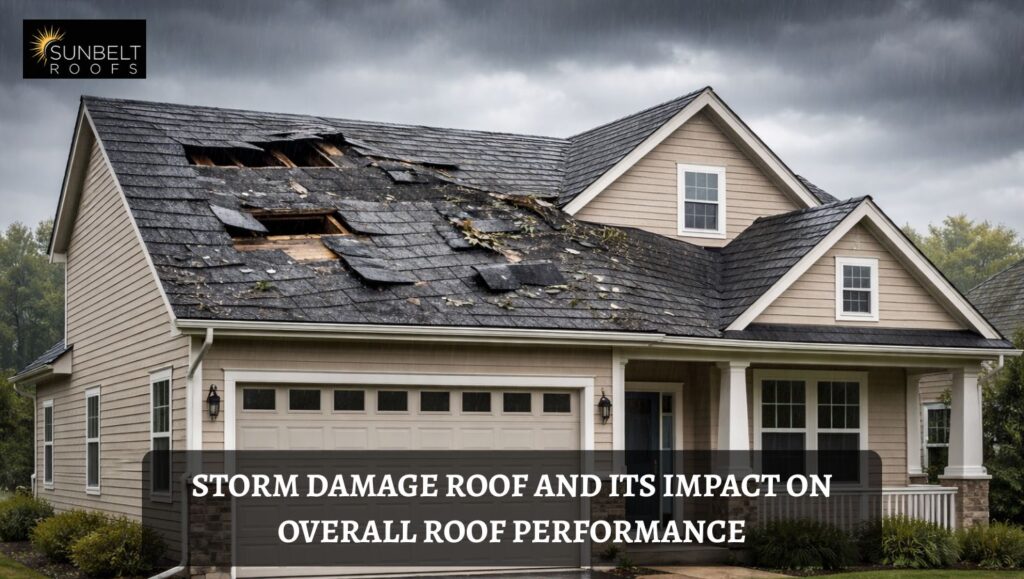
A roof system’s strength and reliability can be heavily affected by severe weather events. A storm damage roof may not always show immediate visible signs, yet hidden issues can gradually weaken overall roof performance. High winds, heavy rain, hail and flying debris can all cause compromise to the roofing system, resulting in the removal of the roof system and in structural stress. Unattended, a storm damage roof can make the systems lose durability, increase energy loss, and increase long-term safety concerns for the owners of the property.
It is essential to understand the impact of storms on roofing systems for the protection of vertical assets both at residential and commercial levels.
Understanding Storm Damage to Roofing Systems
Many property owners ask what is considered storm damage to roof structures after extreme weather. Storm damage can be missing or lifted shingles, cracked flashing, punctures due to debris, loss of granules, and water penetrating due to driven winds and rain. Many times, a storm damage roof can appear stable. However, internal components, like the underlayment or decking, may already be compromised.Delayed deterioration is another aspect of storm-damaged roof conditions. Moisture trapped under surface materials can slowly weaken roof systems. Knowing what a storm damaged roof allows owners to prevent problems from escalating while preserving roof function.
Delayed deterioration is another example of what is considered storm damage to roof conditions. Moisture trapped under surface materials can weaken the roof system. Knowing what is considered storm damage to roof helps prevent damage from getting worse and helps save roof performance.
Common Indicators of a Storm Damage Roof
Homeowners often miss the early signs of a storm damage roof after inclement weather. Visual signs include the uneven laying of shingles, head nails, and the roof sagging. The undersides of the roof can tell the story of a deeper issue with water stains and insulation that is too damp.
Some of these signs can be confused with the signs of a leaking roof, so assessing the damage to a storm damaged roof is essential. The sooner these symptoms are recognized, the less likely a serious decay is to follow.
How Storm Damage Roof Affects Overall Roof Performance
When storm damaged roof are unattended to, they can damage a lot more than the outside of the roof. Structural integrity is the first victim because the materials that are harmed are the ones that keep the roof intact. Enemy number one is moisture, and it gets to the insulation, the thing that helps keep your energy use down and helps your home stay at a consistent temperature.
In the long run, the damage to the storm damage roof starts aging the materials faster than they should be, and a roof that should be able to offer quality protection can now offer little to none. This means increased maintenance that is likely to be more expensive than before, and the roof will likely even lose years off of its expected lifespan.
Why Storm Damage Roof Inspection Matters
The first step after experiencing significant damage is to schedule a storm damage roof inspection. These inspections help to locate and detail damage to a roof that is not able to be seen from the ground or from just a general overview. These inspections allow for action to be taken, and on the roof before these minor issues become larger and more expensive issues.
Great, consistent, storm damage roof inspections provide useful data for long-term planning. Regular inspections can help create other planning issues or elaborate to create and schedule a long-term action plan for the roof overall, from small proactive measures to larger structural measures, to help maintain the overall roof and the building it is covering.
Storm Damage Roof Repair vs Replacement
When Storm Damage Roof Repair Is Suitable
In many cases, damage that a roof suffers can be repaired instead of having to replace the whole thing. A roof can be repaired by storm damage roof repair through the fixing of certain localized problems such as missing and/or damaged shingles, and loose flashing through targeted storm damage roof repair. The covering of these repair areas, and doing it in a timely manner, will help keep the roof waterproof and will help stave off moisture from rotting from the inside.
When Storm Damage Roof Replacement Is Required
In severe cases, a roof must go through a storm damage roof replacement and must be done. Repeated storms, structural failure, and, or failure of the materials from a long-term storm damage roof replacement cycle, and/or structural deterioration of the roof materials is a sign that a roof is in need of a complete storm damage roof replacement. A storm damage roof replacement adds to the roof’s long-term performance and structural integrity. Replacing a roof should have a professional service reviewed before the owner attempts to do it themselves. A professional can provide a more aligned structure to what is needed such as a Dedicated Roof Replacement Service.
Key Benefits of Timely Storm Damage Repairs
To avoid costly damage, repair problems as soon as possible. Repairs for storm damage to roofing, insulation, decking, and interiors are protective. Storm damage repairs that are delayed create issues like mold, inefficiency, and costly restorations. Storm damage repairs of high quality assist in roof functioning well in future weather.
Timely storm-related repairs typically help prevent:
- Moisture issues in roof insulation and decking
- Progressive structural weakening
- Loss of energy efficiency due to compromised materials
- Escalation of minor damage into major roof failure
Roof Storm Repair and Restoration Process
This begins with a detailed assessment of affected areas for professional roof storm repair. During storm repair of roofs, damaged sections are removed, and others are strengthened to provide a protective performance. Completing roof repairs promptly minimizes exposure to future storms and stabilizes the roof system. A well-executed storm repair for roofs increases reliability.
Finding Reliable Storm Damage Repair Near Me
When looking up storm damage repair near me, take experience, and knowledge of the area into account. Knowing the area’s climate is essential for creating storm damage repair solutions. Of the many storm damage repair near me options, dependable craftsmanship is the best to understand and meet the repair needs of the environment. Reliable storm damage repairs near me often help maintain better roof performance instead of providing cheap and quick solutions.
Working with a Trusted roofing contractor in Louisiana and Mississippi will meet the local construction code and the weather related issues.
Preventing Future Storm Damage Roof Issues
Preventive maintenance significantly reduces recurring storm damage roof problems. Routine inspections, proper drainage, and durable materials enhance resistance to severe weather. Investing in advanced solutions for Long-Lasting Roofing Protection further strengthens the roof against future storms.
Regular maintenance reduces the chances of some roof storm damage occurring again. Inspection frequency, water flow, and the quality of the materials improve weather resistance. Advanced solutions for Long-Lasting Roofing Protection can further improve storm resilience.
Conclusion
If a storm damage roof is left for too long, its performance will decline. From learning the type of storm damage affecting the roof to setting up inspections to identifying repairs, proactive management is required. A roof’s storm damage should be addressed in a way that retains its performance for a long time, as a result of timely repairs, quick replacements, and professional inspections.