
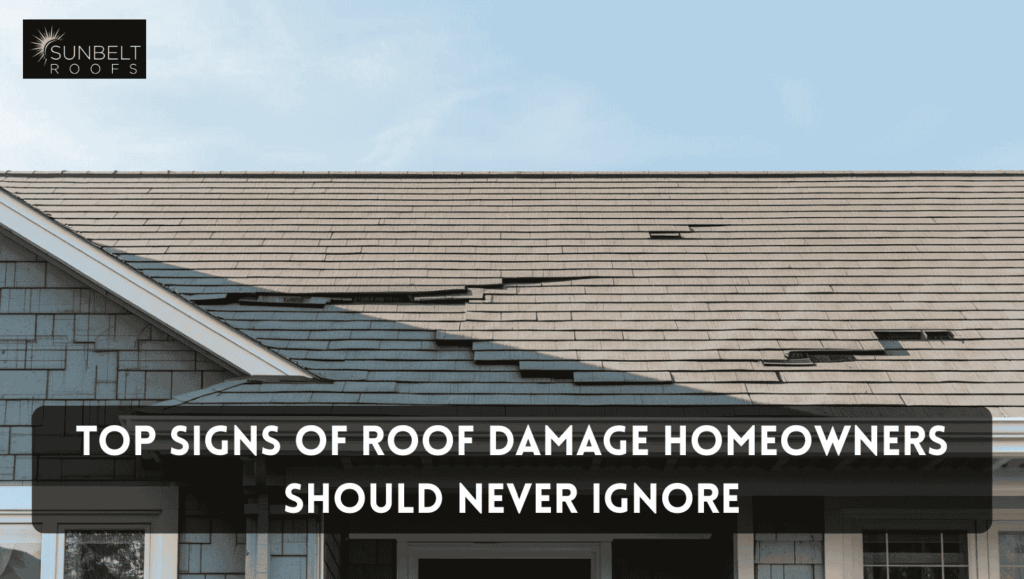
Roofs are often the most overlooked as far as the home’s structure goes, but they are probably the most important. Problems can quietly worsen if not taken care of. Being able to recognize signs of roof damage early on can help homeowners minimize the risk of long-term structural damage, expensive repairs, and even damage to the interior of the home. Knowing what damage to the roof looks like can help protect the property and add years to the lifespan of the roof.
Reasons for not Ignoring Roof Damage
Visible damage to the roof does not happen all of a sudden and often happens due to the weather, materials that age over time, and drainage that is not adequate. If the signs of roof damage are ignored, moisture will spread under the surface and lead to rot, mold, and insulation failure and, over time, can impact the safety, comfort, and value of the home.
Common roof damage can be seen from the outside.
Missing or Damaged Roof Shingles
Missing roof shingles are an obvious sign of roof damage. Roof shingles help protect the roof from rain and strong sunlight. If shingles are missing, the other roof components that protect the house and other structures below the roof layer are exposed and can be damaged. This damaged roof layer can cause major types of roof damage. Natural storms, strong winds, and other weather-related damage can cause missing roof shingles.
Cracked or Split Roof Materials.
The shingles on the cracked roof are a warning that something is wrong. Roof siding can get cracked for various reasons, including changing temperatures, the sun, and old roofing materials. Even little cracks can get bigger and allow water to get inside the roof layers, which can be costly and damaging to the rest of the house. If you get a lot of cracked roof, that can make bigger problems and point to even more fatigue of roofing materials or problems related to problems with the original roof installation.
Loss of Granules on Shingles
The shingles on your roof are supposed to have granules on them. If there are granules on the grass or road or in your gutters, it is a signs of roof damage. Granules help to protect the shingles from getting damaged. If the shingles are missing granules, they get older much faster, and roofing problems like leaks or cracks on the roof occur.
Interior Warning Signs of Roof Damage
Signs of Roof Damage: Water Stains on Ceilings and Walls
Water stains on ceilings and walls are one of the most classic signs of roof leak. These stains tell us that water has already entered the interior and is crawling through the roof layers. This is one of the most obvious signs of roof damage damage and one that should be dealt with immediately.
Signs of Roof Damage: Peeling Paint and Bubbling Drywall
Paint that is peeling or drywall that is bubbling is a pretty telltale sign that moisture has been trapped behind walls. These changes on the interior are strong signs of roof leak and sometimes develop along with many other signs before signs of active dripping have developed. Ignoring these signs will damage the interior and spread to other areas with soft rot.
Signs of Roof Damage: Sagging Ceilings or Soft Spots
Houses with these conditions have a ton of signs of a bad roof or have areas that are pretty soft to the touch. These are severe signs of a bad roof and often indicate prolonged moisture exposure and a weakened structure. Moisture-compromised ceilings will have many types of roof damage developed and will require a professional to have a look.
Hidden Signs of Roof Damage Homeowners Often Miss
Mold or Mildew Growth
The trapped moisture behind the roof is usually the cause of the growth of mold in the attic space or near the corners of the ceiling. This is one of the most hidden signs of roof damage and is often the result of leaking roof damage that goes unnoticed. Mold will deteriorate the materials it grows on and will make the previously stable indoor air quality unsafe.
Wet or Damaged Insulation
Wet or packed insulation is less energy efficient and results in spending more on utilities. Homeowners who experience increased energy costs may have unexplainable internal types of roof damage that allow air and moisture to pass through the roof system.
Weather-Related Deterioration of Roof
Severe Weather-Related Deterioration Storms, Wind and Hail
Severe weather is a primary contributor to roof deterioration. Excessive wind can lift shingles, and hail may fracture the roof. Following severe weather, homeowners should check their signs of roof damage.
Heat and Long-Term Sun Exposure
Constant exposure to the sun can dry out roof materials and make them more brittle, resulting in increased chances of a cracked roof. Excessive sun exposure on a roof is one of the most underestimated severe types of roof damage, especially in warmer climates.
Structural Warning Signs of a Bad Roof
Uneven Roof Lines or Sagging Areas
These changes are often indications of moisture intrusion signs of a bad roof in the structural components below. Structural movement should always be evaluated.
How Roof Cracks Keep Coming Back
If cracked roof have been repaired, and they keep coming back, this is one of the most telling signs of a bad roof. Persistent cracks reflect possible deep structural issues, and like a leaking roof, they should never be ignored. For a deeper understanding of how professional roofing care helps protect homes from long-term risks, you can explore this detailed guide on protecting your home with expert roofing solutions, which explains why timely action plays a critical role in roof longevity.
How Roof Cracks Result in Bigger Issues
Musty odors, damp attic insulation, and active dripping signs of roof leak. Water is often invisibly spread out, meaning widespread damage is likely. Wood rot, electrical issues, and signs of roof leak are ignored, making these early signs very important to identify.
Effects of Left Ignored Roof Issues
Ignoring the initial signs of roof damage leads to small, simple repairs becoming large, major restoration projects. With more hidden damage and more repairs needed, costs become higher, and the projects take longer. Lost value in the property is also a consequence of this inaction. Proactive identification of the early signs of roof issues enables homeowners to take action in order to ensure that these problems do not compound. A reliable option for addressing these concerns is exploring a proven roof repair solution that focuses on identifying damage early and restoring roof performance before issues escalate.
Frequently Asked Questions (FAQs)
How can homeowners identify early signs of roof damage?
Homeowners can identify early signs of roof damage through regular inspections and watching out for early warning signs such as minor cracks, slightly warped shingles, or stains.
What kinds of roof damage happen most often?
Missing shingles, moisture damage, surface cracking, and sagging are all types of roof damage most likely to occur.
Are all signs of a bad roof visible from outside?
Not all visible signs of a bad roof are outside. Most will develop first inside the attic or the insulation and may even remain undetected until you are inside your home.
Can a cracked roof cause interior damage?
A cracked roof damages the interior of your home. Moisture gets inside and leads to mold, stains, and weakened materials.
When should signs of a roof leak be addressed?
Signs of roof leak should always be addressed immediately to avoid damage and loss of more costly repairs.