
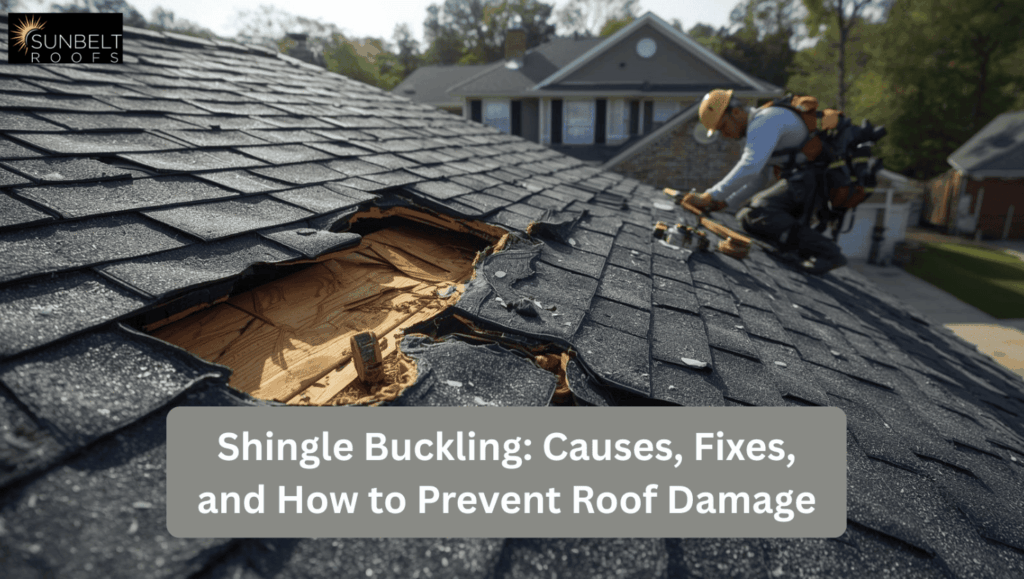
Shingle buckling is when shingles get distorted and look as if they are wavy, lifted, or raised along the roof. Homeowners are often faced with this problem on newly roofed houses as well as older ones, most commonly in areas with a lot of heat and humidity or storms in the fall and summer. Because this problem influences how a roof looks and functions, it is important to understand how to repair and manage this issue. This page outlines the most common causes of roof buckling, repair, and long-term prevention.
Understanding Buckling Roof Shingles: How It Looks and Why It Happens
Buckling roof shingles create ripples over the roof and can create distinct patterns that are sometimes diagonal or vertical. Homeowners can often see the uneven pattern lines that can also include areas that are raised or look to be shingles that are pulled away from the roof. These shingles should not be confused with blistering and curling, which have to do with heat, or the shingles simply aging and cracking.
When shingles visibly lift or wrinkle, it is a strong hindrance. These issues are often due to material misplaced underneath, moisture building up, or mistakes made when the shingles are installed. These tend to be bigger issues that are being skipped to be addressed.
Main Causes of Shingle Buckling
1. Poor Ventilation & Moisture Trapping
Moisture trapped inside the attic can push shingles upward from below. Poor ventilation leads to high humidity, mold formation, and wood rot — all of which contribute heavily to roof buckling causes.
2. Underlayment Problems
Underlayment issues occur when there is installation wetness before placement or during installation. Wrinkling or swelling of the membrane occurs. Damp underlayment instigates roof buckling and is an uneven roofing line creator. This is one of the most common roof buckling causes seen on both old and new roofs.
3. Improper Installation Techniques
Some of the immediate and long-term consequences include damage from incorrect nailing patterns and the use of inadequate materials. Roof bucketing is noticeably formed from different roof sections, as shingles are fastened loosely or not at all.
4. Aging Roofing System
All roofs weaken and absorb moisture with time, making the materials more vulnerable to roof buckling.
5. Structural Movement or Warped Decking
Shingle lines rise or shift when the roof decking droops under excess moisture and shingle buckling. Poor attic airflow, humidity, and leaks can all cause the deck to push its shingles up and warp with moisture.
Unsightly Roofs With Newly Installed Buckling Shingles
Surprisingly, new roof buckling shingles are more common than homeowners expect. This primarily stems from shingles and how they are installed. Shingles that are installed before adjusting to outdoor temperatures, shingles that are installed over moisture that hasn’t dried, and shingles that are installed over uneven sub-roofs all contribute to feeling the wrath of the buckling shingles.
Rushing the New Roof Installation process can result in misaligned shingle rows, wrinkled underlayment, and premature deformation. These mistakes increase the chances of developing new roof buckling shingles within the first year.
Another overlooked cause is improper storage. If shingles absorb moisture while packaged or kept in humid conditions, they may distort shortly after installation. This often explains why homeowners see new roof buckling shingles even when the materials seem brand-new.
How Shingle Buckling Can Damage Your Roof Over Time
Not all roofing system problems are cosmetic. There are several other systems that can become weak and closed in:
- The roof support system may experience cyclical flooding. Water seeps under the shingles.
- The lifespan of the roof system is shortened, or its aging is accelerated.
- Reduced insulation leads to the growth of mold and rot in the attic’s insulation layer.
- The home as a whole will become less efficient and use more energy.
- There will be above-average and unexpected costs in the future for roof system repairs or replacements.
The complexity of the problem will increase and disrupt several other systems.
How to Fix Shingle Buckling (Step-by-Step Guide)
Inspect the Decking and Underlayment
The first thing that can be repaired is to take away the insulation layer of the roof and, along with that, the shingles. From above, take a look at the parts of the roof that are folded. Please document the underlayment systems and underlayments present on the subsurfaces of this area.
When the roofing decking has underlayment systems, swelling, and moisture, the underlayment systems present are the most common problems when shingles are buckled. Repair these first before restoring the shingles on the roof.
Improving Roof Ventilation
To mitigate moisture buildup in the roofing system, it is vital to add soffit vents, ridge vents, and attic fans to improve moisture and air circulation to alleviate the chance of bending in the future.
Repairing Affected Shingle Sections
For full, even rows of shingles, the best move is to perform targeted removal and repairs. Extract the bending/displaced shingles, tend to any moisture issues, and reinstall the shingles lined properly and secured in the correct order. This is a perfect opportunity to pursue a professional Roof Repair Solution to prevent future issues.
When Full Replacement Is Required
If there is a lot of bending of shingles in an area, and if the decking, or the wood underneath the shingles, is damaged, then it is best to pursue a full Roof Replacement Service. This will allow you to install new layered roofing and offer the chance to install proper flat vents, underlayment, and moisture removal.
Prevention Tips: How to Avoid Shingle Buckling in the Future
Preventing bending in shingles in the long term is best achieved through methods like
- Making sure the attic is ventilated properly all year round
- Making sure shingles are flat and dry before they are placed on the roof
- Making sure the underlayment is verified and is smooth, dry, and placed correctly
- Making sure the roofing professionals are qualified to perform installation and inspection.
Following these steps helps eliminate common roof buckling causes and reduces the chances of recurring issues.
When to Call a Roofing Professional
Visible rippling, lines of shingles that are lifted, and moisture damage are all red flags for homeowners. We do not recommend conducting inspections yourself, as this could be dangerous and may lead to higher costs in the long run. Usually, it is an unprofessional installation that is the cause of shingles buckling.
Conclusion: Protect Your Roof from Buckling Shingles
Being able to recognize the root causes, symptoms, and solutions makes it easier for the homeowner to address shingle buckling before it begins to affect the roof structurally. Some symptoms include improper installation, moisture build-up, or simple aging. Homeowners can take timely action to retain a stronger, safer roofing system. If you find the signs of distortion, think about getting professionals involved for New Roof Installation, Roof Repair, or Roof Replacement for enduring safety and performance.
FAQs
Q1. Can buckling be fixed without replacing the entire roof?
Sure. Repairs are able to be done economically in most cases.
Q2. Does the shingle warranty cover buckling?
This is usually a yes or no type of question. If there is a material defect or poor installation, it will usually be a no.
Q3. Is shingle buckling dangerous?
This is an effortless yes. Water will penetrate the roof, leading to even more issues, such as mold or rotting of the wooden structure.
Q4: Can elevated thermal conditions bend shingles?
Distortion may occur due to prolonged heat exposure and a lack of proper ventilation.