
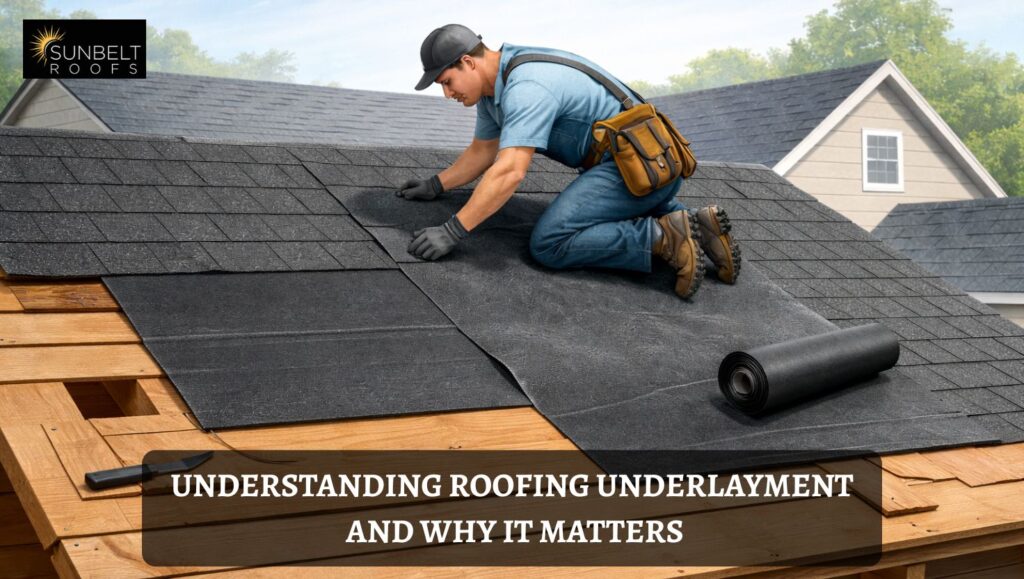
When people think about roofing, they usually think about the shingles or metal panels that go on top of them. However, one of the most important roofing components is hidden from sight. Roofing underlayment provides a protective barrier between the surface of the roofing deck, and the outer roofing. This protective barrier keeps the decking safe from leaks and moisture damage, as well as the long-term structural damage that can occur as a result of leaks. Even the toughest roofing materials can fail without underlayment.
Underlayment can also help roof performance in certain areas, such as places where there is a lot of rain, high winds and rapid temperature changes. Knowing where to use underlayment, the different kinds available, and knowing when it has to be replaced can help the homeowner make smarter decisions when roofing.
What Is Roofing Underlayment?
Roofing underlayment is installed as a protective layer on top of the roof deck before any shingles, tiles, or metal roofing go on. Most underlayment will offer some type of water protection, but underlayment acts as a secondary protective barrier. This means it will help protect the decking if the outer roofing layer becomes damaged or displaced.
Unlike visible roofing materials, underlayment handles moisture exposure efficiently. It protects the roof deck from rain during the installation, and guards against condensation, rain, and minor leaks during the lifetime of the roof. One of the reasons why the underlayment for roofing is of the utmost importance is to ensure that the entire roofing system functions properly.
Why Underlayment for Roof Systems Is Essential
Every roof in the world will face some environmental stress, and underlayment for roof installations helps add an extra line of defense. It helps combat moisture before it gets to the wooden decking underneath, and is especially crucial in places where the weather is stormy and/or humid, and where temperatures fluctuate frequently.
Properly installed underlayment for roof structures also improves the roof’s resistance to wind uplift along and stops water from leaking in through the nail penetrations. For customers looking for advice and installation of underlayment with a Trusted roofing contractor in Louisiana and Mississippi, it is recommended that selected underlayment and placement of the underlayment be done in compliance with the climate and industry standards.
Waterproof Roof Underlayment and Moisture Protection
In regions that experience ice build-up and torrential rain, using waterproof roof underlayment gives you better protection than using traditional materials. Waterproof Roof Underlayment products provide watertight seals that keep moisture from getting to the roof deck, even when the top roofing layers are compromised.
High-grade waterproof roof underlayment products are especially great for low-slope roofs, valleys, and chimney/vent areas. It provides an extra layer of protection from leaks. It also prevents and protects roof space from the damage of mold, rotting wood, and deteriorating insulation. For homes located in more extreme weather, waterproof roof underlayment products are an excellent way to maximize roof life.
Exploring Different Roof Underlayment Types
Different roof underlayment types help property and homeowners optimize their roofing systems. Each of the distinct types, when combined with a specific budget, roof design, and climate, provides a unique set of advantages.
The three most Roof common underlayment types are:
- Asphalt-saturated felt, recognized for low cost and basic moisture protection.
- Synthetic underlayment, recognized for durability and longevity.
- Self-adhering membrane, typically used as a waterproof barrier for problem areas.
All roof underlayment types are unique and require professional help to achieve the best results when installing or replacing.
Selecting the Best Roof Underlayment for Your Property
There are several factors to consider when choosing the best roof underlayment for your roof. These factors include the slope of the roof, the type of roofing materials to be used, the underlayment manufacturer’s recommendations and the prevailing climate. For example, a roof with a steep slope and dry climate may do well with a synthetic roof underlayment, whereas a roof in a humid and stormy climate would benefit from a higher grade overall underlayment.
The best roof underlayment that offers a good combination of durability and water resistance will be most effective. For best results, major renovations and upgrades to the insulation, sheathing and/or the roof deck should be evaluated professionally. If your project scope includes a total roof replacement, consult with a roof replacement service to ensure the best roof underlayment is used for the overall roof system.
Installation Timeline and Roofing Coordination
One of the most critical steps in the roofing process is the installation of the roofing underlayment. It is placed after the deck of the roof has been constructed, and before the final roofing material goes on. Weather and exposure are critical, as underlayment will only be effective for a short period of exposure.
Having a good grasp on the overall installation process will greatly assist roof underlayment scheduling. To understand the overall time it will take a roofer to complete the roof, it is best to refer to the resource: How Long Does It Take to Install a Roof? With proper scheduling, the roofing underlayment will not be compromised.
Signs Your Roof Underlayment May Need Replacement
Although underlayment is hidden, its failure often leads to visible warning signs. Water stains on ceilings, persistent leaks, or damp insulation may indicate compromised roofing underlayment. Aging roofs are particularly vulnerable, as underlayment materials can deteriorate over time.
Upgrading roofs and replacing old underlayment helps avoid new structural damage. New signs can cause old damage that can be very expensive to fix, so at the time of signs replacement and inspection is very important to the longevity of the roof.
Industry Perspectives on Roofing Protection
As roofing materials are upgraded, there are more protective systems to be used. Experts from the industry understand that a more protected roof will be more durable. Gradients and layers to roofing more greatly improve the longevity of the roof. To learn about the right materials to use to improve the performance of the roof and the aesthetic of the roof, refer to the book Strong and Stylish Roofing.
Conclusion: Why Roofing Underlayment Is a Smart Investment
Even if the roofing underlayment itself is not visible, it is of the most vital components that make a roof durable. It contributes to the roof’s overall performance and more to the structural stability of the roof.
Homeowners can better protect their materials as long as they have knowledge of the various types of underlayment, can recognize the signs of wearing, and collaborate with seasoned specialists. Having good underlayment helps prevent losses, and investments made today can give a lot of peace.