

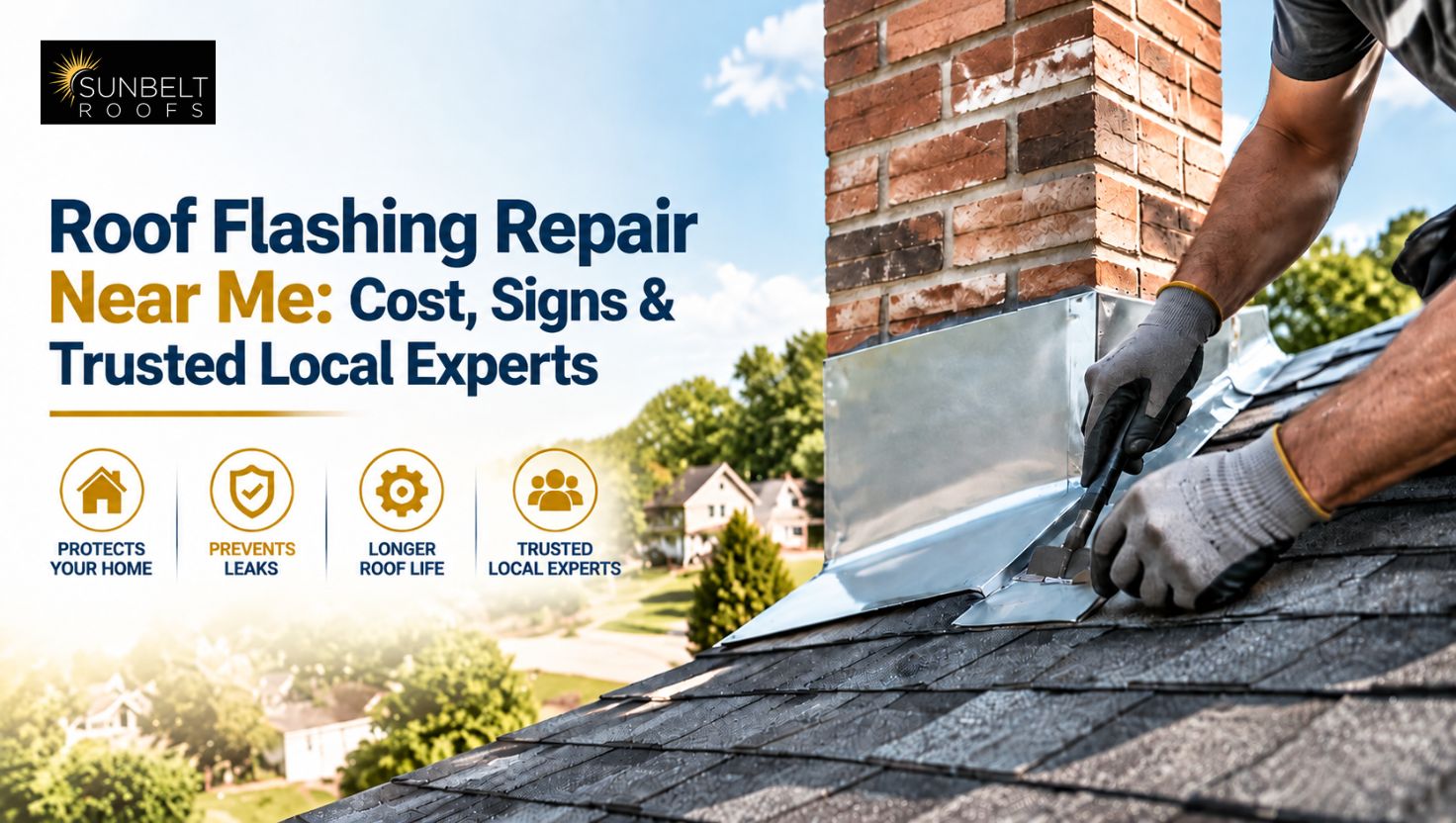
If water keeps showing up in the same spot on your ceiling after every storm, the culprit is usually smaller than you think. It’s not always the shingles. More often than not, it’s the flashing. Homeowners searching for roof flashing repair near me are usually chasing one of two things: a leak that won’t quit or peace of mind before the next round of Gulf Coast storms rolls in. Either way, you’re in the right place.
Flashing is one of those roofing components nobody thinks about until it fails. It’s thin, it’s metal, and it sits in every spot where your roof changes direction, meets a chimney, or wraps around a vent. When it works, you never notice it. When it doesn’t, you notice fast.
This guide walks through what flashing actually does, the warning signs that it’s time for a repair, realistic cost ranges, and how to find Roof Inspection Near Me support before a small leak turns into a bigger repair bill.
What Roof Flashing Actually Does
Flashing is the thin metal barrier installed at the joints and transitions on your roof. Think chimneys, skylights, valleys, and the spots where a roofline meets a wall. Without it, water would find its way straight into your attic within the first heavy rain.
Most flashing is made from aluminum, galvanized steel, or copper. It’s durable, but it’s not invincible. Coastal humidity, sun exposure, and repeated storm cycles wear it down faster in Louisiana and Mississippi than in drier climates.
Signs You Need Roof Flashing Repair Near Me
Flashing problems rarely show up as one obvious sign. Usually it’s a combination of small clues that add up. Here’s what to watch for:
- Water stains on ceilings or walls, especially near chimneys or skylights
- Rust streaks running down the roof or exterior siding
- Curling, cracked, or visibly separated metal along roof joints
- Missing or loose caulk and sealant around flashing edges
- Daylight visible through gaps when viewed from the attic
- Musty smell or damp insulation near roof penetrations
- Shingles lifting or pulling away near valleys and edges
If even one of these sounds familiar, it’s worth getting eyes on the problem before the next storm system moves through.
How to Fix Flashing on Roof: DIY or Call a Pro?
Not every flashing issue needs a full crew. Some repairs are genuinely small. Knowing how to fix flashing on roof problems starts with understanding the difference between a minor fix and a warning sign of something bigger.
When a Small Fix Might Work
Loose sealant around a single flashing joint, caught early, is sometimes a quick patch job. A small bead of roofing sealant can buy time in a pinch, though it’s rarely a permanent solution.
When You Need a Professional
Rusted-through metal, flashing that’s separated from the roof deck, or leaks that keep coming back after a patch all point to a job that needs proper flashing repair on roof surfaces, not a temporary fix. This is usually the point where homeowners start searching for roof flashing repair near me instead of reaching for another tube of sealant.
Our team at Professional Roofing Solutions handles this kind of work daily across both states, so we’ve seen firsthand how a rushed DIY patch often costs more to undo than it would have to fix properly the first time.
Roof Flashing Repair Cost: What Affects the Price
There’s no single number that applies to every home, but understanding what drives roof flashing repair cost helps you budget realistically.
- Type of flashing material—aluminum usually costs the least, copper the most
- Where it’s located on the roof (chimney and valley work tends to cost more than a simple vent)
- How bad the damage already is—one small leak versus flashing that’s deteriorated in multiple spots
- Roof pitch and how easy the area is to access
- Whether the decking or insulation underneath also took damage
- Local labor rates and any permit requirements in your area
Smaller spot repairs usually land on the lower end of that range, while replacing flashing across an entire section costs more. Honestly, the only real way to know where your home falls is to get someone out there for a proper look, rather than going off what a neighbor paid.
Chimney Flashing Repair Near Me: A Common Trouble Spot
Chimneys are one of the most frequent sources of roof leaks, and it’s rarely the chimney itself that’s the problem. It’s almost always the flashing around it.
The joint where a chimney meets the roof deck goes through constant expansion and contraction with temperature swings. Over time, the seal weakens, and that’s exactly where water finds its way in. If you’ve searched for chimney flashing repair near me after noticing a stain near your fireplace wall, you’re already looking at one of the most common flashing failures homeowners run into.
It’s also usually why the broader search for roof flashing repair near me starts in the first place. A leaking chimney joint rarely stays contained to just that one spot for long. Catching it early is almost always cheaper than waiting for it to spread.
Step flashing and counter flashing both need to overlap correctly around a chimney for the seal to hold. When either piece shifts or corrodes, even a light rain can work its way through, which is why chimney joints end up being one of the repairs our team at Local Roofing Company handles most often. They simply take more weather beating than almost any other part of the roof.
How to Replace Flashing on Roof the Right Way
When repair isn’t enough and it’s time to replace flashing on roof sections entirely, the process matters as much as the material. Flashing has to be installed in layers, with each piece overlapping the one below it so water sheds downward instead of pooling or seeping under the edges.
A rushed replacement job, even with quality materials, fails if the layering sequence is wrong. This is one of the more common mistakes we see when inspecting work done by unlicensed crews or well-meaning DIY attempts.
Getting flashing repair on roof surfaces done correctly the first time saves homeowners from repeat callbacks and repeat damage down the line.
Why Local Experience Matters for Flashing Repair
Roof flashing repair near me searches almost always come from homeowners who want someone familiar with their specific climate, not a generic national chain. Louisiana and Mississippi roofs deal with salt air, hurricane-force winds, and long stretches of humidity that most flashing simply wasn’t designed to handle in other parts of the country.
Working with Roofers in Louisiana and Mississippi who understand these conditions means the repair is built for what your roof actually faces each year, not a one-size-fits-all fix.
Before the next storm season sets in, a quick inspection can catch flashing issues while they’re still small, affordable fixes instead of full-blown leaks. If you’ve been putting off that search for roof flashing repair near me, now’s the right time to act on it.
Conclusion
Flashing might be one of the smallest parts of your roof, but when you’re stuck searching for roof flashing repair near me, it’s usually doing some of the heaviest lifting when it comes to keeping water out. Catching the warning signs early, understanding realistic repair costs, and working with a team that knows how local weather affects these repairs makes the difference between a quick fix and a recurring headache. Whether it’s a single chimney joint or a full section that needs new metal, getting it right the first time is what protects everything underneath your roof.
FAQs
Q1: How do I know if my roof flashing needs repair instead of full replacement?
Minor rust or a loose seal at one joint usually just needs a patch. Widespread corrosion means it’s time to replace flashing on roof sections instead.
Q2: What is the average roof flashing repair cost?
It varies by material and damage spread, but chimney and valley repairs typically cost more than simple vent flashing fixes.
Q3: Can I do flashing repair on roof surfaces myself?
Small sealant touch-ups, sure. Anything with rusted metal or repeat leaks needs someone who knows how to fix flashing on roof systems properly.
Q4: Why does chimney flashing fail so often?
Constant expansion and contraction around the chimney wears the seal down over time. That’s why a chimney flashing repair near me is such a common search.
Q5: How long does flashing repair usually take?
A few hours for a single spot. A full section replacement can take a full day, depending on the roof’s pitch and access.