

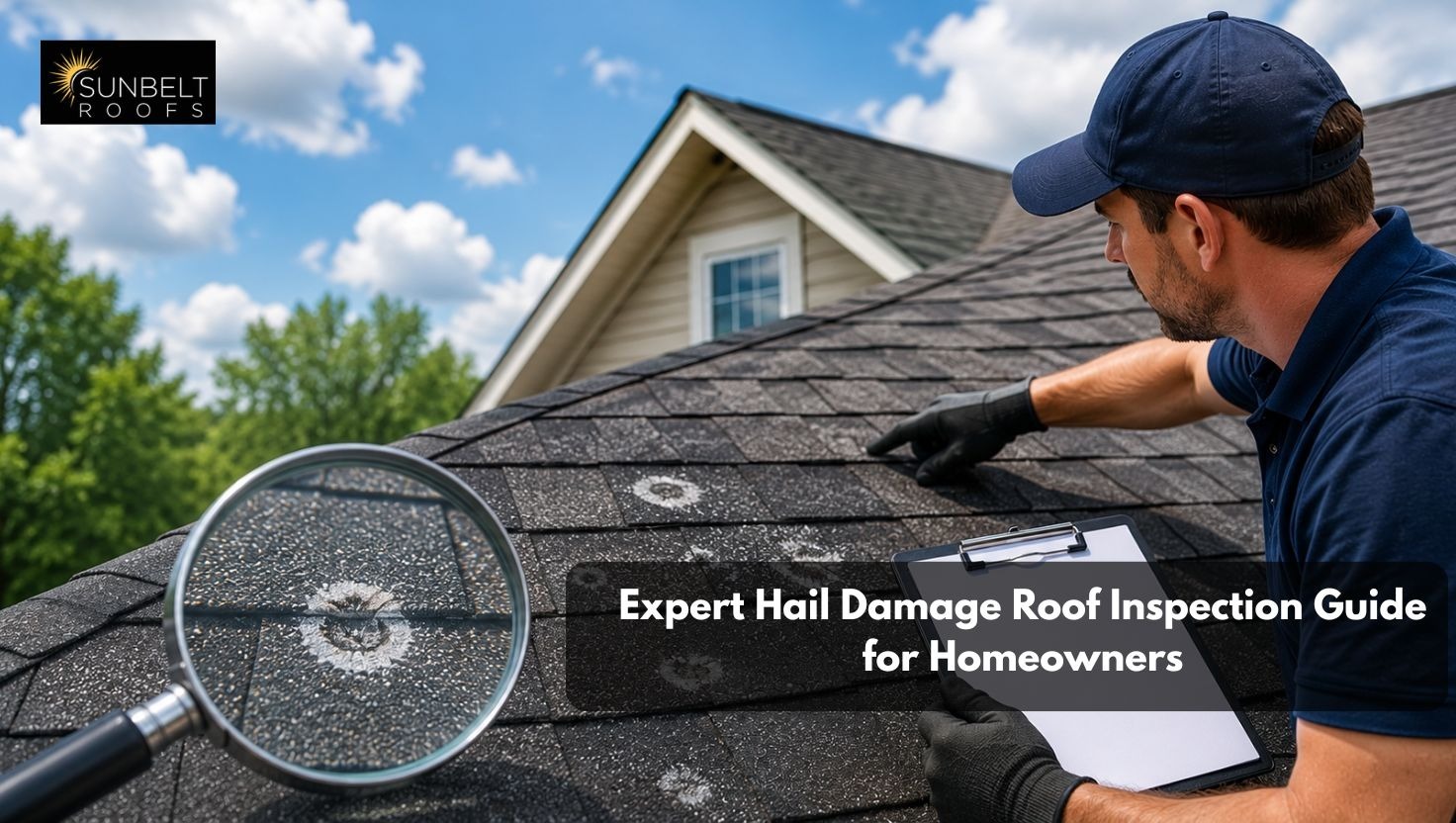
Hailstorms can be sudden. Hail damage can be hidden. Knowing how to perform a roof inspection for hail damage roof inspection as a homeowner can protect your property, help you stay within your warranty, and assist you when filing insurance claims. Here, we will help you identify hail damage and roof inspection professionals.
Why Hail Damage Roof Inspection Matters
After most major storms, your roof is likely to sustain damage. The size of hail can be anywhere from the size of a pea to the size of a golf ball. Roof materials can be bruised and dislocated, even cracked. If this damage is left unrepaired, the problems will get worse with time. Mold and water damage can cause deterioration to your home’s structure.
Getting a hail damage roof inspection will help you do the following:
● Check flashing and ridge caps for early damage prevention
● Identify the loss of granules from your asphalt shingles
● Document damage for insurance claims
● Leave a timely report for your manufacturer’s warranty.
● Protect your property from minor damage that will lead to major structural problems.
After a hailstorm, there can be a deteriorating effect that damages your roof. This can lead to problems with your insurance claim, as it will be indistinguishable from normal wear and tear.
How Hail Affects Different Roofing Materials
Not all roofs respond to hail the same way, and specialty roofs such as Spanish Tile Roofing can sustain hail damage that can manifest as hairline fractures, or even full tile breaks, which are difficult to see from the ground and can allow water to seep beneath the roof. The following provides insight into how hail can affect the most common roofing materials.
Roofing Material | Common Hail Damage Signs | Inspection Priority |
Asphalt Shingles | Granule loss, bruising, cracks | High |
Spanish / Clay Tile | Hairline fractures, full breaks | High |
Metal Roofing | Dents, paint chipping, seam gaps | Medium |
Wood Shake | Split shakes, splintering, exposed grain | High |
Flat / TPO Membrane | Punctures, surface pitting | Medium |
Knowing the roofing type can help you determine what the top priorities are for the roof hail damage inspection. This can help you when you tell the professional what the top concerns are for the roofing hail damage inspection.
Step-by-Step: How to Conduct a Basic Homeowner Inspection
While the inspection must be done by a certified professional, you can do a simple at-home inspection to determine the extent of the damage before someone is called to perform hail damage roof repair near me.
1. Check Your Property for Ground-Level Clues
You must always begin by looking from the ground level before ever climbing the roof. Look for:
- Dents in the gutters, downspouts, or protective gutter guards
- Damaged window screens, window sills, or broken vents
- Dents in the HVAC units or vents
- Lost granules either stuck in the gutter or at the downspout
- Chipped or cracked exterior wood surfaces
All of these can prove that the severity of the storm caused roof damage before you are able to look up.
2. Inspect the Attic First
Before you inspect the roof from outside, check the condition of the attic with a bright flashlight. Signs indicating hail damage may be absent wood, water stains on the wood, or moisture on the insulation. Light coming through the wood may also indicate hail damage. Accessing the attic may help you find damage if water is already leaking through the roof.
3. Walk the Roof Carefully
If it is safe to do, walk the perimeter of the roof. Hail impact on asphalt shingles creates dark stones. If you press and feel the padding, that may mean granules have been displaced. If your roof is unsealed or is made of tile, run your hand across the roof to check for small cracks.
When to Call a Professional Hail Damage Inspector
A self-inspection should never be the only method you employ to assess damage for an insurance claim. An expert roof hail damage inspection is necessary, as a hail damage inspection requires equipment such as a moisture meter and a report of findings in a format that is suitable for an insurance adjuster. You must hire a roof hail damage inspection immediately if:
- You plan to submit a homeowner’s insurance claim.
- You have roof damage that is leaking water.
- Your roof is more than 10 years old.
- Your area has had recent hail that is greater than 1 inch in size.
- You have seen large accumulations of granules in your gutters.
Be sure to have a completed Roof Inspection Checklist to help you get the most from this professional inspection.
Hail Damage vs. Normal Wear: How Inspectors Tell the Difference
Storm damage evaluation is one of the key services of a professional hail damage inspector. The majority of insurance companies deny claims by arguing there are “pre-existing conditions.” Here’s how a certified inspector will tell the difference:
- Hail damage shows up as random, circular patterns of impact with no discernible direction.
- Wind damage results from shingles that are either dislodged, missing, or broken in a consistent direction.
- Shingle deterioration shows granule loss that is uniform across the entire surface.
- Manufacturing defects cause shingle edges to crack in a consistent manner.
Without knowing the differences in the damage types, you will have a tough time convincing the insurance company to pay your claim. This is also why the price difference between companies is often large. A hail damage roofing company that is experienced will cost you more, but you have a much better chance of the claim being paid.
Finding Hail Damage Roof Repair Near Me
Searching “hail damage roof repair near me” or “hail damage roof inspection near me” will get you a ton of results, but not all of these contractors are qualified. When reviewing potential roofers, pay attention to the following:
- Proper licensing and insurance
- Experience with storm or hail damage claims
- Will provide a written damage report
- Fair pricing with no claims fees
- Favorable reviews, particularly those that mention help with insurance claims
A hail damage roofing company you can trust will never pressure you to sign anything on the spot. You should compare a minimum of two, but ideally three, cost estimates before choosing a contractor.
What Happens After a Hail Damage Roof Inspection
Once your roof damage report is submitted, the insurance process starts. We want homeowners to understand the scope of Storm Damage Roof concerns to better equip them for the necessary repairs. Since your insurance company will send their own adjuster, your roofing contractor should be present during the visit.
Repair times can vary greatly from a few weeks to a couple of months. This is largely dependent on how damaged your roof is, and how readily available the necessary roofing material is. Depending on the type of damage, this could result in new shingles, new flashing, replacement of ridge caps, or even new gutter systems.
Protecting Your Roof Before the Next Storm
There are a variety of things that you can do to minimize the effect a storm can have on your roof. Keeping your roof in a good state of repair minimizes damage it can sustain. This can include clearing out your gutters, trimming branches, or Residential & Commercial Roofing. This is well worth the expense, as the repairs from a maintenance storm will cost much more than the repairs from a preventative maintenance storm.
Important preventative measures are:
- Use Class 3 or 4 impact-resistant shingles.
- Trim trees that overhang the roof.
- Seal flashing and penetration points every year.
- Document the roof every year with photographs.
- Get a roof inspection at the beginning and end of storm season.
Conclusion
An extensive hail damage roof inspection is essential to protect the house during a major storm. From identifying damage such as the loss of granules and tile fractures to dealing with insurance claims and finding a reputable contractor for hail damage roof near me, this process requires both the awareness of the homeowner and the involvement of a professional. The three foundations for maintaining a roof’s integrity are taking action, hiring a reputable storm damage roofing contractor and practicing preventative maintenance. Don’t let a small repair lead to a catastrophe. Inspect, document, and repair roof damage without delay.
Frequently Asked Questions
Q: How soon after a hailstorm should I schedule a hail damage roof inspection?
Best within 24-72 hours. The sooner you inspect, the clearer it will be that the damage was caused by the recent storm and the easier your insurance claim will be.
Q: Can I file an insurance claim without a professional hail damage inspector?
Technically yes, but not recommended. Insurance adjusters work for the insurance company. An independent hail damage roof near me works for you and documents damages in your favor.
Q: How do I find a reliable hail damage roof inspection near me?
Look for contractors that have a solid history of storm damage work, check out their Google reviews, and make sure they have the correct licensing and liability insurance before you sign any contracts.