

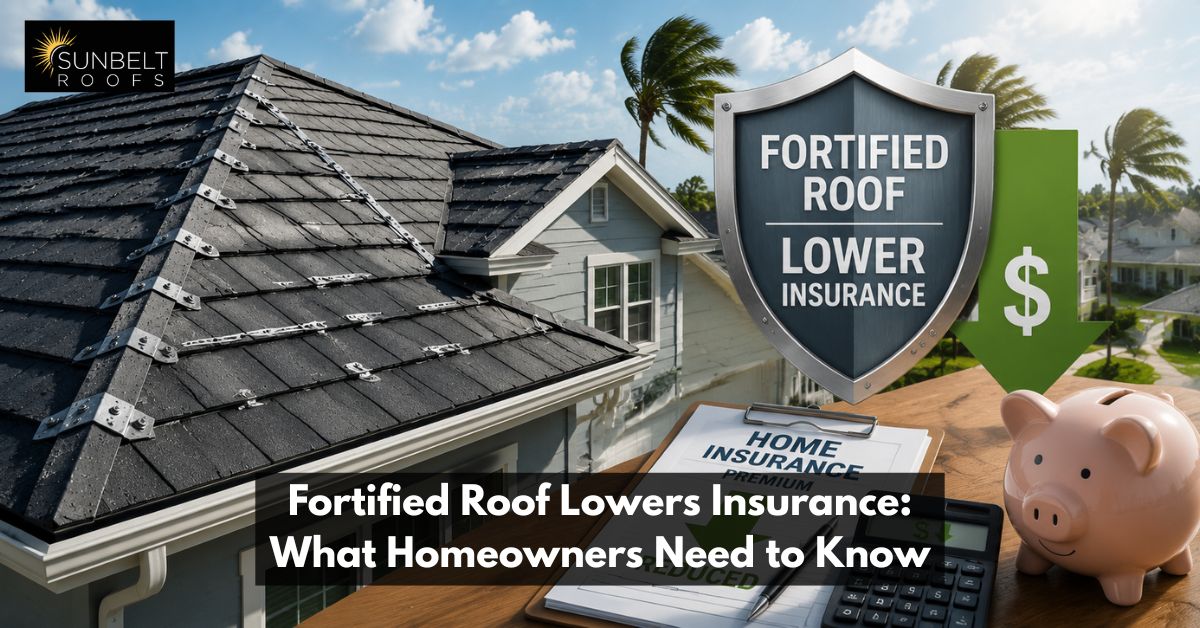
Storms along the Gulf Coast don’t ask for permission before they show up. That’s why more homeowners in Louisiana and Mississippi are paying closer attention to how a fortified roof lowers insurance costs while also standing up to hurricane-force wind and rain. If you’ve heard the term tossed around but aren’t sure what it actually means for your wallet or your roof, this guide breaks it down in plain language.
What Is a Fortified Roof
What is a fortified roof, exactly? It’s a roofing system built to a specific set of construction standards created by the Insurance Institute for Business & Home Safety, often shortened to IBHS. These standards focus on sealing every gap where wind and water could get in during a storm.
A fortified roof isn’t just about the shingles on top. It covers the decking underneath, the way flashing is installed around vents and chimneys, and how the whole system is fastened together. Every layer works as one unit instead of a patchwork of parts.
Homeowners who go through this process often notice the immediate difference in how their home feels during a storm. Less rattling. Fewer worries about a shingle peeling back at the edge. Getting there starts with a roofer offering proper Fortified Roofing Services, since the standard depends heavily on correct installation from day one.
How a Fortified Roof Lowers Insurance Premiums
Here’s the part most people care about most: how a fortified roof lowers insurance premiums in the first place. Insurance companies calculate risk based on how likely a home is to file a claim. A roof built to withstand higher wind speeds and resist impact damage represents a smaller risk on paper.
That lower risk is often reflected in the homeowner’s policy. Many insurers in Louisiana and Mississippi offer premium reductions for homes with a certified fortified roof, since the odds of a major storm-related payout drop significantly. This is the clearest, most direct example of how a fortified roof lowers insurance costs over the life of a policy.
Wind and Impact Resistance Standards
The standards behind a fortified roof aren’t arbitrary. They’re based on decades of storm damage research, looking at which roofs held up and which ones failed during hurricanes and severe wind events.
A few of the specific upgrades that make the difference include:
- Sealed roof decking prevents water ingress when shingles are lost
- More solid fixing with ring-shank nails instead of ordinary nails
- Reinforced connections between roof and wall
- Hail-prone areas—impact-rated products
- Attic properly ventilated, wind-driven, and rain-resistant
Each of these details plays a role in how the roof performs under pressure, and collectively, they’re a big reason a fortified roof lowers insurance risk in the eyes of underwriters.
What the Fortified Roof Program Requires
The fortified roof program isn’t a marketing term. It’s an actual certification process with defined tiers, ranging from Fortified Roof to Fortified Silver and Fortified Gold, each covering more of the home’s structure.
Getting certified means the roofing contractor has to follow specific installation methods, use approved materials, and, in many cases, have the work verified by a third-party evaluator before the certification is issued. It’s not something a homeowner can self-certify or skip steps on.
That verification step matters. It’s what gives insurance companies confidence that the roof actually meets the standard, rather than just claiming to.
Roof Insurance and the Fortified Difference
Traditional roof insurance covers damage after it happens. A fortified roof lowers insurance risk by reducing the odds that serious damage happens in the first place.
Insurers see this distinction clearly. A standard roof might meet basic building code, but a fortified roof goes well beyond code minimums. That gap between “meets code” and “exceeds code” is often exactly where the pricing difference in a policy comes from.
It’s worth noting that Sunbelt Roofs doesn’t sell or issue insurance policies. What we do is build and repair roofs to fortified standards, and homeowners can then check with their insurance provider about what savings might apply based on that certification.
Roof Insurance Inspection Process
Before most insurers apply any kind of discount, a roof insurance inspection typically has to confirm the roof qualifies. This usually involves a licensed inspector checking the attic, the decking, the flashing details, and the overall condition of the roofing system.
The inspection process can feel like a lot of steps, but it’s fairly straightforward when the roof was actually built to the standard from the start. Homes retrofitted or upgraded later sometimes need extra documentation to prove which parts of the system meet fortified requirements.
Keeping records from the original installation, including photos and material specs, makes this part of the roof insurance inspection go much smoother down the road.
Why Louisiana and Mississippi Homeowners Are Upgrading
Coastal and near-coastal homes face a different level of storm exposure compared to inland properties. Areas like New Orleans, Slidell, Gulfport, and Biloxi see regular hurricane activity, which makes wind and water resistance a bigger priority than it might be elsewhere.
A few reasons homeowners in these regions are choosing fortified upgrades:
- Rising storm frequency along the Gulf Coast
- Long-term savings potential on insurance premiums
- Reduced risk of major storm damage claims
- Increased resale value for fortified-certified homes
- Access to state grant programs that help offset upgrade costs
That last point matters more than people expect. Louisiana’s fortified roof grant program has helped a lot of local homeowners offset a portion of the upgrade cost, making the investment more realistic for regular budgets.
Choosing the Right Roofing Team
Not every roofing contractor is trained or certified to install to fortified specifications. Choosing the right team matters just as much as choosing the right materials, especially when insurance savings are riding on the certification being done correctly.
Look for a contractor with hands-on experience navigating both the technical requirements and the paperwork insurers ask for. From the initial assessment through final certification, the process goes far smoother with a team that’s handled it before.
Durable Roofing Options for Safer Living Spaces
Not every home needs the same approach. Durable Roofing Options for Safer Living Spaces can range from a full fortified roof replacement to a targeted upgrade that strengthens the most vulnerable parts of an existing roof.
Some homeowners start with just the decking and flashing improvements, then work toward full certification over time. Others go all in from day one, especially if they’re already planning a full roof replacement after storm damage.
Either path can move a home closer to fortified standards and closer to the potential insurance benefits that come with it.
Conclusion
A fortified roof lowers insurance risk in ways that go beyond a simple premium discount. It’s a sensible upgrade that many homeowners find pays for itself with better protection and possible cost savings. If you are thinking about upgrading, talk to your insurance company about how fortified certification may affect your policy, and work with a roofing team that understands the process.
FAQs
Q1. Does a fortified roof guarantee an insurance discount?
No. Discounts depend on your insurance provider’s specific policies, but many insurers do offer savings for certified fortified roofs.
Q2. How much does it cost to upgrade to a fortified roof?
Costs vary based on your current roof condition and the certification tier you’re aiming for. A local inspection gives the most accurate estimate.
Q3. Can an existing roof be retrofitted to fortified standards?
In many cases, yes. Some upgrades, like sealed decking or reinforced connections, can be added without a full roof replacement.
Q4. How long does fortified certification take?
Timelines vary, but most projects move from inspection to certification within a few weeks, depending on inspector availability.
Q5. Is a fortified roof only useful in hurricane-prone areas?
It offers the most value in storm-prone regions, but the added durability benefits any home dealing with high winds or severe weather.