

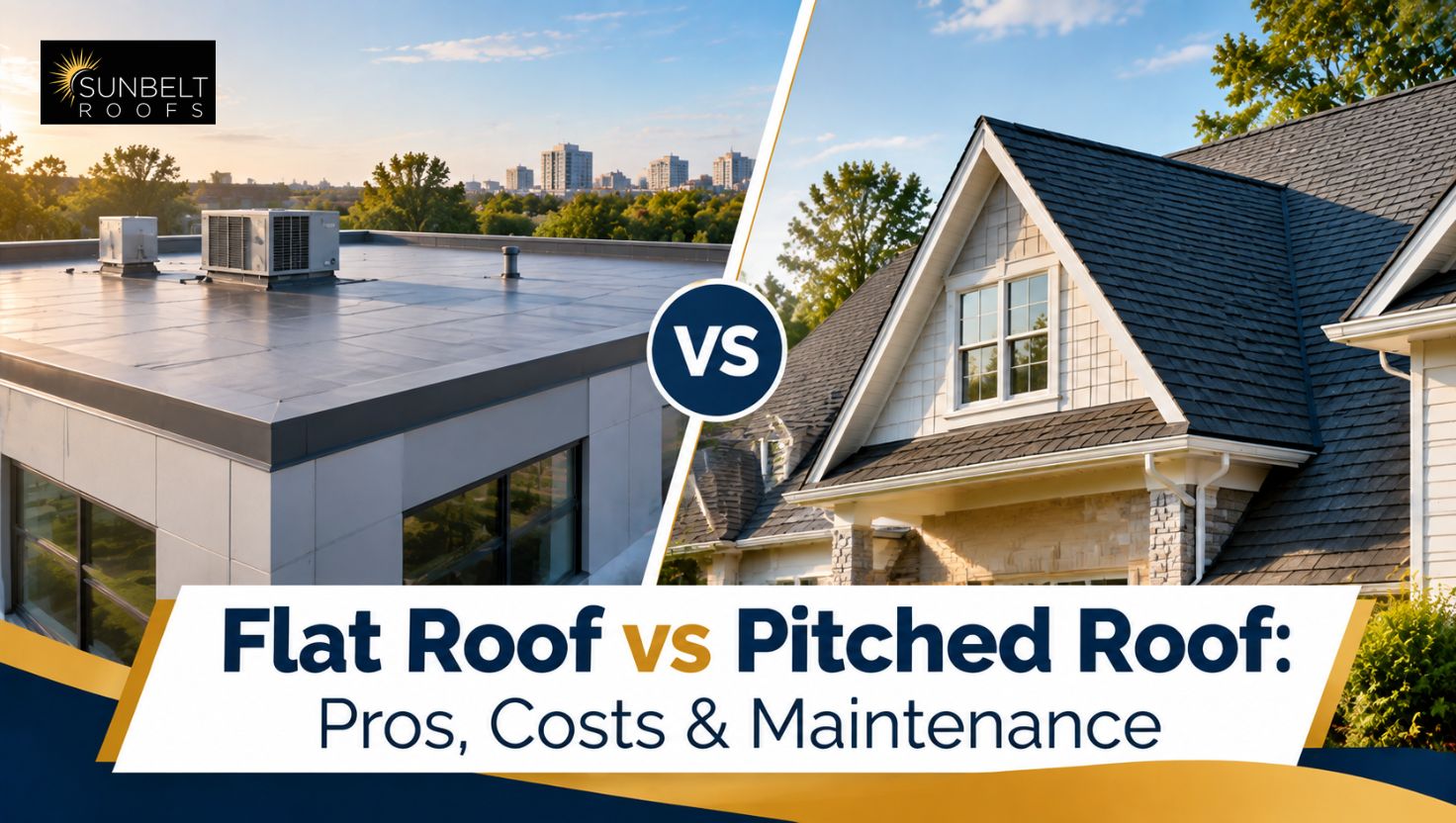
The roof is one of the most critical parts of any commercial structure. Choosing between a flat roof vs pitched roof can shape the look of your building, how well it performs during storms, and even how much cash you spend later on repairs. In this guide, we break down the good and the not-so-good, the costs, and the everyday care each type needs so you can pick the one that fits your business best.
What Is a Flat Roof?
Understanding Flat Roofs Commercial Buildings
Flat roofs show up on almost every commercial building, factory, and office park in town. Although the name says flat, most of these roofs do have a tiny slope-usually less than 10 degrees-just enough to let rain roll off instead of pooling.
Why Do Commercial Buildings Have Flat Roofs?
There are a few simple reasons why commercial buildings have flat roofs:
- Cheaper to frame and cover
- Quick to install and easy to fix
- Perfect perch for HVAC, solar, and green gardens
- Let the rooftop pull double duty
What Is a Pitched Roof?
Understanding the Basics of Sloped Roofs
What is a pitched roof? A pitched roof sports a clear angle that slices the air instead of hugging it. You see it on homes all the time, but big stores, schools, and warehouses can wear a slope too.
Benefits of a Pitched Roof
- Water and ice run off quickly, cutting leak risk
- Stronger framing resists wind and heavy snow
- Metal, tile, or shingle layers often last twice as long as most flat options
- Stronger resistance to heavy snow and rainfall
- Classic architectural appearance
Flat Roof vs Pitched Roof: Key Differences
Let’s compare the key features of a flat roof vs pitched roof across various parameters to understand their performance:
Aesthetic Appeal
Generally, flat roofs give a modern, sleek look that fits well with minimalist buildings. Pitched roofs offer a classic, sometimes grand style, which many brands still prefer.
Space & Usability
Flat roofs create extra room that builders often use for
- solar panels
- green rooftops
- HVAC systems
- seating lounges
Pitched roofs waste less outside area yet free up useful attic or upper-storage space inside.
Weather Performance
When it snows or pours, roof shape really matters. Pitched surfaces let water and slush slide off naturally. Flat decks need regular checks to stop ponds that cause leaks.
Cost Comparison
Flat-roof installation normally runs cheaper because basic materials and swift labor cost less. Still, the owners must pay more often for patches and recoating. Pitched systems need a bigger up-front budget but pay back later through strength.
Flat Roof Cost vs Pitched Roof Cost
- Flat roof cost vs pitched roof cost can differ significantly.
- Flat roofs generally cost less to install due to simpler materials and reduced labor.
- However, maintenance over time may be more frequent.
- Pitched roofs may have a higher upfront cost but often prove cost-effective long-term due to durability.
Flat Roof and Pitched Roof Maintenance Comparison
When picking between a flat roof and pitched roof, upkeep is a big part of the decision:
Flat Roof Maintenance
- Check for water that pools after a rain.
- Inspect sealants and membranes for cracks.
- Clear and test gutters, scuppers, and drain lines.
Pitched Roof Maintenance
- Climb up once in a while to spot broken shingles or tiles.
- Scoop out leaves from gutters and clear the downspouts.
- Repairs come up less often, but they often hit the wallet harder.
Energy Efficiency
Flat roofs shine in hot areas: you can lay reflective materials on top, and the insulation sits right above the living space. In cold climates, though, a pitched roof helps snow slide off fast and keeps heated air from leaking out through the eaves.
Flat Roof vs Pitched Roof in Hurricane-Prone Areas
If you’re building or re-roofing anywhere along the Gulf Coast, the flat roof vs pitched roof decision isn’t just about looks or budget — wind is the variable that actually decides how long either roof survives. Frame it as pitched roof vs flat roof for a moment and the difference is really about how each one handles moving air, not just rain.
Pitched roofs generally handle high wind better on their own. The slope lets wind pass over the surface instead of catching underneath it and lifting the edges, which is the most common failure point in a hurricane. Flat roofs don’t have that natural advantage, so the membrane, fasteners, and edge detailing have to do all the work instead.
That doesn’t mean flat roofs are a bad choice for commercial buildings in Louisiana or Mississippi. It means the installation standard matters more than the roof type. An IBHS Fortified roof — flat or pitched — is built and tested specifically to resist wind uplift, and in a lot of cases a properly Fortified flat roof will outperform a standard, non-rated pitched roof in the same storm. We’ve seen this play out on commercial jobs across the region: the roof shape gets the attention, but the fastening pattern and membrane attachment are what actually hold up when the wind picks up.
If you’re weighing flat vs pitched for a building in New Orleans or along the Mississippi coast, ask your contractor about Fortified certification before you ask about roof shape. It changes the math more than most people expect.
Is a Flat Roof Cheaper Than a Pitched Roof? Real Numbers
Short answer: usually, yes, up front. But “cheaper” and “cheaper over 20 years” aren’t the same question, and most of the comparisons online skip that part. Any flat roof vs pitched roof cost breakdown really needs to look at both numbers side by side, not just the installation quote.
Flat roofs are generally the more budget-friendly option to install, mainly because the materials and labor involved are simpler — there’s no framing complexity, and crews can move faster on a flat surface. Pitched roofs take more time and more material to get right, which pushes the upfront investment higher. That gap tends to narrow once you look past installation, though.
Where the math shifts is maintenance. A flat roof needs more frequent inspection — pooling water and membrane seams are the two things that cause most flat roof failures, and catching them early keeps small issues from turning into a full replacement. Pitched roofs need less routine attention but come with a bigger bill when something does go wrong, since access and labor are harder. Looked at that way, a flat roof versus pitched comparison really comes down to when you pay, not just how much.
| Flat Roof | Pitched Roof | |
| Upfront installation | Generally lower | Generally higher |
| Typical lifespan | 15–20 years | 25–40+ years |
| Maintenance frequency | 2x/year inspections recommended | Annual inspection typically enough |
| Wind performance (non-fortified) | Higher risk of edge/membrane lift | Sheds wind more naturally |
| Wind performance (fortified) | Strong—comparable to pitched | Strong |
| Best for | HVAC/solar space, modern commercial look | Long-term durability, storm-prone sites |
So converting a flat roof to a pitched roof—something we get asked about fairly often—isn’t a simple retrofit. It usually means adding new structural framing on top of the existing deck, not just swapping materials, since the building typically wasn’t engineered to carry a sloped roof’s added weight and drainage system. That makes it a much bigger undertaking than a standard roof replacement, closer to a structural project than a roofing one. For most commercial buildings, it only makes sense if the existing flat roof is failing anyway and a full rebuild is already on the table.
Flat Roof or Pitched Roof: Which Should You Choose?
Your final choice boils down to a flat roof or pitched roof:
- The weather where you live.
- The look and layout of the building.
- How much do you have to spend now and later?
- Your own comfort level with regular maintenance.
Flat roofs commercial buildings favor modern design and utility, while pitched roofs offer better drainage and longer lifespan. If you’re considering roof replacement or new construction, consult professionals who understand the nuances of both systems.
Fortified Roofing Service Insight
For extra peace of mind, think about Fortified Roofing Service packages. They add tougher materials and more careful installation, making your roof better able to weather storms and heat.
Trusting Professional Help
When you hand the job to a qualified Commercial Roofing Services, you gain reliable workmanship, regular follow-ups, and the chance to relax knowing the roof is built to last.
It also makes sure your new roof meets local building codes and energy-saving rules.
Conclusion
Picking between a flat roof vs pitched roof goes beyond looks; it affects how much value and protection your property gets over time. By comparing installation costs, how each style performs, how they look, and the upkeep they need, you can select a roof that fits your business and its surroundings.
Whether you lean toward the sleek, space-saving flair of a flat roof or the classic, water-shedding curve of a pitched roof, a smart choice today guards you against expensive repairs and wasted energy tomorrow.
Flat Roof vs Pitched Roof: FAQs
Q1. Is a flat roof cheaper than a pitched roof?
To install, generally yes. Over a 20-year span, a pitched roof often costs less overall because it needs fewer repairs and lasts longer.
Q2. Is a flat roof more expensive than a pitched roof?
Not upfront—that’s usually reversed. Where a flat roof can end up costing more is in the ongoing maintenance it needs to stay leak-free.
Q3. How much does it cost to change a flat roof to a pitched roof?
It’s a bigger job than most owners expect. It usually requires new structural framing, not just a material swap, so it’s closer to a full rebuild than a standard reroof.
Q4. Are flat roofs cheaper to maintain?
No—the opposite, usually. Flat roofs need more frequent inspections to catch pooling water and seam issues before they become leaks.
Q5. Which holds up better in hurricanes, flat or pitched?
Pitched roofs handle wind better by default. But a Fortified-certified flat roof can perform just as well, since the certification specifically addresses wind uplift.
Q6. Can you pitch a flat roof without a full rebuild?
Rarely. Adding a true slope usually means new framing and drainage, which is a structural project, not a simple roof update.