

As a business owner in Louisiana or Mississippi, you might have heard of a built up roof before. That’s because this proven roofing style has helped protect low-slope and flat buildings for more than a century. But what is a built up roof? How does it work? Is it even the best roofing solution for you? Let’s put all these questions to rest about this time-tested roofing solution.
What Is a Built Up Roof?
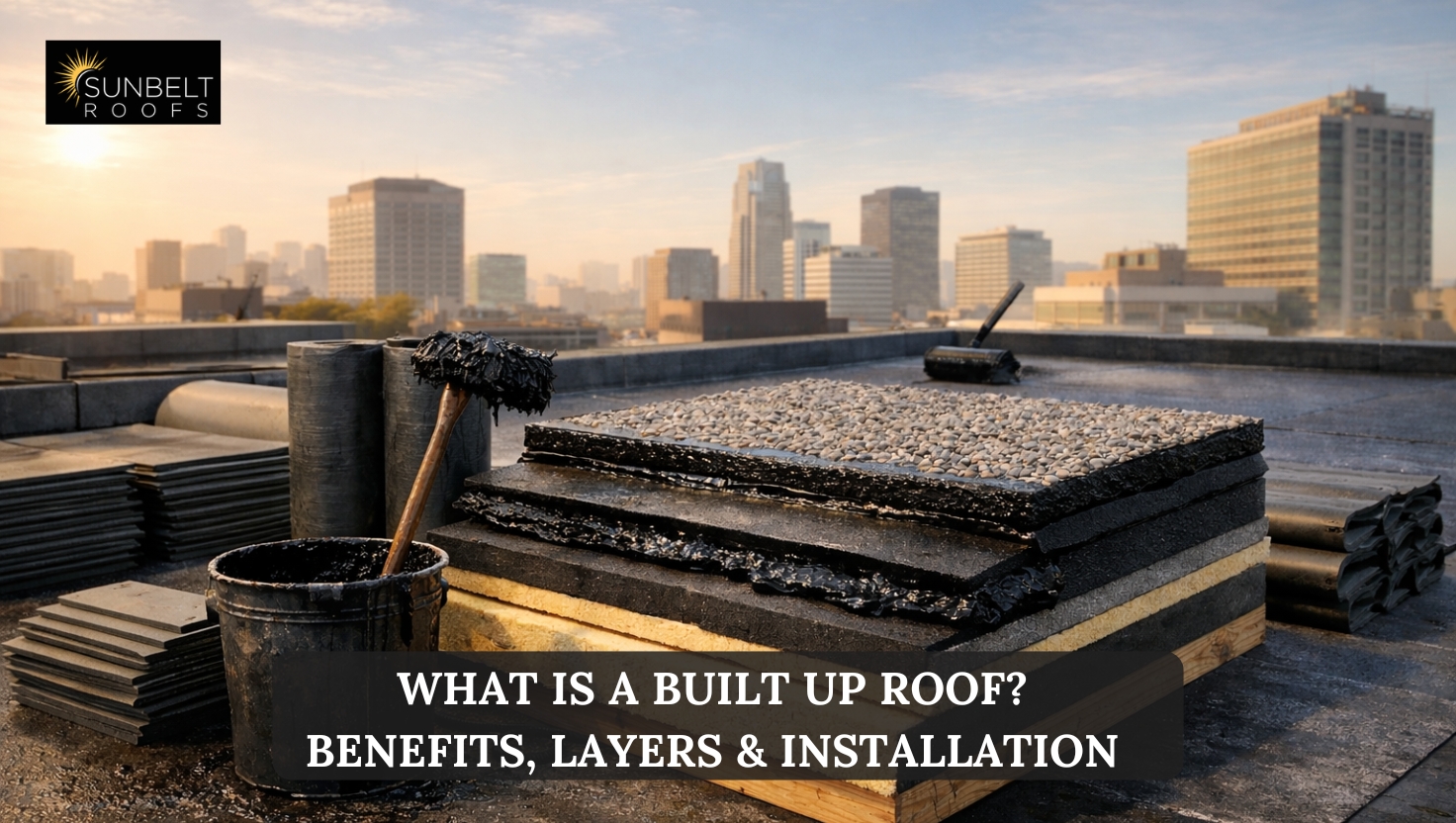
A built up roof is a multi-layered flat roofing system that is built up on-site with several alternating layers of bitumen (asphalt or coal tar) and reinforcing fabrics with a top protective layer.
What you need to know about built-up roofs is that, as opposed to single-ply roofing, systems gain their strength from a better system, which is a greater number of layers, or “plies,” of material that have been fused together. This is what forms a seamless, “elements-proof” barrier, which is what you want in the Gulf Coast climates. Check out our Commercial Roofing Services for the best roofing options for your business.
How to Build Roofs Using the BUR Method
Layer-by-Layer Breakdown
Learning how to build roofs using the BUR method includes knowing how to build using layers. The first layer consists of the deck layer, which is a structural foundation made of concrete, wood or metal. Then, installation of the rigid insulation boards is done. This helps to improve the energy efficiency of the building. After the insulation is installed, multiple layers made of fiberglass or organic felt, which are incorporated in the hot bitumen to build the core strength of the system, are forged.
The hot or cold bitumen mops provide waterproofing. Properly designed built in roof gutters built on the roof are designed to channel the water away from the roof surface to avoid ponding, which can damage the roof structure for many years. Lastly, to protect the roof surface from ultraviolet rays and from the damage of daily usage, gravel, mineral granules or some reflective coating can be put on the roof.
Key Benefits of a Built Up Roof
Why Property Owners Choose BUR
The built-up roof has not only been selected for many years for commercial roofing and residential roofing but for other types of roofing as well. It has a fully incorporated system, which means there are no gaps for water to get in. This is a major concern for the hurricane states of Louisiana and Mississippi. The multiple-layer construction of BUR, provides insulation. And if one of the layers is broken, the house will still be safe because of the other layers.
Apart from being durable, BUR systems have their own distinct advantages over other roofing options:
- Long Lifespan — With regular maintenance, a built-up roof can last 20 to 30 years.
- Energy Efficient — Insulation boards and reflective surface coatings result in a significant reduction in cooling costs.
- Severe Weather Approved — Built-up roofing systems are ideal in hurricane and high-rainfall coastal weather.
- Cost Efficiency – Commercial properties have a large return on investment due to lower long-term maintenance costs.
Homeowners can rest easy knowing that BUR systems are one of the best types of roofs for long-term safety with little upkeep because they are reliable and have many benefits.
Built Up Roof Repair: What to Watch For
Common BUR Problems to Identify Early
Built-up roofs can wear over time just like any other roofing systems. That’s why it’s important to stay current with maintenance and to know the signs of wear. Addressing problems early can keep minor issues from becoming major repairs. Some common problems that can result in built up roof repair are
- Blistering — bubbles that have ruptured due to moisture and/or air being trapped between roof layers.
- Alligatoring — surface cracking due to age and UV exposure.
- Ponding — the presence of standing water that is not drained in a 48 hour period.
The built in roof gutters that are blocked are also one of the most overlooked problems that can lead to BUR damage. When water cannot drain due to a blockage in the gutters, it sits on the membrane, increasing the wear on the membrane and causing leaks and early failure. When done regularly, inspections can catch these problems early, minimizing the need for costly repairs.
Built-Up Roof Installation: What to Expect
Step-by-Step Installation Process
Learning how to build roofs using the BUR method allows property owners to have a clearer picture of what is to come. The journey begins with a full deck assessment where the surface is cleaned, damage is repaired, and the surface is inspected. Decked and fastened insulation boards, followed by layers of ply, covered with bits of bitumen, and topped with additional layers for full coverage against the elements.
After the core layers have been set, the built in roof gutters must be adequately placed and sealed for full drainage to work. Lastly, a final surface consisting of gravel or of a reflective coating is placed, and a final quality assurance check is done to verify that the layers are all intact and sealed.
Is a Built Up Roof Right for Your Property?
Properties That Benefit Most from BUR
A built-up roof is best for a property that meets the following:
- Waterproofing needed to be seamless.
- A durable, traffic-resistant surface is needed for roof-top HVAC or mechanical equipment.
- High rainfall, storm-prone coastal regions.
- Residential & Commercial Roofing Requirements consider the property long-lasting.
If your property matches the above, then the built up roof system is the best roofing option.
Conclusion
A built-up roof is one of the best flat roofing systems because of its long life span, unique waterproofing, and multilayer design. Investing in this roofing system will benefit you in the years to come. For proper installation and built up roof repair, partnered with professional contractors to guarantee the best results.