
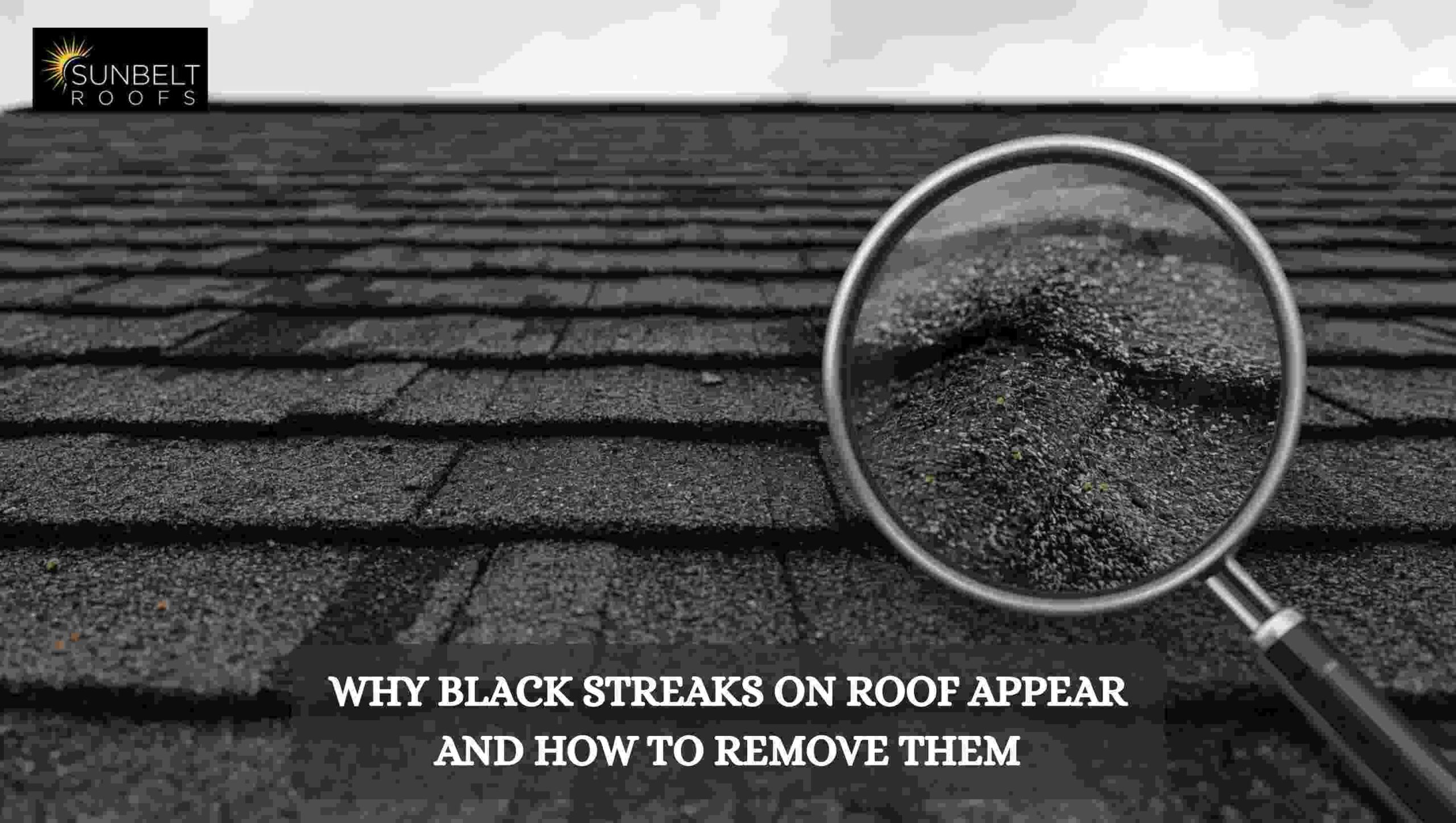
Many homeowners suddenly notice black streaks on roof surfaces and assume it is dirt or storm damage. However, marks on the roofs are common, especially in warmer areas or regions with high humidity. These black stains can spread and make roofs appear older and poorly maintained. Knowing the reasons why dark streaks on roof and how to remove them is important for the look and longevity of the roofing system.
This guide will cover the black stains on roofs, the safest way to remove them, and the best ways to prevent them in the future.
What Are Black Streaks on Roofs?
In the case of black streaks on roofs, one of the culprits can be mold and moisture, or even debris from the environment. They tend to appear as long black lines that run along the shingles, and if gone untreated, the roof black streaks can become more widespread and become more of an eyesore.
Homeowners tend to confuse the marks for mold or deterioration of the roofing materials. However, the more common black stain on roof is due to algae that grows due to moisture and spreads across the shingles.
When you first notice black streaks on roof shingles, you should take action as early as possible so that the roof shingles do not become permanently stained.
Main Causes of Roof Streaking
1. Algae Growth (Gloeocapsa Magma)
Gloeocapsa magma, a kind of blue-green algae, is the number one reason for black streaks on roof shingles. Algae usually thrives in warmer, more humid climates, and in areas where the roofs remain damp for long periods of time.
Visible discoloration as black streaks on the roof is the result of the several colonies and the resulting dislocation of these algae. These black stains on roofs are most frequently observed in shaded regions and on the northern slopes of the roofs.
Gloeocapsa spreads quickly and, if not cleaned thoroughly, the algae will quickly worsen the roof streaking.
2. Moisture and Humidity Problems)
Streaking on roofs as moisture increases. Roofs that remain humid and do not dry after the rainfall prolong algae and mildew streaking.
The following issues cause the moisture:
● Poor ventilation in the attic
● Humidity in the area
● Water pooling on the edges of the roof
● Structures that surround the roof that cause continuous shade.
As moisture stays trapped, roof black streaks become more severe and harder to remove.
3. Debris and Organic Buildup
Leaves, twigs, and dirt can build up over time, especially in valleys and gutters. This organic material retains moisture, which speeds up algae development.
If debris and organic buildup is left to sit, the odds that black streaks on roof shingles and the surface gets uneven staining increases.
Are Black Stains on Roof Harmful?
Initially, black streaks on roof do seem like a simple cosmetic problem. Although algae does not destroy shingles right away, neglecting the problem can cause serious issues.
Untreated black stains on roof can lead to:
- Shortened shingle life
- Increased aging of roof
- Moisture retention that cause deterioration
- Lowering of curb appeal and resale value
If severe roof streaking is present, it may be time for a professional inspection. If you need a professional, a trusted roofing contractor in Louisiana and Mississippi can assist you in determining if the staining is just cosmetic or if there are larger issues with your roof.
How to Remove Black Streaks on Roof Safely
Efforts to remove black streaks on roofs must be done very carefully. The main aim is to remove algae and not to remove shingles.
1. Soft Washing (Best Solution)
Cleaning black streaks on roof shingles can be done by Soft Washing. It is a low pressure cleaning approach that utilizes specialist solutions to eliminate algae stains.
Soft washing effectively treats:
- dark streaks on roof
- Heavy algae buildup
- Persistent black stains on roof patches
Cleaning with a pressure washer is not a good option because it removes protective granules on shingles. Soft washing is the better option because it does not strip protective granules.
2. DIY Roof Cleaning (For Minor Stains)
Some homeowners clean roof streaks using a mixture of water and a mild roof-safe cleaner. Precautions should be taken because of the risks that come with using a ladder and working at heights.
DIY cleaning is only suitable if:
- the roof has minimal streaks
- the roof is of a safe slope to climb
- the roof can be cleaned with proper cleaning products using
improper products and methods can worsen the roof streaking and potentially void the roofing warranties.
3. Avoid Pressure Washing
One of the biggest mistakes homeowners make to remove black streaks on roofs is the use of pressure washing. High-pressure water can:
- Remove shingle granules
- Cause leaks
- Shorten roof lifespan
- Spread algae further
The safest approach is always gentle cleaning, especially for black stains on roof caused by algae.
Long-Term Prevention Tips
Once you remove roof black streaks, prevention becomes the next priority. Roofs in humid regions often experience recurring stains, so proactive care is important.
1. Install Algae-Resistant Shingles
Shingles made with algae-impeding technology are able to help in the prevention of black streaks on roof shingles for the first time. These new shingles battle the onset of dark streaks on the roof area for the first time.
2. Regular Roof Maintenance
If you keep the roof collection of organic matter, you will keep moisture retention to a minimum. The following actions would help moisture retention the most:
- Regularly clean gutters
- Remove any debris on the roof
- Cut any overhanging tree branches
- Schedule roof inspections
Consistent upkeep helps stop streaking on roof before it spreads.
3. Zinc or Copper Strips
Metal strips placed near the roof ridge release small amounts of ions that inhibit algae growth. This is one of the most effective solutions for preventing future black streaks on roof buildup.
These strips are especially helpful in regions where roof streaking is common year-round.
When Roof Replacement Becomes Necessary
In some cases, black stains on roof may appear along with curling shingles, granule loss, or roof aging. If stains are widespread and shingles are deteriorating, replacement may be the best solution.
If your roofing system has experienced extreme weather or just been many years since it has been replaced, consider professional services through Roof Replacement Service to regain your roof’s aesthetics and exterior long-term protection.
Expert Roofing Support Matters
While many people consider removing black streaks on roof to be a hassle, it can actually be handled in a productive way. Cleaning, as always, should be in a way that is safe and gentle and should focus on preventing algae regrowth.
If you need additional professional support, feel free to visit Expert Roofing Solutions for Homes and Businesses as they provide additional roofing services.
Conclusion
Algae and moisture building up over time causes black streaks on roof siding. Although it can be considered a cosmetic defect that causes a decline in value in your property and causes a reduction in the estimated lifetime of your shingles. This is because the defect goes untreated.
When homeowners use safe removal tactics like soft washing, and long-term prevention their roofs remain protected and are the cleanest.
If you have put a lot of effort into eliminating dark streaks on roof and have experienced a lot of the listed items, to remove the shingles, you may want to consider a professional to replace the roofing system.