

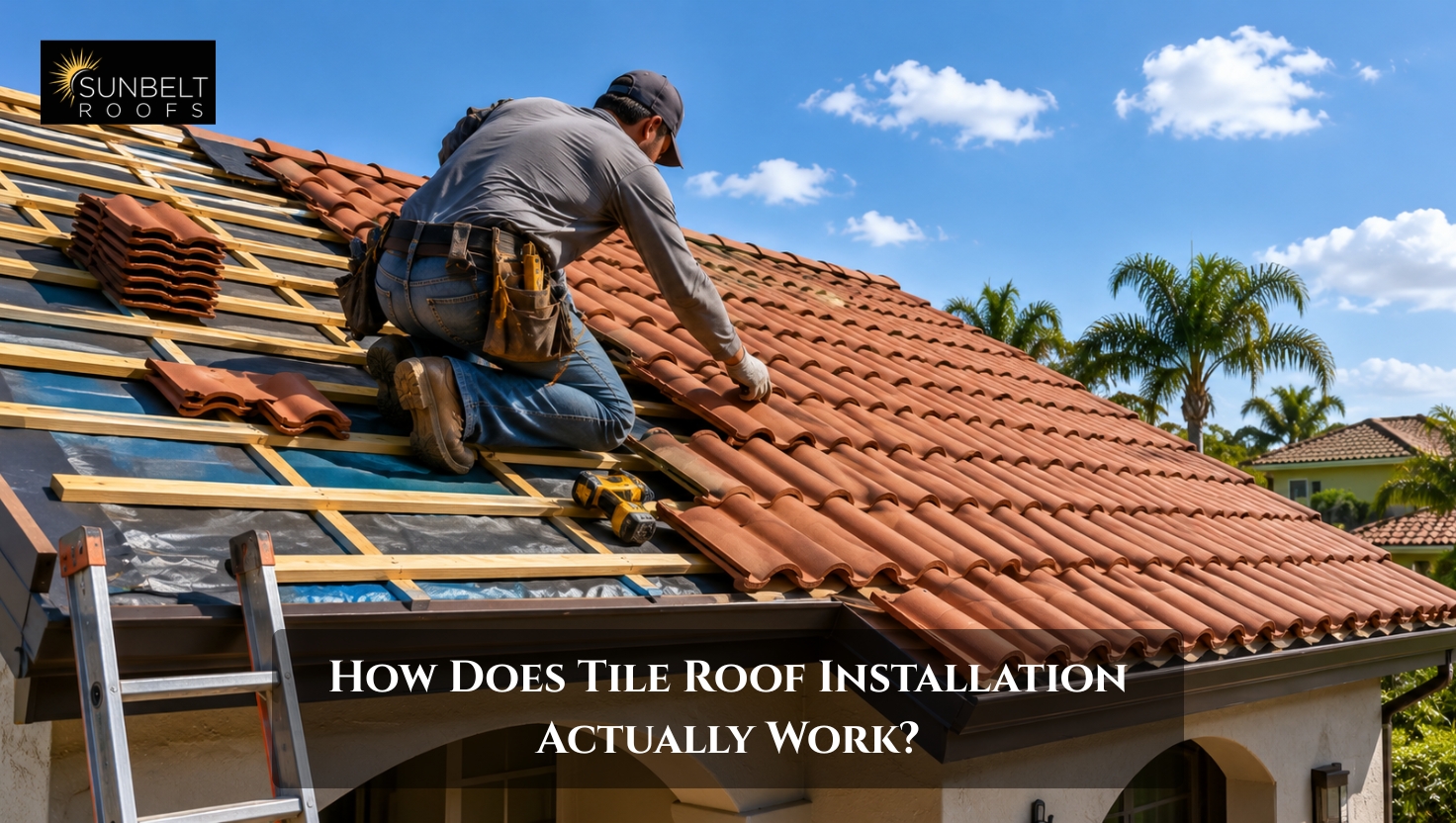
Picture two roofers rolling out sheets across your roof and stapling them down. That’s shingle work, not tile. Tile roof installation is a slower, layered process, and understanding what actually happens under those tiles is the difference between hiring the right contractor and getting burned. Here’s the real breakdown, start to finish.
What Is Tile Roof Installation?
Tile roof installation means fitting individual clay, concrete, or slate pieces over a roof deck, held in place by an underlayment and batten system built to survive wind, rain, and heat. Shingles go down as one continuous surface. Tiles don’t. Each piece is set on its own, which is exactly why the deck underneath matters as much as the tiles themselves. Skip the structural prep and you get a roof that looks fine for a year or two, then fails the first time a real storm rolls through the Gulf Coast.
Why Homeowners Choose New Tile Roof Installation
Most people who go looking for new tile roof installation fall into one of two camps: building fresh, or finally replacing a roof that’s given up. Tile does well here. It shrugs off heat and humidity, doesn’t attract pests, and won’t shed granules the way asphalt does after a decade of sun. Options have opened up too. Brava Tile Roofing Services now offers lightweight synthetic tile that looks like clay or slate but skips the extra structural weight, which matters more than people expect once you get into older homes.
The Tile Roof Installation Process, Step by Step
Every crew worth hiring runs roughly this sequence, no matter what tile you pick:
- Deck inspection and repair, checking the plywood or wood base for rot or soft spots before anything else happens
- Underlayment application, a waterproof layer that becomes the roof’s real line of defense against moisture
- Batten installation, horizontal strips that give the tiles something stable to hang from
- Tile placement, set row by row starting at the eave and working up toward the ridge
- Flashing and ridge capping, sealing the valleys, edges, and peak where water tends to find its way in
Residential Tile Roof Installation: What to Expect
Residential tile roof installation usually takes longer than a shingle job. Tile is heavier, it needs more careful handling, and the structural checkup front isn’t optional the way it sometimes feels with lighter materials. Expect a roof-load assessment early on, because plenty of homes, especially older ones, weren’t framed to carry clay or concrete without some reinforcement. That’s a big reason residential tile roof installation quotes swing so widely from house to house. Some properties need bracing before a single tile goes down; others don’t.
Timing matters more than most homeowners think, too. Good crews avoid starting tile work when a storm is on the way, since an open deck left exposed overnight can turn a simple job into a much bigger repair. Along the coast, that usually pushes installation toward spring or fall, when the weather’s calmer and there’s enough of a runway to finish decking, underlayment, and tiles without delays piling up.
Comparing Common Tile Roofing Materials
Tile Type Average Lifespan Weight Best For Clay 50+ years Heavy, hot, humid coastal climates Concrete 40-50 years Heavy Budget-conscious durability Slate 75-100 years Very heavy, high-end, long-term investment in synthetic/Brava 40-50 years Lightweight homes needing lighter structural load
Tile Roof Installation Cost and Estimate Factors
Tile roof installation cost comes down to material, roof pitch, square footage, and whether the deck needs reinforcement first. If you want a real tile roof installation estimate, get someone out to walk the property in person. Quoting off photos alone misses too much, especially load-bearing capacity and the actual condition of the deck. It’s also worth calling your insurer once the new roof is in. Many carriers knock down premiums for impact-resistant or wind-rated materials, and looking into your Roof Insurance options afterward is a smart move for homeowners across Louisiana and Mississippi.
Finding Tile Roof Installation Near Me
When you search tile roof installation near me, you want licensed, insured contractors who actually specialize in tile, not general roofers who take on the occasional tile job. Tile has a steeper learning curve than shingles, and it shows fast when the work is sloppy. Leaks, cracked pieces, wind damage, all of it shows up sooner than you’d think.
A few signs it’s time to start looking:
- Cracked, slipped, or missing tiles in more than one section
- Sagging visible along the roofline
- Water stains showing up on ceilings inside
- Granule-like debris collecting in gutters, a sign underlayment is breaking down
- A roof that’s near or past its expected lifespan
Why Professional Installation Matters
Tile rewards precision, plain and simple. Every batten line, every flashing point, every tile overlap affects how the roof holds up during a real Gulf Coast storm. Crews that know Professional Roofing Solutions built for coastal exposure tend to catch structural problems while they’re still small, not after they’ve turned into a repair bill.
Maintenance doesn’t stop once the crew packs up, either. A solid tile roof still needs periodic checks for cracked or shifted tiles, cleared valleys, and flashing that might have loosened after a hard storm. Homeowners who get it looked at once or twice a year tend to catch the small stuff, a hairline crack, a nudged ridge cap, before it turns into a leak.
Conclusion
Knowing how this process actually works, from deck prep to the last ridge cap, puts you in a much stronger position when you’re vetting contractors. Tile remains one of the toughest, longest-lasting roofing choices for homes across Louisiana and Mississippi, as long as the crew doing the work respects every step along the way.
FAQs
Q: How long does tile roof installation take?
A: Most residential jobs run one to three weeks, depending on the size of the roof and how much structural prep is needed.
Q: Can any roof structure support tile?
A: Not always. Older homes sometimes need reinforcement before tile can go on safely.
Q: Is tile roofing worth it in humid climates?
A: Yes. Tile handles moisture, rot, and pests better than most materials, which makes it a solid fit for the Gulf Coast.