

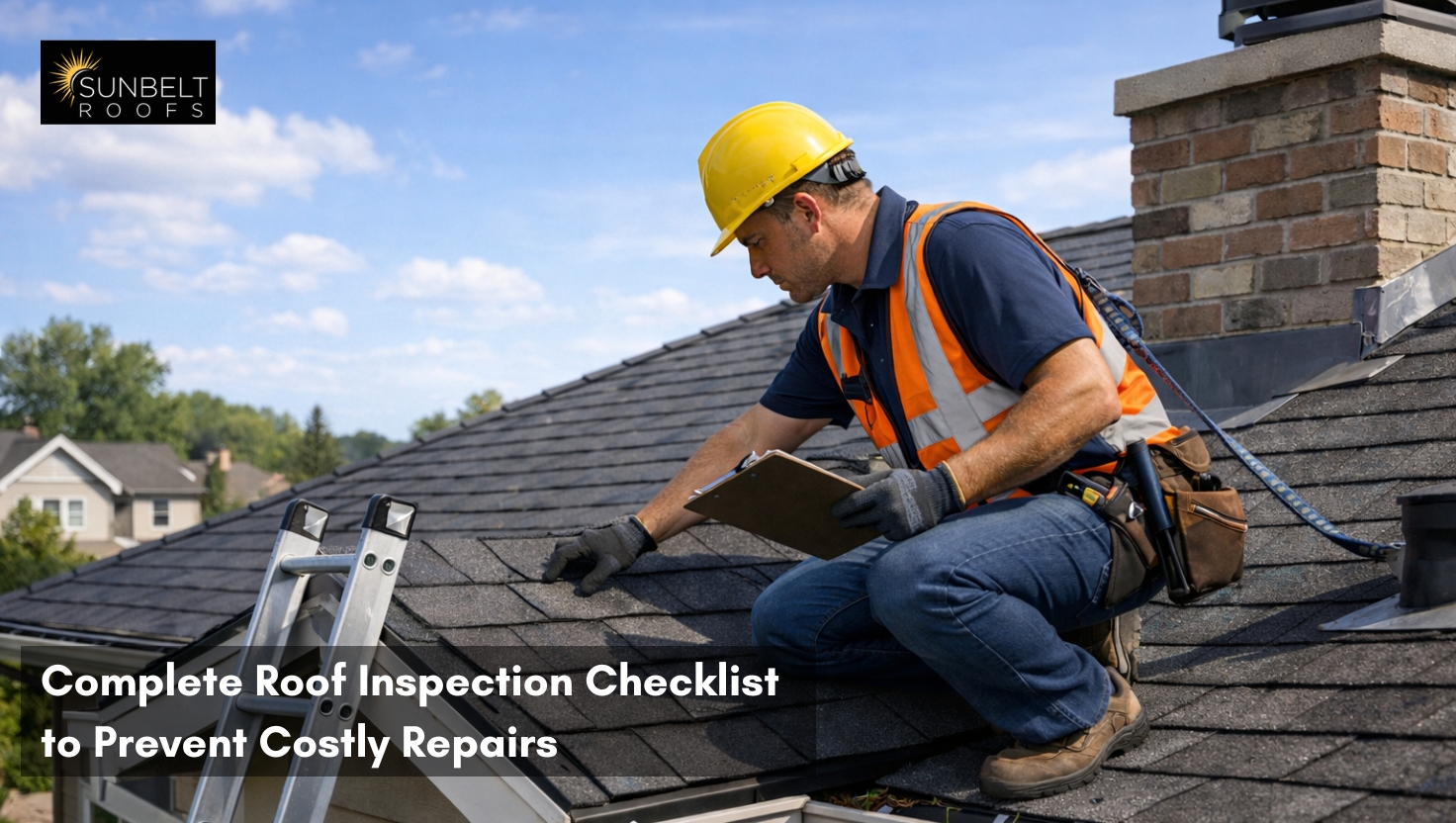
Your roof withstands damage from rain, wind, heat, and storms and acts as the first line of defense for your property. Most owners develop awareness for the roof only when there is obvious damage like a leak or a crack. A roof inspection checklist allows for the identification of damage before it requires extensive repairs and the repairs are costly. They also help prolong the life of your roof and the maintenance saves the value of your property. A roof inspection checklist is preventive and saves both residential and commercial property owners money.
Why Regular Roof Inspections Matter
The roof inspection checklist identifies broken or missing shingles and broken or weak flashing and it also identifies problems with gutters and drainage issues. These problems should be repaired to avoid costly damages to the structure and the internals. Roof contractors also draft roof inspection report to inform owners of the state of the roof and the repairs that should be made.
After any type of storm or extreme weather, these inspections become even more important. These damages may cause layers of roofing materials to be exposed and weaken the roof.
Benefits of Routine Roof Checks
- Protect walls and ceiling from water damage
- Improve drainage
- Maintain property value
- Increase longevity of roof
- Maintain the value of your property
Exterior Roof Inspection Checklist
The first part of a roof inspection checklist is the outside of the roof. The top part of the inspection checklist should be roofs, gutters, and the edges of the roof. Look for rust, broken brakes, or any other signs that water isn’t draining properly.For large-scale projects, professional Commercial Roofing services can help ensure proper planning and cost-effective solutions.
It is very important to inspect roof for hail damage after storms because hail can dent it, loosen granules, and break roofing materials. Impact marks can lead to leaks in the future, so don’t ignore small damage. Here are some common warning signs on the outside: Moss or algae growing, shingles that are bent or missing, flashing that is broken, gutters that are overflowing, and roof regions that are drooping.
Common Exterior Warning Signs
- roof shingles are missing or curled.
- Damaged flashing.
- gutters are overflowing.
- growth of algae or moss.
- areas of the roof are sagging.
Interior Roof Leak Inspection
Leaks and other roofing issues are often first detected in the attic or the ceiling. To conduct a thorough roof leak inspection, check the attic insulation, rafters, ceiling, wall corners, and ventilation system. If moisture becomes trapped inside, it can damage the wood frame and cause mold.
Finding leaks early is the reason why inspections should target both the exterior and roof inspection checklist.
Indoor Signs of Hidden Damage
- stains from water on the ceiling.
- insulation that is damp.
- The attic has a musty smell.
- The paint on the walls is peeling.
- mold is in the corners near the ceiling.
A roof inspection should be conducted regularly
It is home roof inspection to conduct regular roof inspections in order to avoid unanticipated repair costs. The changing seasons can damage roofing systems over time, and it is beneficial to conduct a home roof inspection in the spring and fall.
Pay special attention to the gutters, chimney, skylight, and airflow on the attic and roof inspection checklist.For durable roofing performance, explore professional Metal Roofing Service options that complement proper ventilation systems.
Professional Roof Inspection Services vs. DIY
While some homeowners may conduct their own roof inspections from the ground, professional roof inspection services take it a step further. Experts notice signs of damage such as the type of roof damage, structural deficiencies, moisture damage, and storm damage that may be missed during a visual inspection.
Professional roof inspection service provide photo, measurement, and roof inspection report documentation that aids planning and helps ensure nothing is overlooked. This is particularly useful for older roof inspections, for insurance claims, or for property sales.
Why Choose Professional Help
- Better accuracy
- Safer than accessing a roof
- Detailed damage findings
- Repair recommendations
- Long-term maintenance guidance
Considering Costs Associated With Roof Inspections
The average roof inspection cost varies based on the roof’s design features, the materials used, the roofing slope, and inspection techniques selected. Visual inspections tend to be the most economical, whereas inspections that utilize drones or thermal imaging will result in increased costs.
To avoid greater costs, homeowners must conduct roof inspections before issues become larger and pricier. Investing in a roof inspection cost is more economical than waiting to conduct inspections, and it can save you from further significant expenditures.
Storm Damage: Inspect Roof for Hail Damage
Storms can hide damage that can result in sustained damage to roofing materials. After a storm, it’s important to inspect roof for hail damage. Impact damage can include cracked shingles, lost granules, dented flashing, and other signs of storm damage.
Experts can inspect roof for hail damage and provide documentation for repairs or insurance claims. Take the inspections as soon as possible to minimize damage.
What a Roof Inspection Report Includes
Quality roof inspection reports summarize the condition of the roof. It should contain pictures and the location of damages and maintenance needs to the degree of urgency required for the repairs. A roof inspection report breakdown is useful for owners to budget and plan the repairs.
Seasonal Roof Maintenance Tips
The seasonal roof inspection checklist can be done before the monsoon, winter, or storm seasons. Maintenance saves more money than the repairs at the time. After heavy rainfall, be sure to clear the gutters, break up the branches, and examine the roof leak inspection.For complete roofing solutions, consider Protecting Your Home with Expert Roofing Solutions to ensure your system performs efficiently.
FAQs
1. How often should I use a roof inspection checklist?
Most roofs are recommended to be inspected at least biannually.
2. What affects roof inspection cost?
The roof inspection cost can be attributed to the size, material, and accessibility. How advanced or simple the technology is plays a role too.
3. What is the point of having a roof inspection?
A roof inspection on a house might find leaks, storm damage, and old materials before they become greater issues.
Conclusion
For preventing costly repairs, the roof inspection checklist is money well spent. Your roof will perform optimally, saving you money with regular inspections and maintenance.