

Property owners need to consider a number of factors when selecting a roofing system for their building, but the first and foremost is always the time, money, and energy costs associated with a roofing system’s installation and all the subsequent care and upkeep required for that system. Each types of roofing materials and its installation affects all of those costs differently. Understanding material options and the associated costs will help a property owner make an informed decision.
Home and business owners will always appreciate different types of roofing materials ability to protect the rest of the structure from the weather and assist with insulation and heat retention.
Key Factors to Consider When Choosing Roofing Materials
Property owners consider various factors, such as those detailed below, most of which attempt to take the time and money costs of care and upkeep into account.
Climate and Environmental Conditions
In order to make the best choice, the local weather and environmental conditions need to be understood. If the area is prone to heavy rain or storms, materials need to be selected very carefully to ensure they will withstand such conditions. Durable roofing materials that can withstand the stresses and shocks that weather conditions can bring as well as the inevitable moisture and freezing-and-thawing cycle of temperature changes are more costly initially, but the overall costs of care and maintenance will be lower over the life of the material.
Budget and Roofing Materials Cost
When analyzing roofing options, you want to know how much roofing materials cost as well. The different roofing materials will have different costs. This will depend on the different types of materials, how difficult the materials are to install, and other costs associated with long-term maintenance. Some materials that may be more expensive at the beginning have longer lifespans which will give you less maintenance costs.
Durability and Maintenance
Different roofing systems will have different lifespans. Materials of higher quality will have better protection and maintenance will be needed less often. The best roofing materials that can be found will be more of an investment, but spending this will save on repair costs and can increase the amount of time your roofing can be used.
Popular Types of Roofing Materials for Residential Properties
The various roofing systems used for residential buildings can be seen as a combination of the three principles of affordability, durability, and aesthetics. The types of roofing materials used are typically reliable and have many options as to how they can be arranged.
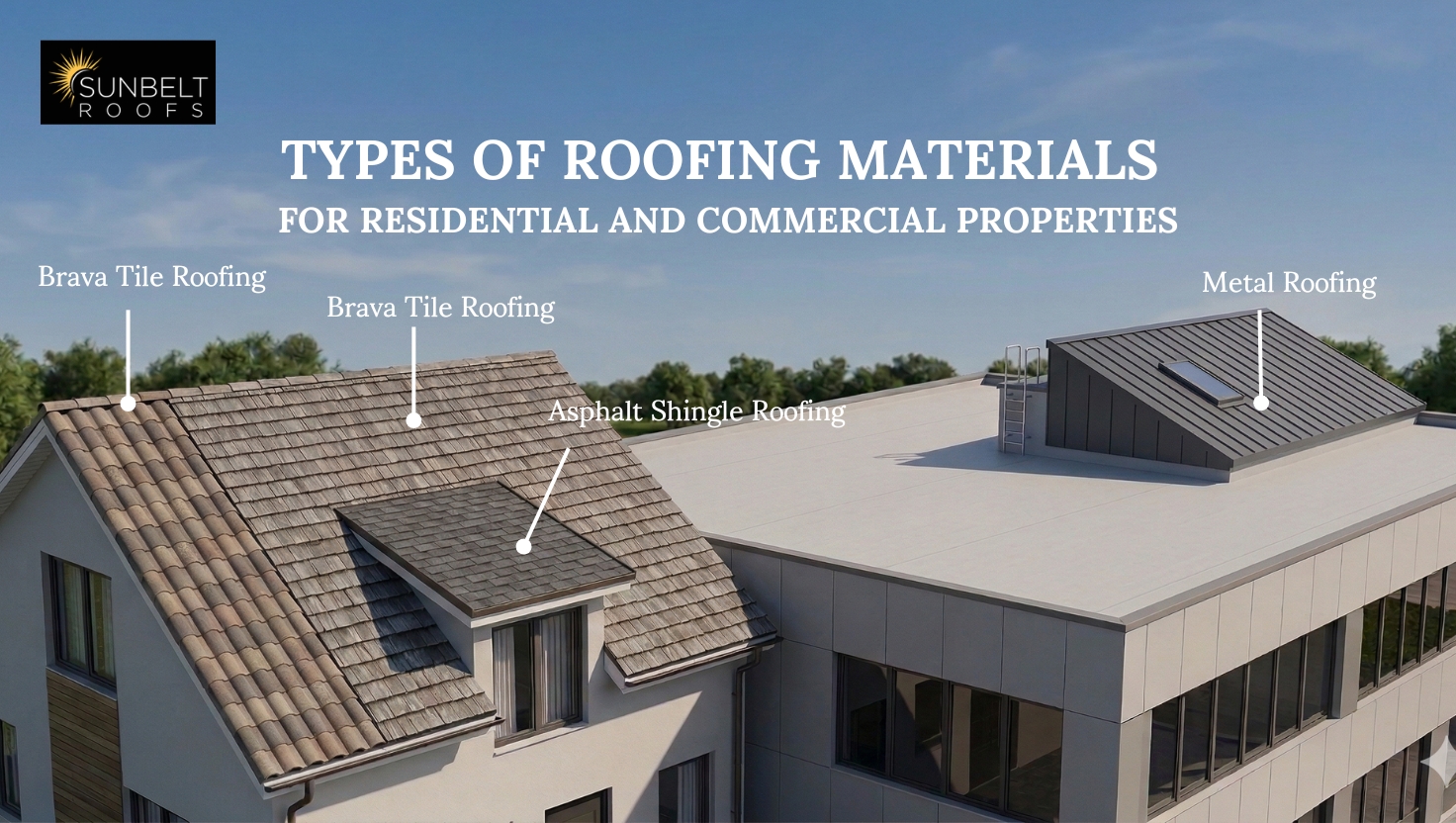
Asphalt Shingles
Asphalt shingles are some of the most popular roofing materials to be found on homes. Reliability and protection of residential developments makes asphalt shingle roofing a popular choice amongst homeowners.
Benefits and Applications
- One of the most affordable roofing materials available
- Great selection of colors and styles to complement varying designs of homes
Asphalt shingles remain highly used and recommended because of well-built copies and the long-lasting protection they provide compared to their cost.
Metal Roofing
A modern trend of construction has been the increased popularity of metal roofing due to their durability and energy savings. Thus, most homeowners appoint metal roofing services.
Benefits and Applications
- Remarkable strength and resistance to extreme weather
- Greater lifespan than most traditional roofing materials
Metal roofing services are most recommended to homeowners seeking long-lasting protective best roofing materials that require minimal maintenance.
Clay and Concrete Tiles
Clay and concrete tiles are especially common in applications and designs of warm climates that need specific styles of roofing.
Benefits and Applications
- Superior resistance to heat, moisture, and fire
- A pleasing appearance which improves the value of the building
Among the several options of roofing materials available for residential structures, these different types of roofing materials are popular for their durability.
Wood Shingles and Shakes
Apart from the modern styles and construction, this roofing type gives an outdoor, natural look which many homeowners enjoy.
Benefits and Applications
- Natural insulating qualities that enhance energy efficiency.
- Distinct look that complements rustic homes.
Wood roofing has aesthetic benefits, but can be higher maintenance than other options.
Common Roofing Materials for Commercial Buildings
Housed commercial properties usually have a roofing system specifically made to suit flat or low-slope structures. Roofing systems are made to be more durable, water resistant, and energy efficient than roofing made for private use. There are several different types of roofing materials.
TPO Roofing Systems
Thermoplastic Polyolefin (TPO) is a popular roofing system for energy-efficient and long-lasting premium-grade commercial properties.
Benefits and Applications
- The reflective surface reduces heat absorption.
- One of the most preferred modern roofing materials in contemporary commercial construction.
TPO roofing systems are usually applied by specialized commercial roofing services for office, warehouse, and industrial buildings.
EPDM Roofing
EPDM (Ethylene Propylene Diene Monomer) is a synthetic rubber used as a roofing membrane for flat roofs.
Benefits and Applications
- Highly flexible and resistant to extremes of heat and cold.
- Provides long-lasting durability and waterproof protection.
EPDM roofing is one of the most dependable and durable roofing materials options for commercial roofs.
Modified Bitumen Roofing
Modified bitumen roofing is made specifically for flat or low-slope commercial roofing systems that require effective waterproofing.
Benefits and Applications
- Exceptional layered structure resistance to water penetration
- A layered structure that lasts adds more defense
Most building owners look at these systems while roofing material comparison to see which option yields the best value in the long run.
Roofing Material Comparison
Knowing the specifics helps building owners select the best roofing option for their needs. A good roofing material comparison factors in durability, price, maintenance needs, and total performance.
Cost vs Performance
The different roofing systems and materials provide different values. Some systems and materials provide a more favorable value in the long run as the total roofing materials cost and the maintenance and repair costs are lower.
Maintenance and Longevity
The material used for roofing systems determines maintenance requirements. Property owners tend to prefer affordable roofing materials that are high in durability and long in performance.
Best Roofing Materials for Residential and Commercial Properties
Most factors considered, the best roofing materials for a property vary according to design, budget, and climate.
Residential Roofing Options
Most practical roofing types used in residential building construction today are:
- Metal roofing
- Concrete or clay tiles
- Asphalt shingles
These are among the most practical types of roofing materials used in residential construction today.
Commercial Roofing Options
Some common commercial roofing systems are:
- TPO roofing membranes
- EPDM rubber roofing
- Modified bitumen systems
Roofing materials cost planning looks at many of these materials to ensure long-term financial payback.
Modern Trends in Roofing Materials
Roofing systems are continually improving and the newest systems to hit the market are more efficient, more cost effective, and are more sustainable than previous systems. Many of these new systems also put emphasis on reducing the energy use and environmental impacts modern roofing materials cost planning.
Energy-Efficient Roofing Solutions
Reflective roofing systems provide a way to cost effectively reduce the heat absorption and cooling costs of a building. These materials enhance the energy performance and are often the best roofing materials for new construction.
Sustainable Roofing Options
Roofing materials that reduce the negative impacts on the environment are gaining a lot of popularity. Sustainable materials are often one of the first things to be considered when looking at different types of roofing materials systems designed to provide a positive long-term environmental impact.
Conclusion
Choosing a roofing system can be challenging. Each of the systems available are designed to provide specific benefits. These can be asphalt shingles or metal roofing systems for houses. These can also be more advanced commercial systems.
While assessing roofing systems, property owners should consider the best options based on the durability, maintenance, and roofing materials cost. For strong structural protection, many property owners consider additional fortified roofing services for increased storm resistance and structural protection.
Differentiating the primary categories of roofing materials helps property owners safeguard their investment. Professional contractors help achieve long-term reliable performance through additional roofing improvements. This assures that the roofing system will remain dependable for many years.